


How to leave RRIF, TFSA, property and other wealth to your children while avoiding probate and minimizing taxes?

How to leave RRIF, TFSA, property and other wealth to your children while avoiding probate and minimizing taxes?
Article content
“Probate should apply to his home and to his non-registered investments and would cost about $29,000 today. However, since the value of his home and investments should continue to rise in value, it will likely cost his estate more in future.”
Article content
Many people add their children’s names to their home and investments to avoid probate, Rempel said. But the general rule of thumb is that if your home is worth more than $1 million or if your investments are worth more than $250,000 to $500,000, the possible tax costs and risk of creditors or divorce settlements for your children are usually more prohibitive than probate fees, he said.
Article content
“Frank’s home and non-registered investments are worth too much for this to be a good idea. There is a risk that the Canada Revenue Agency (CRA) will think he is giving his children part ownership of his home, making this a taxable transaction. He could write a letter stating he is adding their names for estate planning reasons only, but CRA might not accept that. Income tax costs would be far more than probate fees.”
Article content
Since the value of Frank’s investments exceeds $250,000, adding their names to his non-registered investments would create a “bare trust” under the new CRA rules and he would have to file a T3 trust tax return and special schedule every year, Rempel said.
Article content
Article content
There are different types of trusts, Rempel said. “Frank could use an ‘inter vivos trust’ or a ‘bare trust’ but neither makes sense for his home. “If he owns his home until death, the principal residence exemption means there will be no income tax on it. However, if he transfers it to a trust, there would be a capital gains tax from now until his death, which is likely to be a lot more than probate.”
Article content
As for his non-registered investments, Rempel said transferring them to a trust would avoid probate but is not likely worthwhile until they grow to $1 million or more.
Article content
“Creating a trust costs between $5,000 and $10,000 in legal fees to set up. Then a trust income tax return must be prepared by an accountant every year, which likely costs $1,000 or more. Probate fees on $700,000 of non-registered investments is just under $10,000.”
Article content
Whether Frank stays in his home or moves to an assisted living residence should be a lifestyle decision and not based on trying to save probate costs, Rempel said.
Article content
“Selling his home may not really save him probate fees anyway. He would avoid probate on his home but the proceeds would be added to his non-registered investments, which are subject to probate,” Rempel said. “If he does this, then he would have more than $2 million in non-registered investments, so creating an inter vivos trust would make sense.”
Article content
Article content
“If he is confident in his investments and his children are less knowledgeable about investing, it can make sense for Frank to recommend transferring his investments ‘in kind’ to his children instead of in cash, but this is something his children would have to do,” he said.
Article content
As for Frank’s registered investments, “the RRIF does not have to be fully withdrawn by age 90,” Rempel said. “The minimum RRIF withdrawal rises every year until age 90 when it is 20 per cent a year. You can keep your RRIF indefinitely. They are deemed cashed in on death and taxes withheld.”
Article content
*His name has been changed to protect his privacy.
Article content
Are you worried about having enough for retirement? Do you need to adjust your portfolio? Are you starting out or making a change and wondering how to build wealth? Are you trying to make ends meet? Drop us a line at wealth@postmedia.com with your contact info and the gist of your problem and we’ll find some experts to help you out while writing a Family Finance story about it (we’ll keep your name out of it, of course).
Article content
Sponsor
Sponsor
Sponsor
Sponsor
Zoekertjes
Categorieën
Read More
Toyah Cordingley: Nurse found guilty of Australian beach murderMan found guilty of Australian beach murder after hiding in India for yearsQueensland Police ServiceThe murder of Toyah Cordingley prompted an outpouring of grief across the state of QueenslandA former nurse has been found guilty of the high-profile murder of Toyah Cordingley, whose body was found on a popular tropical beach in...

Spotify acquires music database WhoSampled Spotify has acquired the community-run database tracking sampled music, WhoSampled, the company announced Wednesday. The streaming service had also shared the news as part of its Wednesday blog post about new song credits features. Deal terms were not disclosed, but Spotify confirmed to TechCrunch the acquisition is for both the WhoSampled team and...

Best Rowing Machine Picks As Tested by a Fitness ExpertA rowing machine can be a good home gym option. There are many to choose from, and each machine has its own price and worthy features. "The rowing machine is a great machine to achieve an efficient full-body workout with HIIT, return from a recovery with [low-intensity steady state cardio] or improve your anaerobic and aerobic energy...

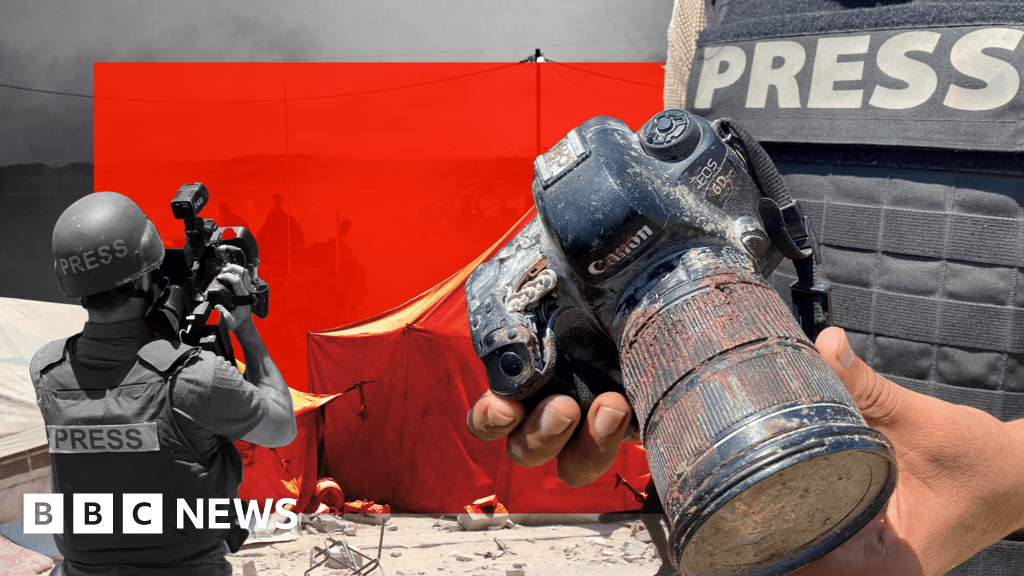
'Exhausted, hungry, and scared': What it's like to be a journalist in GazaAmira MhadhbiBBC News ArabicBBCJournalists in Gaza work and sleep in tents near various hospitals "I never imagined that one day I would be living and working in a tent, deprived of the most basic human necessities - even water and a bathroom."It's more like a greenhouse in the summer and a refrigerator in the winter,"...
Apple Watch Series 11 vs. Series 10: Are the Differences Enough to Justify Upgrading?If you're looking at getting an Apple Watch this holiday season, you have a tough choice: Should you buy the latest Apple Watch Series 11, or find a Series 10 that has most of the same features at a lower cost? Apple made incremental changes to its flagship smartwatch, while also introducing...

