Their film was shot in secret and smuggled out of Iran. It won an award at Sundance
Their film was shot in secret and smuggled out of Iran. It won an award at Sundance

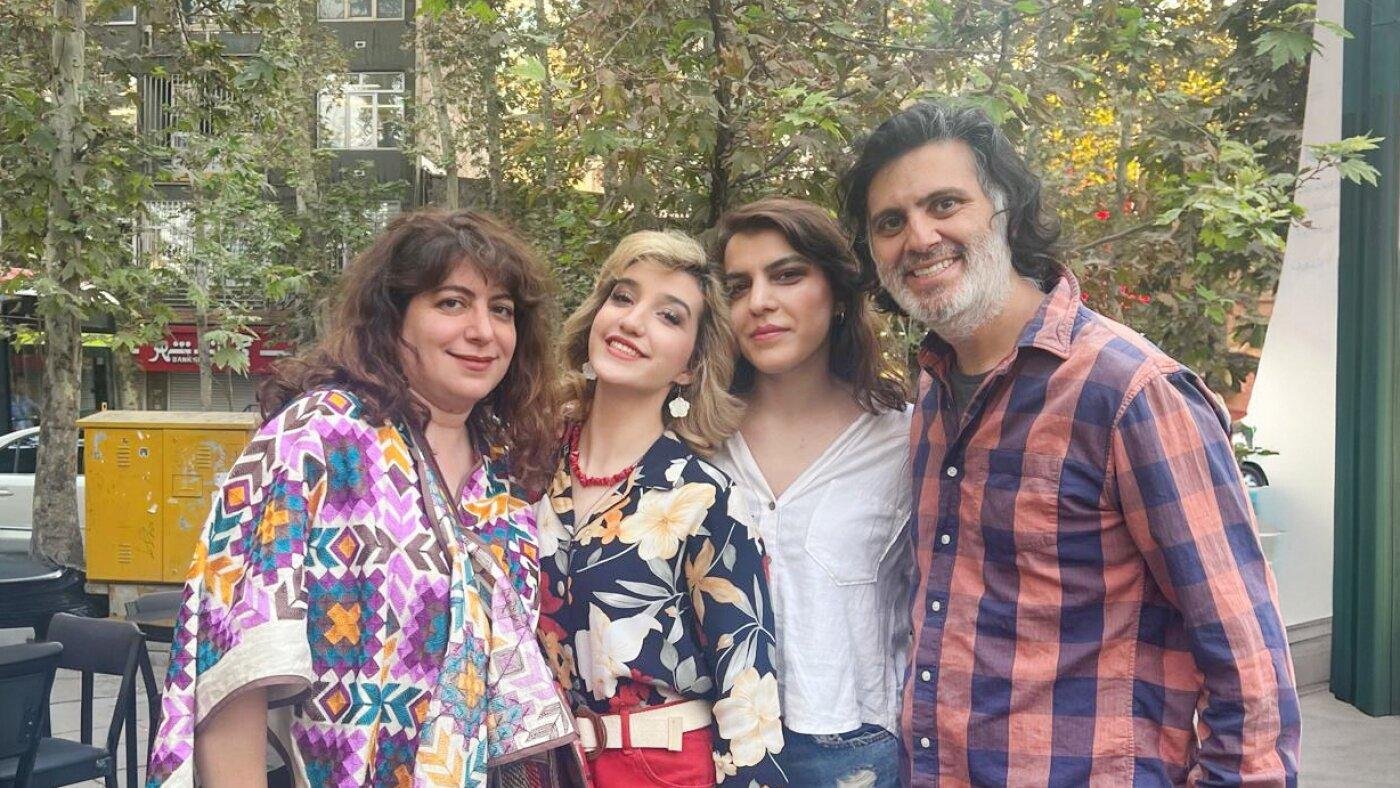
Maryam Ataei and Hossein Keshavarz in Park City, Utah, after the premiere of their film The Friend's House is Here at the Sundance Film Festival. Mandalit del Barco/NPR hide caption
toggle caption
Mandalit del Barco/NPR
A feature film shot covertly in Iran won a jury award for ensemble cast at this year's Sundance Film Festival. Between war and recent street protests, the filmmakers had many challenges getting The Friend's House is Here finished in time for their premiere.
Set just after last summer's Iran-Israel war, the film is a portrait of Tehran's vibrant underground culture. Despite increasing government crackdowns, street concerts, art galleries, avant-garde theater performances, and after parties carry on. They are the spaces where artists celebrate, flirt, and discuss life and art.
The story — all in Persian — centers on two roommates and friends who are part of that scene. Like the actresses who portray them, one performs with an underground theater troupe, and the other makes social media videos of herself dancing in front of historical monuments — something that's illegal under Iranian law.
When a woman in the street scolds Pari and Hana for not wearing their hijabs, they laugh. They and their creative friends refuse to be silenced by the regime, even as authorities begin to target them.

Hana Mana and Mahshad Bahram, in The Friend's House is Here. Alma Linda Films hide caption
toggle caption
Alma Linda Films
"They just wanna just have a regular life, they wanna be on Instagram, they wanna dance. They wanna be free," says filmmaker Maryam Ataei. "We wanted to tell the story of sisterhood and a fantastic community of people helping each other."
Her co-director and husband, Hossein Keshavarz, who also co-wrote and co-produced the film says they were inspired by the young artists they know in Tehran. "We just fell in love with them. They're so cool. They're so funny. They're so hip," he says. "Resistance is an everyday act for them."
Keshavarz says the same defiant generation has been challenging the Iranian government in massive street protests. But as NPR has reported, security forces have arrested and even killed thousands of people since the beginning of the year.
"Even if the government is violently cracking down, these young people don't want to be told how to live," he says. "Even though the government brutalizes them, they take their lumps. So many people we've worked with have been arrested for such arbitrary reasons, but they keep on and they're there for each other."
Keshavarz says Iranian authorities continue to clamp down on filmmakers critical of the regime, like Jafar Panahi, who is nominated for an Academy Award this year for his film It Was Just an Accident. In Iran, Panahi's films are banned; he's been repeatedly arrested and imprisoned in Iran for speaking out.
In December, Panahi was sentenced in absentia to another year in prison. And just this week, his co-screenwriter was arrested.
"Jafar Panahi actually said it was like psychological terrorism," says Keshavarz. "Artists are being arrested so much for doing their work. That's just kind of like the baseline of difficulty and fear that we had to deal with."
The filmmakers met with NPR during the Sundance Film Festival in Park City, Utah, to talk about what it took to get their film there.

The filmmakers with actresses Hana Mana and Mahshad Bahram from The Friend's House is Here. Alma Linda Films hide caption
toggle caption
Alma Linda Films
They say they shot The Friend's House Is Here in secret, hiding their cameras and sound equipment. They could only shoot one or two takes in the streets to avoid getting noticed by authorities. They worried that spies could rat them out, and could only trust close friends and family to be extras.
They finished shooting the film in October and were still in post-production when massive street protests began. By January, the Iranian government responded by shutting down the country's internet.
"We were so stressed out," says Ataei. "We were not sure we would make it for Sundance."
Ataei and Keshavarz were already in the U.S., but two of their crew members made the risky decision to smuggle the film out of the country to Turkey. They hid the footage on a hard drive.
"They put it at the end of a religious film in case their drive got seized," says Keshavarz.
He says the crew members went through numerous checkpoints, and drove nonstop for 12 hours to get past the border into Turkey.
"Then finally we got a call: 'I have the film! I'm going to upload the film right now,'" Ataei recalls. "What they did was so heroic!"
But the drama didn't end.
During a protest in Iran last month, an actress from the film was injured. "She got shot in the face with pellet bullets. And she couldn't go to the hospital because she would be arrested or possibly killed," says Keshavarz. "So many people, nurses, doctors, helped her hopefully save her vision."
Meanwhile, because of the U.S. travel ban, the film's two main actresses were not allowed to go to the premiere.
"It's so crazy, all these difficulties making a film in Iran and skirting the authorities," says Keshavarz. "And then now the film's at Sundance, but you can't get a visa from the State Department."
With their seven-year-old daughter, the filmmakers continue to split their time between the U.S. and Iran. Ataei, 45, says she spent her childhood surviving nearby explosions during the Iran-Iraq war in the 1980s. Keshavarz, 48, who grew up in New Jersey and New York met Ataei ten years ago through his sister. They quickly teamed up to make indie films together.
"Also we worked on a Hollywood movie for five years. We were consultants. But they cancelled the film," says Ataei, who says that was heartbreaking.
But the filmmakers haven't given up; they're now in L.A. back pitching Hollywood their next projects, including an animated feature set in ancient Iran.
Sponsored
Ads
Ads
Ads
Categories
Read More
This week, a new app called Alta announced its first partnership with the well-known New York City fashion brand, Public School. Inspired by the classic movie "Clueless," Alta aims to make finding and styling outfits easier for everyone. With this collaboration, they plan to introduce special styling tools that can be added to various websites. By working together, Alta and Public School hope...

Whack-a-droneThe US tried to ban Chinese drones. Brendan Carr can’t keep them grounded.by Sean HollisterJul 24, 2026, 12:00 PM UTCSean Hollister is a senior editor and founding member of The Verge who covers gadgets, games, and toys. He spent 15 years editing the likes of CNET, Gizmodo, and Engadget.In Pasadena, California, there’s a cute red brick courtyard where one storefront isn’t like the...

Peacekeepers killed by roadside explosion in Lebanon, initial report findsReutersThe UN's peacekeeping force patrols the de facto border between Lebanon and Israel, in collaboration with the Lebanese armyTwo Indonesian peacekeepers were killed on Monday by a "roadside explosion" in southern Lebanon, UN peacekeeping chief Jean-Pierre Lacroix has said, citing the findings of an initial...
Clouted wants to take the guesswork out of making short videos go viral It feels like short video clips from podcasts, songs, and movies are suddenly everywhere on social media right now, and that’s not an accident. Brands have realized that the format offers a highly cost-effective way to market products. Brands and marketing agencies often outsource the process of finding the most compelling...

Most Pet Owners Would Do Anything for Their Pets. Not Everyone Can Afford To. We research all brands listed and may earn a fee from our partners. Research and financial considerations may influence how brands are displayed. Not all brands are included. Learn more. Key TakeawaysMost pet owners say they love their pets like family, according to...