Hugo BachegaMiddle East correspondent, Tel Aviv

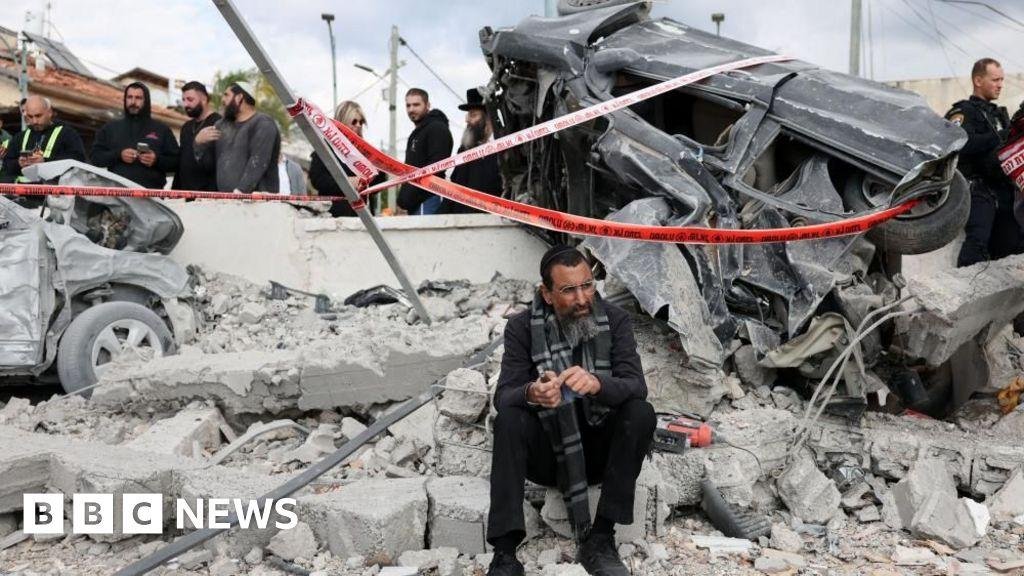
 EPA
EPA
A sense of normality is slowly returning to Israel, even as large-scale Israeli-American attacks on Iran show no sign of abating, and as Israel expands its offensive in Lebanon against the Iranian-backed militia Hezbollah.
Six days on, as the intensity of the Iranian retaliation has diminished, measures that banned gatherings and closed shops and offices are being relaxed here. Air raid alerts still sound, sending people across the country to shelters.
Chaya Dekel, who is in her 70s, said she had lost count of many wars she had seen. She was tired, she said, but defended the war as Iran "didn't want peace".
"We're living here, with hope that there will be an end," she said. "Everybody is Israel hopes we'll live in peace with our people and our neighbours."
"This is actually a consensus," Prof Tamar Hermann, a senior research fellow who helped carry out the survey, said. "Even during the last campaign against Iran, we didn't have such high numbers."
One of the reasons behind that, she said, was the fact that the damage in Israel from Iran's retaliatory strikes had been "very, very limited".
This is due to Israel's sophisticated air defences - a multi-layered system of protection that, according to officials, has intercepted between 80% to 90% of the projectiles fired at the country in this war. So far, the attacks have killed 10 people across Israel.
Another factor, Prof Hermann said, was that public trust in the military and the intelligence services has recovered after the security failures that led to the attacks on 7 October 2023 led by Hamas - one of the militant groups in the region that Iran has supported to form a so-called "ring of fire" around Israel.
But, crucially, there is also unity over the Iranian issue which, for decades, has been framed by many as an "existential threat". That includes Prime Minister Benjamin Netanyahu.
From his 1995 book Fighting Terrorism to his famous speech at the United Nations General Assembly in 2012, when he displayed the illustration of a bomb to explain how close, in his view, Iran was to obtaining a nuclear weapon, Netanyahu has repeatedly told the world that Iran must be stopped.
Last June, Netanyahu, who is Israel's longest-serving prime minister and the leader of the most right-wing government in the country's history, ordered an attack on Iran that significantly damaged its nuclear and military capabilities.
The US eventually joined the conflict, which became known as the 12-Day War.
The campaign was celebrated as a success in Israel, helping boost domestic support for the army.
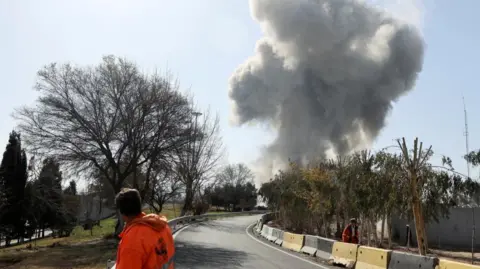 Reuters
Earlier this year, Iran's security forces brutally repressed anti-government protests, killing thousands of people.
The demonstrations exposed huge public discontent amid mounting questions about the legitimacy of rule by the clerics and an economy in deep crisis.
With the leadership under pressure, Iran's defences downgraded and its proxies weakened, Israel and the US saw an opportunity to attack Iran that was not to be missed.
President Donald Trump deployed what he described as an "armada" to the Middle East - marking the largest US military build-up in the region since the American-led invasion of Iraq in 2003.
But neither him nor Netanyahu has clearly laid out what imminent threat Iran presented which required the use of military force or what their objectives were of this latest war, which Iran says is illegal and unjustified.
Israeli officials, including Netanyahu, have publicly said they hope it could lead to regime change in Iran.
For now, this is an unlikely scenario, even after the killing of the Supreme Leader, Ayatollah Ali Khamenei, in an air strike on his compound in Tehran on the first day of the war.
Khamenei had repeatedly called for the destruction of Israel, as well as urging crowds chanting "Death to America" every week.
The war, Netanyahu said earlier this week, will "usher in an era of peace that we haven't even dreamed of".
He also laughed at the suggestion that he had dragged the US into this conflict, describing it as "ridiculous".
The perception that this is a conflict to defend Israel's interests could damage Israel's image in the US even further.
In Israel, however, there has been very little criticism of Netanyahu's decision to go to war, even from his opponents.
And according to the Israel Democracy Institute poll, among Jews, 57% believe that the bombing should not stop until the current Iranian rulers are overthrown.
"[Israelis] see that the people of Iran share this goal...so they believe this is the opportunity [to do it] with the Israelis and Americans from the air, and the people of Iran on the ground," said Prof Meir Javedanfar, an Israeli-Iranian analyst and professor at Reichman University in Herzliya.
"I don't think they realise how difficult that is."
At the same time, many in Israel are tired.
"It's been five years of constant upheaval. It was the judicial reform [plans by the government to limit the powers of the Constitutional court which led to huge protests], then 7 October, then Iran a year ago. Now we have this, and we've had Lebanon in the middle," Tom Dan said after leaving a bomb shelter.
"Obviously, a lot of other people are living tougher lives...but there's this feeling that this is a good cause. This [Iranian] regime was hell bent on destroying Israel."

But have Israelis become too happy to embrace militarism?
"I certainly would say that, on the radical right, people are much more eager to deal with the regional problems by force," Prof Hermann said.
"They see it as something that separates Israeli Jews from diasporic Jews. For example, we're strong. We're capable of defending ourselves.
"And all this mumbo-jumbo of diplomatic negotiations is something that won't save us once there is someone in Tehran that is interested in destroying us."
Rut Spigler, a 19-year-old student on a gap year, was helping clean up the site that was hit by an Iranian missile in Tel Aviv the morning after the attack.
"The times the Israeli people most came together were the wars with Iran because that's a goal that we believe in," she said.
"Maybe this one will be the last war and we'll have some peace and quiet."
There is a small minority, though, who question the reasons for starting a new war.
Ron, who did not want to give his full name, owns a coffee shop in central Tel Aviv.
"I feel sadness, fear and frustration, and it's a bad time for Israel. Israel should not attack Iran - it not the police of the world," he said. "[There's] no right under international law...you don't have the right to attack a nation far away from here."