Geeta PandeyWomen and social affairs editor, India
A short promotional film challenging the traditional view in India that a married daughter must stay with her husband in their marital home - even if he is abusive - has spotlighted domestic violence and won hearts across the country.
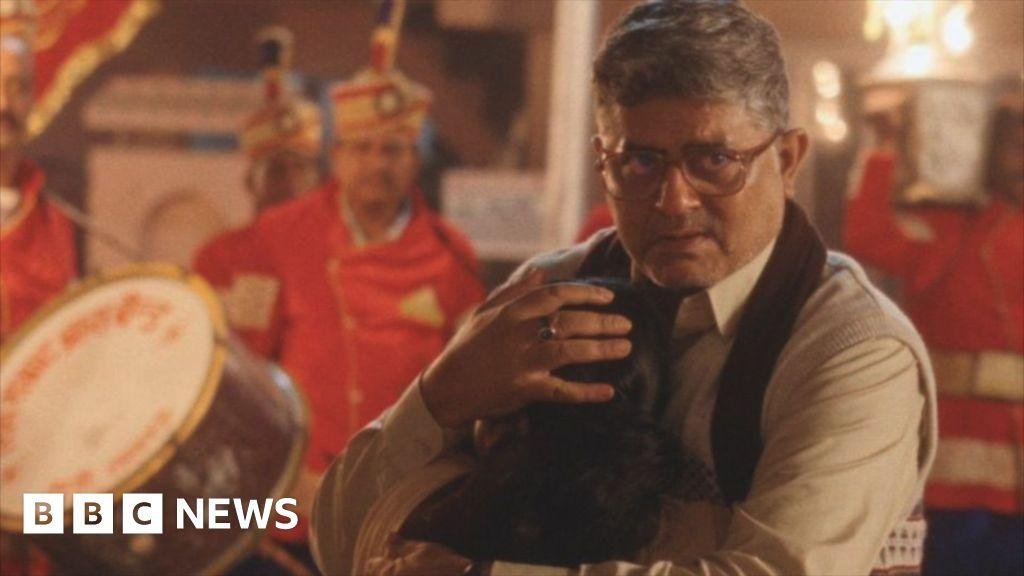
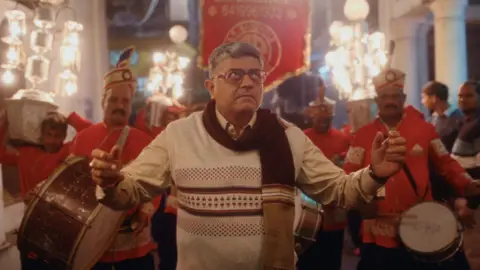
The three-and-a-half-minute Band Baaja Bitiya - Hindi for "a wedding band and daughter" - is the moving tale of a father who goes to retrieve his daughter from her violent matrimonial home and uses the celebratory wedding band as a mark of defiance.
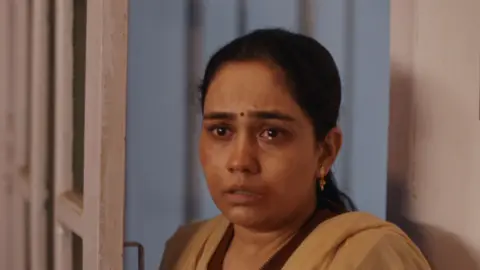
The film starts with the father, played by veteran Bollywood actor Gajraj Rao, receiving a phone call from his daughter Surabhi.
"Again?" he asks, the pained expression on his face reflecting the troubling news he's just heard.
The advice he receives from family and friends is typical. "It's her home, her fate." Or, "tell her to adjust." "A little bit of shoving and pushing" is "no big deal" in a marriage. Once Surabhi has a baby, "things would sort themselves out".
"In India, it's said that the bride enters the husband's home carried on a palanquin and that she leaves only after her death, carried out on a funeral bier," Rao told the BBC. "It's believed that the father's responsibility ends the day he gives away his daughter in marriage."
But Rao's screen father chooses not to look away. And when he goes to rescue his daughter, he makes a song and dance about it, literally, by hiring a wedding band – since there was one at the send-off, why shouldn't there be one when she returns?
"It's not a matter of shame for the father," Rao says. "He wants to welcome her back with the same pomp and show with which he had sent her off. By celebrating her return, he's showing his pride that he's putting an end to her pain and torture."
As his battered daughter runs into his arms, the film's message is loud and clear: a daughter is forever.

 The Unicorn Films
 The Unicorn Films
Official data suggests about one in three Indian women experience domestic violence. Abuse - and even the killing of new brides over dowry disputes - still routinely makes headlines. In 2023 alone, more than 6,150 women were killed in dowry-related deaths, while police registered 133,676 cases of cruelty by husbands or their families.
Campaigners say many women stay trapped in abusive marriages because their parental families offer little support. So the quiet act of solidarity by an ordinary father standing by his daughter has struck a chord online, drawing millions of views and widespread praise.
On social media, viewers have called it "the best ad film of 2026" and "a revolutionary idea whose time has finally come". Many said it moved them to tears. "The world needs more such fathers and parents," one Instagram user wrote.
Many women shared emotional stories of fathers who stood by them in similar moments, while some fathers wrote about reassuring their daughters they would always have their support.
Rao - who's one of Bollywood's finest character actors and is celebrated for his role in hit Bollywood film Badhai Ho - says the response to the film has been overwhelming.
"This is the first time in my life that I've been mobbed at an airport with 15 to 20 people surrounding me, telling me how much they loved the film. People have accepted it and welcomed it with open arms," he says.
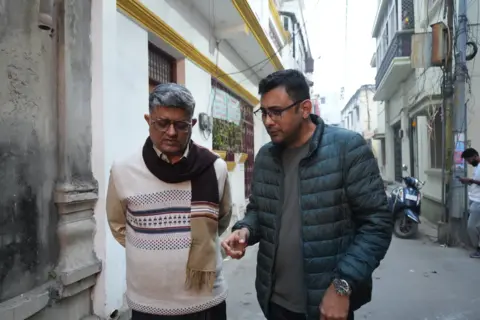
Director Prosit Roy, who is father to a toddler daughter, describes himself as "a girl dad" and says he made the film to challenge "old ideas and archaic values".
"Domestic violence is rampant but parents don't intervene because they worry 'what will people say'? We tell our daughters to adjust and sometimes it's too late. I'm just showing a mirror to society, to make them understand why they must act."
Roy says he chose this story because he found it inspiring and "felt we could use it to inspire parents and relatives to support daughters. It's a necessary conversation and this film can start it".
The film mirrors a handful of real-life cases in which fathers decided to challenge tradition and rescued their daughters from unhappy marriages.
The first such case was reported in October 2023 from the state of Jharkhand where businessman Prem Gupta hired a wedding band to bring his daughter Sakshi home.
She had been married a year and Gupta told the BBC he also initially advised her to adjust.
"In India, daughters are told by their parents that after marriage, you belong with your husband and his family. You have to live and die with them. Like most people, I was also worried about what will people say," he said.
But as her relationship deteriorated, he began to worry "that she would get depressed and may harm herself".
"As her father, I felt I couldn't abandon her. We chose the first day of Navratri - the nine-day Hindu festival when we worship the goddess Durga. It's considered an auspicious time for starting new ventures and undertaking important work. We wanted to send out a message that we were doing the right thing."
 The Unicorn Films
Sakshi said she was aware that her father was coming to take her home, but when she heard the celebratory band playing nearby, she was overcome by sadness.
"My marriage had collapsed and I was leaving my marital home. I thought the band must be part of someone else's wedding procession. I was really surprised when I discovered that it was for me."
A viral video at the time showed Sakshi smiling as she wheeled a suitcase out of her ex-husband's home while a band played and firecrackers burst. "My father gave me a new life," she told the BBC.
"I did it to see my daughter smile. I did it for her happiness. I never thought it would go viral. I wasn't trying to set an example, but I believe I did," says Gupta, adding that a handful of fathers have emulated his example.
Gajraj Rao says with Band Baaja Bitiya, they want to take their message mainstream in the hope that one day it will become the norm for parents to tell their daughters that they have a forever home and they have a right to be there.
"I know it's a long long journey, and things won't change in a split second. Our attempt is like a drop in the ocean, but at least it is an attempt," he says.
"People need courage to challenge tradition and maybe our film can motivate them, maybe it can act as a guiding light for families that they need to help their daughters."