James LandaleDiplomatic correspondent in Kyiv

 EPA
EPA
The decision by the US to ease some sanctions on Russian oil sales has provoked a chorus of criticism from European leaders.
President Emmanuel Macron of France said there was "no justification" for it. Chancellor Friedrich Merz of Germany said the decision was "wrong". EU Council President Antonio Costa said it was "very concerning".
Russia is already benefiting from rising oil prices driven by the Middle East war.
These European leaders fear that allowing Russia to sell more of its oil will give an even bigger boost to Kremlin coffers.
Russia has been under US and European sanctions since it launched its full-scale invasion of Ukraine in February 2022.
The US under President Donald Trump had also imposed sanctions on countries buying Russian oil and gas - big consumers like India.
But with world markets rattled by the US and Israeli war against Iran - and the Iranian retaliation against their allies in the Gulf, some major energy producers for world markets - Trump has decided to ease sanctions.
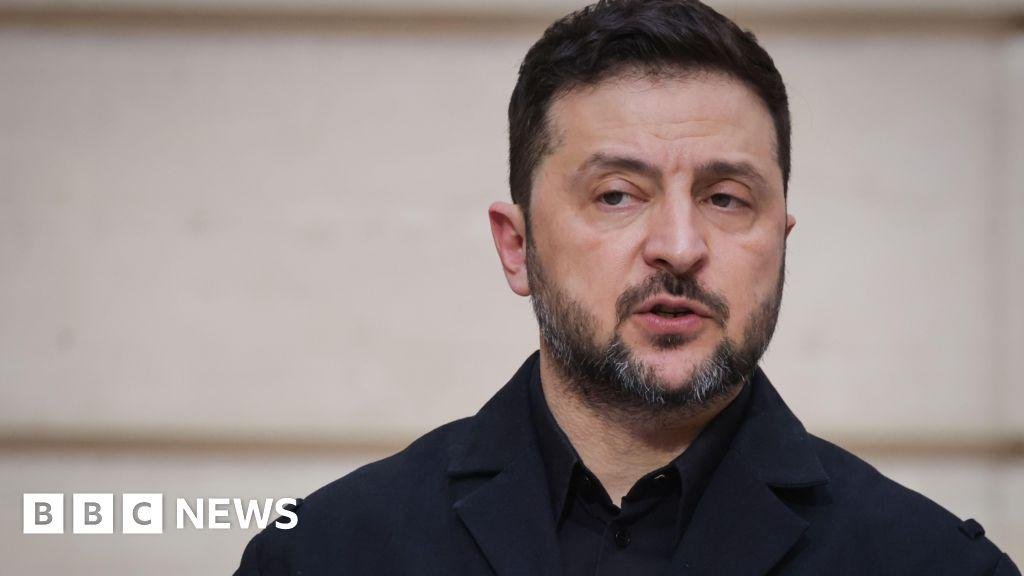
At a news conference in Paris, where he met his French counterpart, President Volodymyr Zelensky said this US decision alone was worth $10bn (£7.5bn) to Russia. "This certainly does not help peace," he said.
That is because the more revenues Russia can earn, the more pressure it can ease on its war economy.
Such is the squeeze on Russian public finances in recent months, the Kremlin had to sell gold reserves and increase consumption taxes to boost revenues. With extra oil sales, Russia will now be able to buy more weapons and soldiers to throw into the front line.
For European leaders, this could not have come at a worse time. Ukraine has survived a brutal winter. It has started taking some territory back from Russia. It has struck targets deep inside Russian territory.
At the same time, Russia was facing economic tensions and struggling to recruit enough soldiers to replace the 1,000 or so casualties, both dead and wounded, it continues to suffer almost daily.
But now Russia is being given an economic boost and its opponents are distracted by war in the Middle East. It continues to talk to the US - there was a meeting only days ago between senior Trump and Kremlin officials in Miami, about which little is known.
In fact, Ukraine is struggling for cash because promised EU funds worth €90bn ($103bn; £77bn) are being delayed by a row with Hungary.
Kyiv is under pressure from the EU to reopen a pipeline - that passes through its territory - that was damaged by Russian strikes in January. It normally carries - extraordinarily - Russian oil to Hungary and elsewhere and Budapest accuses Kyiv of dragging its feet repairing the pipeline. The authorities in Ukraine say the damage is severe and will take time to fix.
So the war in Iran is having - perhaps inevitably - an impact far outside the Middle East.
President Trump's envoys have been leading efforts to end the war in Ukraine.
But the US president does not appear to have taken on board the views of Ukraine or its European allies with his unilateral decision to ease pressure on Russia - a move that will, inevitably, mean peace talks will be less likely to make much progress for the time being.
The fear among European chancelleries is that this could get worse and the temporary US easing of sanctions on Russia could become permanent.
A spokesman for UK Prime Minister Sir Keir Starmer said all allies should maintain pressure on Russia and its war chest. "The best way to continue to stop Russia supporting hostile actors is to continue on collective pressure and end the war in Ukraine," he said.
But for now, that pressure is not collective, it is being reduced - and the Kremlin is reaping the harvest.