Hugh SchofieldParis correspondent, Paris

 Reuters/BBC/Léa Guedj
Mayors for France's major towns and cities will be chosen on Sunday, in the last vote before next year's presidential elections.
Excitement is especially high in Paris and Nice.
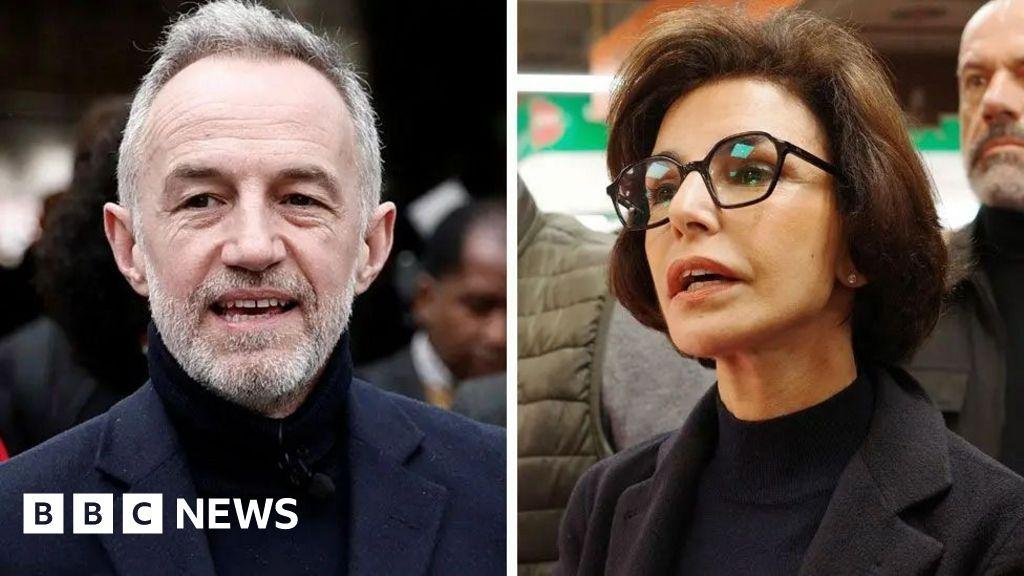
The capital could shift to the right after 25 years under a Socialist-led coalition, if Rachida Dati comes from behind in the opinion polls to defeat Emmanuel Grégoire.
And on the Riviera, a hard-right ally of Marine Le Pen's National Rally (RN), Eric Ciotti, seems on course for victory.
But in this second round of municipal elections, the biggest focus across the country is on the hard-left party France Unbowed (LFI).
 Getty Images
In many of these places, it has now formed alliances with other left-wing lists – mainly from the Socialist Party (PS) or Greens – in order to concentrate the anti-right vote.
But the key test in these elections – of big importance ahead of 2027 – is whether voters favour or shun these alliances, given the growing criticisms aimed at LFI and its leader Jean-Luc Mélenchon for alleged antisemitism and pursuing a "sectional" i.e Muslim vote.
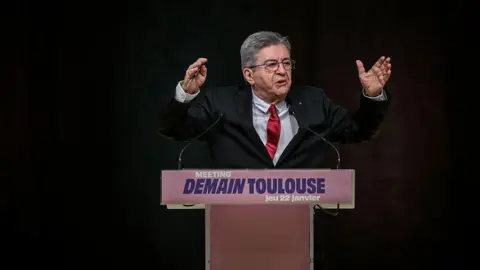
Emblematic of this is Toulouse in the south-west, home of France's aeronautics industry as well as a big student population and a classic French banlieue of high-rise estates.
The city's centre-right mayor Jean-Luc Moudenc came first in round one, with 37% of the vote. But he was followed by two left-wingers, François Piquemal (27.5%) of LFI, and the Socialist François Briançon (25%).
These two have now merged their lists, giving them a clear lead over Moudenc on paper. If they win it will be the hard-left Piquemal who becomes Toulouse mayor.
The test is to see whether the left/hard-left alliance acts as a clarion call to Toulouse voters or a turn-off.
 Getty Images
Similar left-wing pacts have been made in 26 big towns and cities, including Nantes, Grenoble, Lyons, Limoges, Clermont-Ferrand, Brest and Tours – earning the fury of right-wing politicians who call them "alliances of shame".
The fact of the matter is that these alliances have been forged just weeks after the Socialists led the rest of the mainstream left in a chorus of condemnation of LFI, vowing to forego any future nationwide all-left coalition unless it changed its ways.
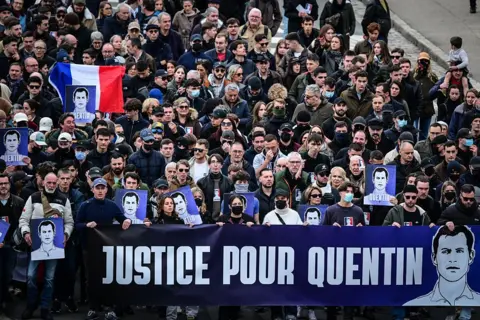
This followed the murder of a far-right student in Lyon by suspected far-left militants, including the parliamentary assistant of an LFI MP; and then a speech by Mélenchon in which he performed a nod-and-a-wink to his audience about the Jewish identity of late sex criminal Jeffrey Epstein.
For opponents of the left, the Socialists have ditched their principles at the first test – tying themselves once again to LFI out of fear of losing votes on their outside flank.
In their defence, the left says the alliances are needed to ward off victory by the far right – even though, in the vast majority of cities where the pacts have been reached, their main opponent is not from the RN but from the mainstream right Republicans (LR).
 Getty Images
Commentators of all shades see these developments as a sign of Mélenchon's growing confidence ahead of next year's presidential election, his aim being to become the main depository of left-wing votes ahead of a run-off against Marine Le Pen or the RN's president Jordan Bardella.
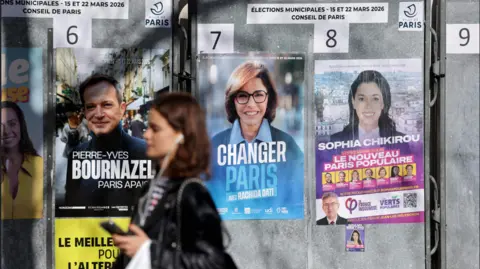
Not every city has seen an all-left pact. In Paris, the Socialist Emmanuel Grégoire refused an alliance with LFI candidate Sophia Chikirou, who remains in the race.
Meanwhile, right-winger Rachida Dati has benefited from the withdrawal of candidates from the centre and far-right, and in the polls is nudging at Grégoire's lead.
In Marseille the incumbent, Socialist Benoît Payan, has been boosted by the withdrawal of the LFI candidate, while his close challenger from the RN, Franck Allisio, is hindered by an LR candidate leaching right-wing votes.
The RN is as ever limited by its enemies' willingness to unite against it, as in Marseille and neighbouring Toulon.
The hard right's best hopes of a breakthrough are in Nice where Eric Ciotti, of the RN's allied UDR party, looks set for a win against the incumbent Christian Estrosi.
For centrists the best news has been the strong first round performance of former prime minister Edouard Philippe, who is likely to win in Le Havre – giving a big boost to his presidential ambitions next year.