Sam Altman-backed fusion startup Helion in talks with OpenAI
Sam Altman-backed fusion startup Helion in talks with OpenAI
Fusion startup Helion is reportedly in talks to sell power to OpenAI. Both companies are backed by Sam Altman.
The deal, which was reported by Axios, is in early stages, and it could guarantee OpenAI 12.5% of Helion’s production — five gigawatts by 2030 and 50 gigawatts by 2035. OpenAI partner Microsoft signed a similar deal with Helion in 2023 to buy power starting in 2028.
If the figures in Axios’ report prove to be accurate, it suggests that Helion expects to be able to rapidly scale production of its fusion power plant. Helion has said that each of its reactors will generate 50 megawatts of electricity, meaning it will need to build and install 800 reactors by 2030 and an additional 7,200 by 2035.
The company did not immediately reply to inquiries from TechCrunch.
Helion is racing to build its first commercial-scale reactor by that time. If the startup is successful, it would place it years ahead of the competition, which is mostly targeting early 2030s for commercial operations.
The startup raised $425 million last year from investors, including Altman as well as firms Mithril, Lightspeed, and SoftBank.
Most fusion startups are pursuing one of two approaches — harvesting heat from the fusion reactions and using a steam turbine to turn it into electricity. Helion is taking a different tack, developing a reactor design that would use magnets to convert fusion energy into electricity.
Techcrunch event
San Francisco, CA | October 13-15, 2026
Inside the hourglass-shaped reactor, fusion fuel is first turned into plasma at either end and then shot toward each other using magnetic fields. When they collide in the middle, another set of magnets compresses the merged plasma ball until fusion occurs. The reaction pushes back on the magnets, which can convert that energy directly into electricity.
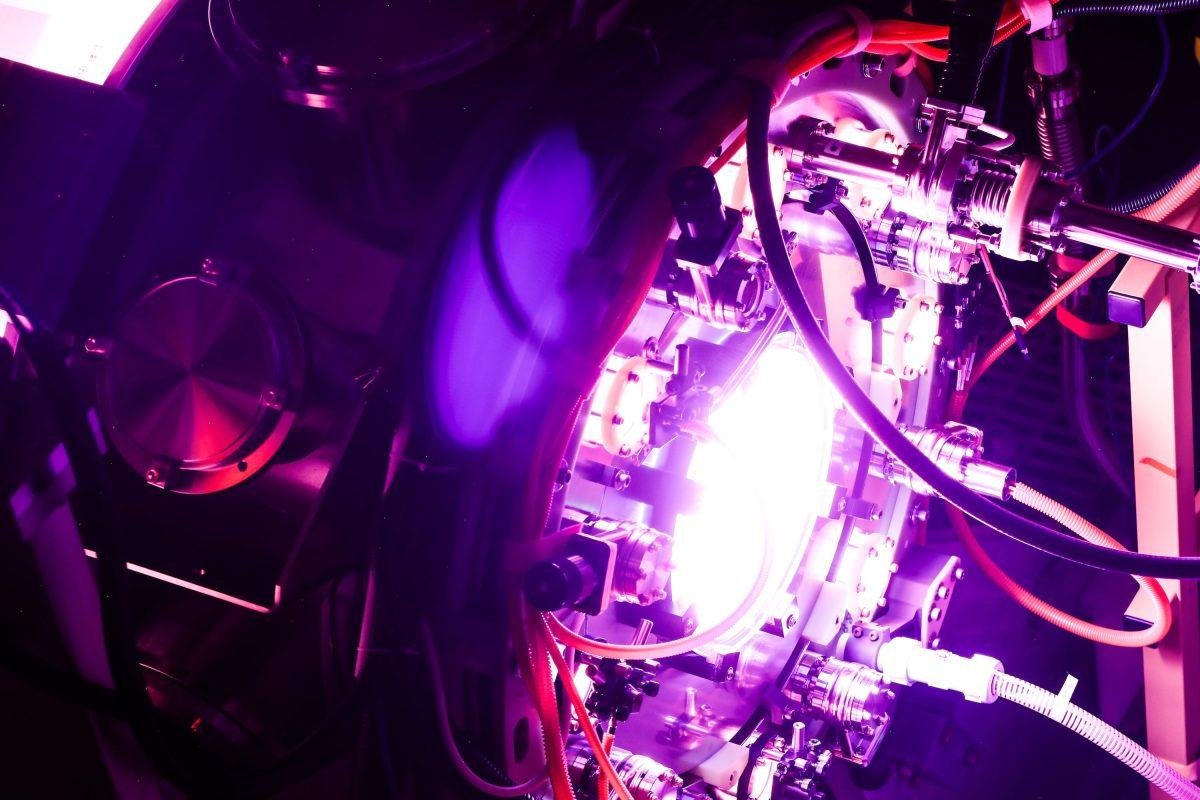
Helion is currently operating its Polaris prototype in advance of its push to commercial power. In February, the company generated plasmas inside the reactor that hit 150 million degrees Celsius, almost to the 200 million degrees Celsius the company thinks will be required for commercial operations.
Though Altman has reportedly stepped down from his position as chair of Helion’s board and recused himself from the discussions, his fingerprints are all over the matchmaking.
Last year, Altman stepped down as board chair of Oklo, a small modular nuclear reactor startup that had merged with his acquisition company, AltC. The move was intended to allow Oklo to explore strategic partnerships with leading AI companies, including potentially with OpenAI,” Caroline Cochran, Oklo’s co-founder and chief operating officer, said in a statement given to CNBC at the time.
Tim De Chant is a senior climate reporter at TechCrunch. He has written for a wide range of publications, including Wired magazine, the Chicago Tribune, Ars Technica, The Wire China, and NOVA Next, where he was founding editor.
De Chant is also a lecturer in MIT’s Graduate Program in Science Writing, and he was awarded a Knight Science Journalism Fellowship at MIT in 2018, during which time he studied climate technologies and explored new business models for journalism. He received his PhD in environmental science, policy, and management from the University of California, Berkeley, and his BA degree in environmental studies, English, and biology from St. Olaf College.
You can contact or verify outreach from Tim by emailing tim.dechant@techcrunch.com.
Προωθημένο
Διαφημίσεις
Διαφημίσεις
Διαφημίσεις
Κατηγορίες
Διαβάζω περισσότερα
Mogul says it has tracked $1.5B in music royalties, raised $5M in funding Music rights and royalties are a complex world. There are multiple types of royalties, and artists need to make sure that their data is updated across all platforms so they don’t miss out on potential earnings. For them, making sure that they have all the information in the right place while maintaining creative output is...
Your Phone Pinging Hijacks Your Brain for 7 Seconds, Study Finds It's tough to ignore the buzz of your phone when a new message arrives. Julian is a contributor and former staff writer at CNET. He's covered a range of topics, such as tech, crypto travel, sports and commerce. His past work has appeared at print and online publications, including New Mexico Magazine, TV Guide,...

Exciting news for curling fans! If you're eager to catch the action of the 2026 Winter Sports curling competitions, you can do so without spending a dime. There are various online platforms that will allow you to live stream the games from anywhere in the world. This means you won’t miss a single moment of the thrilling matches, whether you're at home or on the go. To watch curling for free,...

Fandango Amplifies Its Free Streaming Service in Major RebrandFandango, the company best known for movie ticket sales, has announced that it's consolidating its paid streaming service, Fandango at Home, into its overall brand. Gone is the "at Home" part, with the focus now on expanding its free, ad-supported streaming platform. The rebranded offering will expand its catalog of movies and TV...

Russian fuel shortages bite – but will Putin change tack in Ukraine war?If you want to get a sense of the fuel crisis gripping Russia, all you need to do is spend a day driving around Moscow. At almost every petrol station we passed there was a queue of cars and lorries. Some lines were long, some short; some static, others moving steadily.If there was no queue, that meant the garage had run...