Sam Altman-backed fusion startup Helion in talks to sell power to OpenAI
Sam Altman-backed fusion startup Helion in talks to sell power to OpenAI
OpenAI CEO Sam Altman is stepping down as board chair of the Helion — the fusion startup he backs — amid reported talks between the two companies.
The deal, which was reported by Axios, is in early stages, and it could guarantee OpenAI 12.5% of Helion’s production — five gigawatts by 2030 and 50 gigawatts by 2035. OpenAI partner Microsoft signed a similar deal with Helion in 2023 to buy power starting in 2028.
If the figures in Axios’ report prove to be accurate, it suggests that Helion expects to be able to rapidly scale production of its fusion power plant. The startup has said that each of its reactors will generate 50 megawatts of electricity, meaning it will need to build and install 800 reactors by 2030 and an additional 7,200 by 2035.
Helion wouldn’t confirm if talks with OpenAI were underway. A spokesman told TechCrunch the company has not announced any new customer agreements beyond those it already has with Microsoft and Nucor. However, the company did confirm to TechCrunch that Altman is leaving the board chair of Helion, suggesting that the two companies may eventually work together.
“Sam is stepping down from Helion’s Board of Directors after more than a decade. This decision enables Helion and OpenAI to partner on future opportunities to bring zero-carbon, safe electricity to the world,” David Kirtley, co-founder and CEO of the company, told TechCrunch in statement. “We look forward to continuing to work with him in this new capacity.”
Helion is racing to build its first commercial-scale reactor by that time. If the startup is successful, it would place it years ahead of the competition, which is mostly targeting early 2030s for commercial operations.
The startup raised $425 million last year from investors, including Altman as well as firms Mithril, Lightspeed, and SoftBank.
Most fusion startups are pursuing one of two approaches — harvesting heat from the fusion reactions and using a steam turbine to turn it into electricity. Helion is taking a different tack, developing a reactor design that would use magnets to convert fusion energy into electricity.
Techcrunch event
San Francisco, CA | October 13-15, 2026
Inside the hourglass-shaped reactor, fusion fuel is first turned into plasma at either end and then shot toward each other using magnetic fields. When they collide in the middle, another set of magnets compresses the merged plasma ball until fusion occurs. The reaction pushes back on the magnets, which can convert that energy directly into electricity.
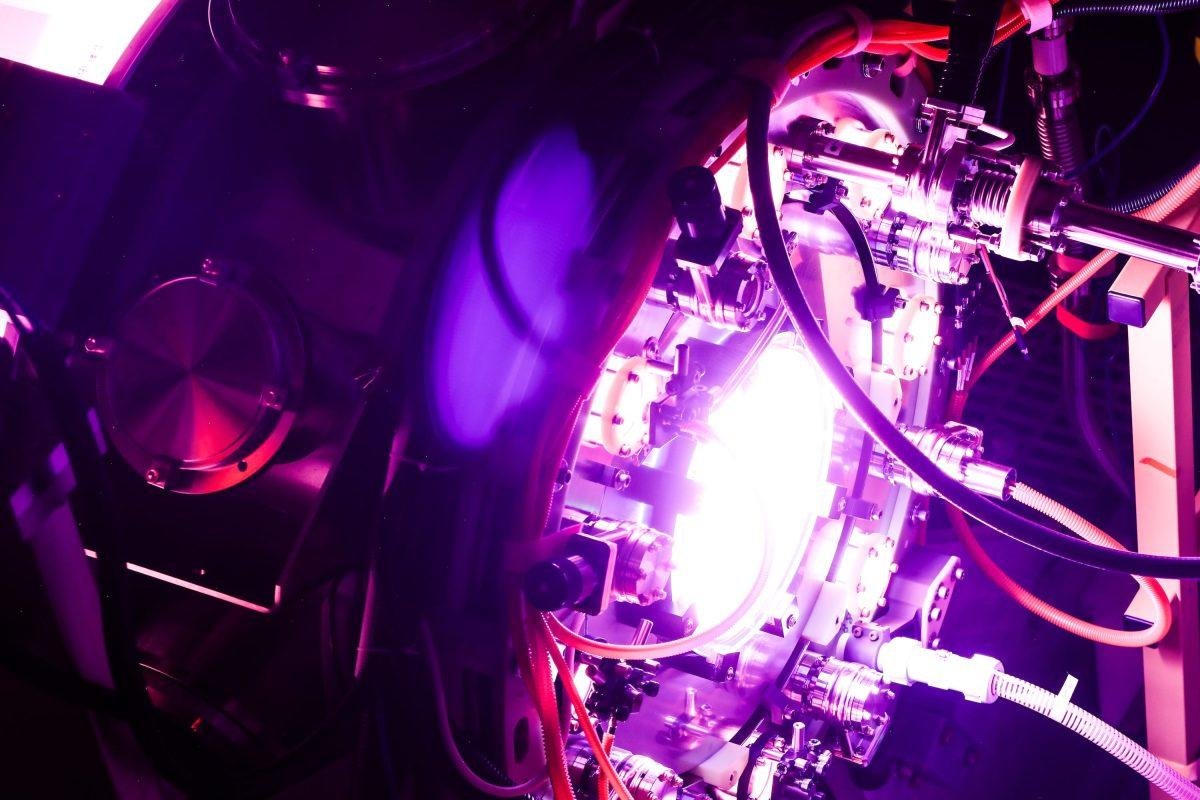
Helion is currently operating its Polaris prototype in advance of its push to commercial power. In February, the company generated plasmas inside the reactor that hit 150 million degrees Celsius, almost to the 200 million degrees Celsius the company thinks will be required for commercial operations.
Though Altman has stepped down from his position as chair of Helion’s board and reportedly recused himself from the discussions, his fingerprints are all over the matchmaking.
Last year, Altman stepped down as board chair of Oklo, a small modular nuclear reactor startup that had merged with his acquisition company, AltC. The move was intended to allow Oklo to explore strategic partnerships with leading AI companies, including potentially with OpenAI,” Caroline Cochran, Oklo’s co-founder and chief operating officer, said in a statement given to CNBC at the time.
Update 1:30 pm ET: Added confirmation from Helion regarding Altman stepping down as board chair.
Tim De Chant is a senior climate reporter at TechCrunch. He has written for a wide range of publications, including Wired magazine, the Chicago Tribune, Ars Technica, The Wire China, and NOVA Next, where he was founding editor.
De Chant is also a lecturer in MIT’s Graduate Program in Science Writing, and he was awarded a Knight Science Journalism Fellowship at MIT in 2018, during which time he studied climate technologies and explored new business models for journalism. He received his PhD in environmental science, policy, and management from the University of California, Berkeley, and his BA degree in environmental studies, English, and biology from St. Olaf College.
You can contact or verify outreach from Tim by emailing tim.dechant@techcrunch.com.
Sponsored
Sponsored
Sponsored
Sponsored
Ads
Categories
Read More
Today's NYT Connections Hints, Answers and Help for April 30, #1054 Why You Can Trust CNET Our expert, award-winning staff selects the products we cover and rigorously researches and tests our top picks. If you buy through our links, we may get a commission. Reviews ethics statement Here are some hints and the answers for the NYT Connections puzzle for April 30 #1054 CNET...

eBay’s bizarre cyberstalking saga ends with a $56 million settlementEmma Roth is a news writer who covers the streaming wars, consumer tech, crypto, social media, and much more. Previously, she was a writer and editor at MUO.eBay and three former executives will pay $55.7 million as part of a settlement with a Massachusetts couple targeted with a bizarre harassment and cyberstalking campaign in...

How Inflation Changes the Social Security Claiming Decision We research all brands listed and may earn a fee from our partners. Research and financial considerations may influence how brands are displayed. Not all brands are included. Learn more. Social Security benefits keep up with inflation via a cost-of-living adjustment (COLA) that is...

A married founder duo’s company, 14.ai, is replacing customer support teams at startups The customer service industry is in a bit of flux, thanks to AI. Investors and corporate leaders have rung alarm bells for the BPO (Business Process Outsourcing) industry. On the other hand, AI-powered customer support startups such as Decagon, Parloa, and Sierra have picked up millions of dollars in funding...
ICC top prosecutor removed over sexual misconduct allegationsMembers of the International Criminal Court (ICC) have voted to dismiss Karim Khan as chief prosecutor for alleged sexual misconduct.Elected the ICC's third prosecutor in 2021, Khan was suspended last month. The decision to removehim was passed with 82 votes in favour.The court's oversight body found in June he had committed a...