Arinna raises $4M seed round to solve the space power problem
Arinna raises $4M seed round to solve the space power problem
The space ambitions of nation states and billionaires alike demand better sources of power, and a new startup founded by two Stanford PhDs may have the answer.
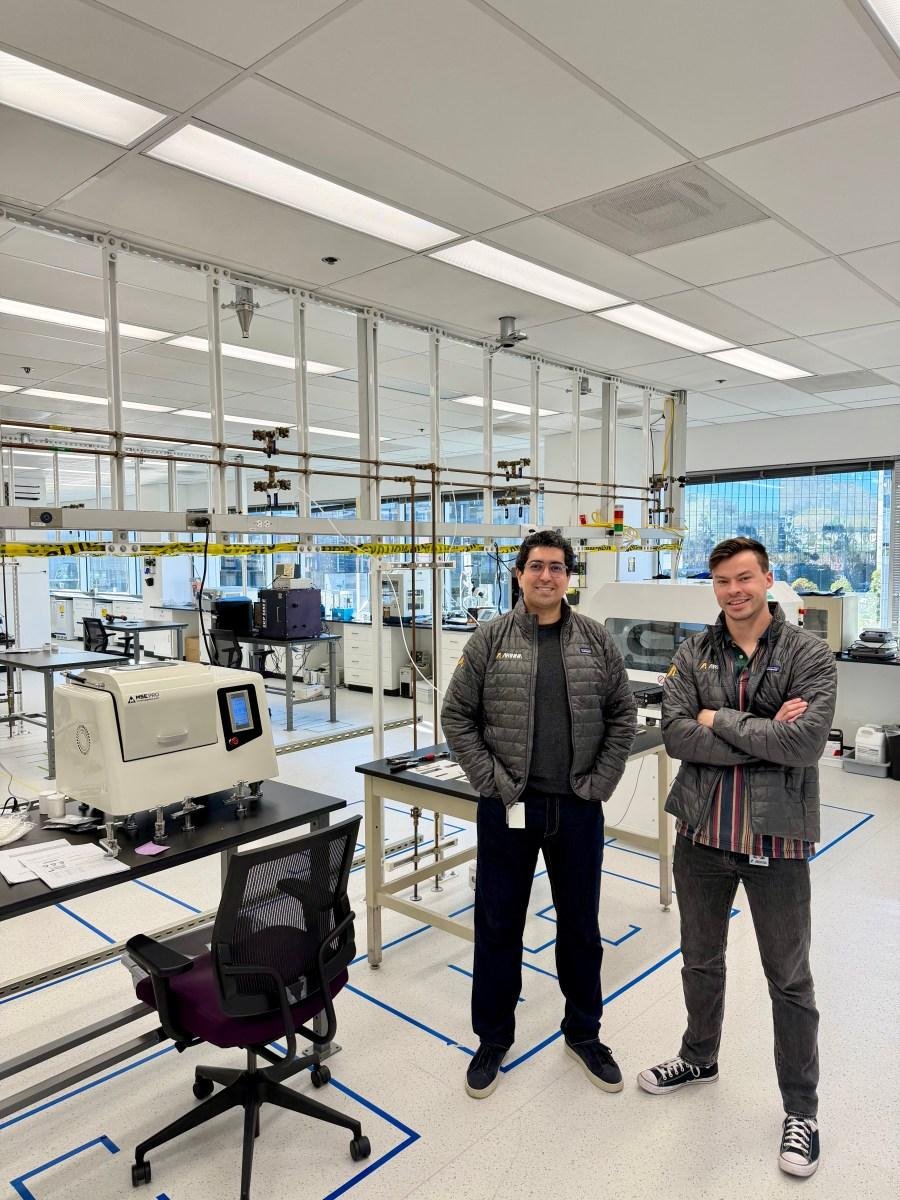
Arinna, founded by CEO Koosha Nazif and CTO Alex Shearer, said Wednesday that it had raised a $4 million seed round to build ultrathin solar panels from a brand new material developed during their doctoral research.
The capital raise was led by SpaceCadet Ventures, with participation from Anorak Capital and Breakthrough Energy Foundation; the company declined to share its valuation.
Arinna, named for the Hittite god of the sun and pronounced like arena, expects to have its first products being tested on orbit before the end of this year. After qualifying their photovoltaics in space, the company hopes to build a facility that can mass produce the stuff at megawatt scale in 2028.
“We are building qualification panels to send to our first customers that will demonstrate that these two dimensional photovoltaics have the efficiency and the durability to survive space,” Shearer said. “We’re going to prove that out at a larger scale over this next year, and in doing so, we are refining the processes necessary to make every single layer of our photovoltaic to produce these in a roll to roll fashion.”
Arinna builds solar cells specifically for spacecraft. In the pre-SpaceX world when most satellites were bespoke, spacecraft used expensive but hardy solar panels made of rare earth elements. With mass manufactured satellites, cheaper silicon panels are being used, but they degrade more quickly due to cosmic radiation.
Instead, Arinna’s technology is based on a new material — transition metal dichalcogenides, or TMDs, atomically thin semiconductors that have only been developed in recent decades. Arinna’s ultrathin solar technology allows for extremely flexible cells that the company claims are cheaper and more durable than legacy space solar panels.
Techcrunch event
San Francisco, CA | October 13-15, 2026
“A lot of solar development over the years are eking out slight percentage improvements on well-known and existing technology,” Ben Gaddy, a materials scientist and senior director at Breakthrough Energy, told TechCrunch. “This is a totally different class of materials.”

Nazif and Shearer met at Stanford while pursuing their doctoral research. Nazif’s work was in materials that could also be used to create photovoltaic cells as capable as traditional semiconductors, while Shearer developed techniques to produce those cells at scale. ”Koosha was very much the architect, and I am construction,” Shearer joked.
The company expects its photovoltaics will be far more flexible than traditional panels and 32% more efficient. Arinna’s technology also won’t require protective coverings, will last 15 years on orbit, and can be delivered within weeks, Shearer said.
These would be major upgrades over the current technology, as long as the company gets through its orbit test campaign this year without any surprises and can deliver on its mass manufacturing plans.
“What I’ve seen from all of the space companies we’ve invested in is that power is a barrier, a bottleneck,” Wiz Khuzai, a general partner at Space Cadet Ventures who led the round, told TechCrunch. “[Arinna] are going to be the unlock for the next generation of power needs in space.”
Tim Fernholz is a journalist who writes about technology, finance and public policy. He has closely covered the rise of the private space industry and is the author of Rocket Billionaires: Elon Musk, Jeff Bezos and the New Space Race. Formerly, he was a senior reporter at Quartz, the global business news site, for more than a decade, and began his career as a political reporter in Washington, D.C. You can contact or verify outreach from Tim by emailing tim.fernholz@techcrunch.com or via an encrypted message to tim_fernholz.21 on Signal.
Sponsorizzato
Sponsorizzato
Sponsorizzato
Sponsorizzato
Pubblicità
Categorie
Leggi tutto
Rihanna working on new music, says A$AP RockyRihanna could be set to break a decade-long album hiatus, according to her partner A$AP Rocky."She in the studio right now," the rapper said on the The Jason Lee podcast on Wednesday. Few details about the project were revealed, apart from a denial that the pair would collaborate on a double album. However, in response to questioning about about a...

Can the EU find a Russia whisperer to mediate an end to the war in Ukraine?58 minutes agoSarah RainsfordSouthern and Eastern Europe correspondentGetty ImagesFinnish President Alexander Stubb (right) said he "probably couldn't answer in the negative" if he were offered the task of mediating with RussiaUkraine is urging the EU to help negotiate an end to the war with Russia, a topic that will be...

Mark Zuckerberg texted Elon Musk to offer help with DOGE In Brief Posted: 2:23 PM PDT · March 28, 2026 Image Credits:Chris Unger/Zuffa LLC While the relationship between Elon Musk and Mark Zuckerberg was once thorny enough that Musk challenged Zuckerberg to a cagefight, things had warmed up by the early days of the second Trump...

AI hedge fund Situational Awareness may have sold its public portfolio, but it still has its Anthropic shares Situational Awareness, a hedge fund formed by former OpenAI researcher Leopold Aschenbrenner, has sold the majority of its public stock portfolio to Ken Griffin’s Citadel following steep losses over the past month, The Wall Street Journal reported earlier on Thursday. It’s a big...
Venezuela signs deal with US energy giant to rebuild energy grid33 minutes agoVanessa BuschschlüterLatin America online editorJuan BARRETO / AFP via Getty ImagesVenezuelans have endured frequent and lengthy power cuts in past yearsVenezuela's interim president has signed an agreement with US energy giant General Electric to rebuild the country's electricity grid.Delcy Rodríguez, who was sworn...