Hugo Bachegaand Samantha Granville,in Saksakiyeh, southern Lebanon

 BBC
BBC
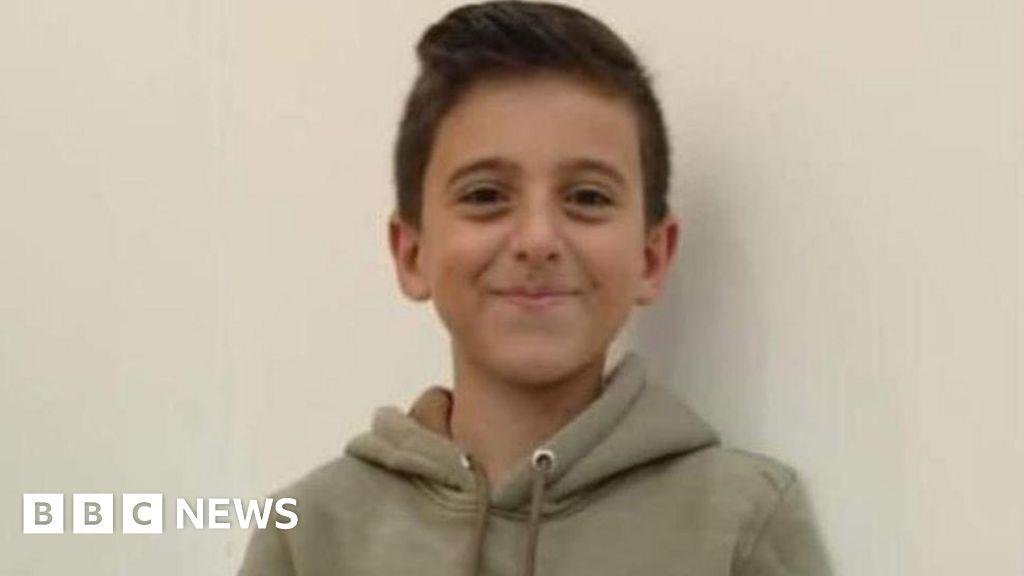
A funeral has been held in a southern Lebanese village for an 11-year-old boy and his uncle who were killed in an Israeli air strike.
Jawad Younes and his uncle, 41-year-old Ragheb Younes, were laid to rest in Saksakiyeh on Saturday after their family compound was hit a day earlier.
They are among the latest casualties in Israel's offensive against the Iran-backed armed group Hezbollah, after the group fired rockets into Israel earlier this month amid the war between the US and Israel against Iran.
Lebanese health officials say more than 1,100 people have been killed since the escalation began, with civilians increasingly caught in the crossfire.
The Israeli military did not respond to a request for comment on the intended target of the strike that hit the Younes family compound.
Hundreds gathered in Saksakiyeh town centre for Jawad and Ragheb's funeral.
Women dressed in black robes wailed over the bodies, one of which was draped in Hezbollah's yellow flag - a reflection of the group's support in this largely Shia area.
Malak Meslmani, Jawad's mother, sat beside her son's body with tears streaming down her face.
"My son is gentle and pure," she told the BBC.
"He loved the idea of martyrdom, and when he grew up, he wanted to be with the resistance.
"He wanted to resist the enemy Israel who killed him."
As the funeral procession made its way to the grave site, the sound of Israeli air strikes echoed in the distance. Plumes of smoke rose above nearby hilltops.
The strike on the Younes family home happened shortly after 13:00 (11:00 GMT) on Friday. Jawad's father, Hussein Younes, said his son had been playing football with his nine cousins at the time.
Standing in front of the ruins of his home, Jawad's father threw his hands in the air, and shouted: "I don't know! I don't know!", when asked why the Israeli military had targeted the house.
"If this was a military base, no kids would be here," he told the BBC.
The BBC spoke to multiple members of the family and local council members who all said the family had no involvement with Hezbollah militarily.
Five people survived the attack, and those wounded were taken to a nearby hospital. Among them was Jawad's aunt, Zeinab.
"Before it happened, me and my husband were inside," she said, speaking through tears from her hospital bed.
"We didn't see anything, and we didn't hear anything... Then I found myself under a pile of rubble."
Zeinab is being treated for a broken spine and a fractured leg. Doctors say they are hopeful she will walk again, but she is likely to require extensive surgery.
She said there had been no warning ahead of the strike, and that the family would have fled had they been alerted.
Jaward and Ragheb's burial comes just a day after another family in the same neighbourhood buried two children and their mother. They were also killed in Israeli bombardment amid another wave of deadly strikes across southern Lebanon.
On Saturday, three Lebanese journalists were killed in what authorities described as a targeted Israeli strike on their media vehicle, including Ali Shoeib, a well-known correspondent for Al Manar TV, a station affiliated with Hezbollah.
The Israeli army described him as a Hezbollah member who had been exposing Israeli military positions in southern Lebanon, without providing evidence to support the claims.
Lebanon's President, Joseph Aoun, condemned the attack as a "blatant crime" that violated all norms under which journalists should be protected during war.
The Committee to Protect Journalists has previously accused Israel of repeatedly killing media professionals while alleging they were militants without providing credible evidence.
Also on Saturday, an Israeli air strike killed five paramedics in the town of Zoutar. Human rights groups say Israel's repeated attacks on healthcare workers in Lebanon could amount to war crimes.
Since 2 March, Israeli air strikes have battered towns and villages across Lebanon, while ground forces continue to advance in the south as part of an ongoing offensive. Israel says its operations are aimed at Hezbollah targets, but civilians are frequently among those killed.
On Friday, the UN's refugee agency warned that Lebanon was facing a worsening humanitarian crisis that could become catastrophic, with more than one million people now displaced.
Lebanon remains trapped in a cycle of violence, with Israel and Hezbollah both vowing to continue the fight despite the mounting human cost.
Many, like the surviving members of the Younes family, say they are willing to pay the price.
"We are not afraid of the war, because we are not afraid of death," Zainab's son Ali said.