Tokens: Everything, Everywhere, All at Once?
Tokens: Everything, Everywhere, All at Once?
As the world talks more and more about “modernizing” existing financial market infrastructure, Nasdaq's new white paper estimates that 52% of institutions expect to be using tokenized collateral by the end of 2026.
It seems that everything can be a token, and they can be everywhere, all at once.
But the more you look, the less things look the same.
Tokens can be many things
One thing is clear: Tokens can be many different things.
Tokens range from non-fungible tokens (NFTs) like “Bored Ape” to cryptocurrency, which itself ranges from Dogecoin to bitcoin to stablecoins, and more recently, company stocks. That’s something investors (and companies that might see their stock trading in token form) probably don’t yet appreciate.
SEC announced a token taxonomy
In November 2025, the U.S. Securities and Exchange Commission (SEC) Chair Paul Atkins gave a speech that laid out his vision of a token “taxonomy” to address the fact that everything was being called a token.
Given the SEC regulates “securities,” the taxonomy started based on the premise that “not all tokens are securities.” For instance, the SEC issued a statement that a “meme coin,” a type of crypto asset inspired by internet memes, characters, current events or trends, is not viewed as a security since it does not involve the offer and sale of securities under the federal securities laws. Rather, this taxonomy is centered on the time-tested “Howey Test,” where, to qualify as a security, a contract must satisfy four requirements:
- Investment of money: There must be an initial outlay of capital or other consideration of value.
- Common enterprise: The investor's money is pooled with that of other investors in a common venture, creating interdependence among participants.
- Expectation of profits: Investors must expect to earn returns on their investment, whether through capital appreciation or income distribution.
- Profits derived from the efforts of others: The profits must result primarily from the work and management of a third party (the promoter or operator), rather than from the investor's own efforts.
In that setting, NFTs or cryptocurrencies don’t qualify as securities (as there are no “efforts of others,” like a company’s employees). In fact, Chair Atkins divided the digital world into four categories, only one of which are securities:
Table 1: Token Taxonomy

Valuing assets the old-fashioned way
For those of us in the markets:
- We know that not all securities need to pay dividends, the expectation of a capital gain is also “profit.”
- But we are also used to being able to calculate an underlying “fair value,” even if it represents some future cashflows with in-exact discounting valuation math.
Not all cryptos have assets backing them
Cryptocurrency has been held out as a potential medium of exchange – just like money. But crypto does not gain from the “efforts of others.” So, it’s not a security.
However, a subset of “cryptocurrency” is backed by actual money (aka stablecoin – like USDC). How these cryptocurrencies work in the U.S. is covered in the U.S. GENIUS act.
As we see in the chart below, stablecoins are just a fraction of total market cap of all crypto, even after the recent sell-off in many cryptocurrencies.
Chart 1: Cryptocurrency market cap over time

The majority of other coins may someday have utility — potentially in settlement and trade. But they only have value because markets say it does.
Bitcoin is somewhat unique because of the relatively expensive cost of mining and limits on the supply of tokens, which in theory supports scarcity and value.
Security tokens aren’t that different from traditional ETFs, ADRs, futures or swaps
Turning to the tokens that represent public companies (securities), as the market evolved, we see that they can take multiple forms.
A “native token” = A stock in digital form
Right now, when an investor owns Apple or Amazon in the U.S., it is recorded in a database owned by DTCC. That’s “digital” but not on Distributed Ledger Technology (DLT).
The owners of stocks have rights to vote and receive dividends.
It is possible a company stock could be represented on a blockchain database instead (or Nasdaq as well*). In that case, a buyer of the token should also have rights to vote and receive dividends. Although the settlement of the token can be “atomic” and the custody might be in your personal wallet.
Chart 2: An issuer-backed token represents a share in the company

*A DTCC-sponsored token would, in principle, work the same way – even if the token needed to be converted back into a private (DTCC) ledger – as it would represent a share of the actual company. However, it’s important to note that DTCC tokens are not native tokens; they are entitlements to the shares held in DTCC’s custody, meaning the token itself is not the actual share.
An Asset-Backed Token - Similar to an ETF or ADR
A fund or bank could accept investor inflows, buy underlying stock and issue tokens over those holdings.
These “tokens” would actually work very much like ADRs and ETFs work these days.
Buyers and sellers would know the “fair” value for the token – being the value of the underlying company(ies).
Chart 3: An asset-backed token looks more like an ETF or ADR today

For these tokens, the costs and ability to arbitrage would be important to ensure investors' prices are comparable to buying the stock directly.
Importantly, even if the underlying can be “created/redeemed” frictionlessly, there will be a difference in fair value thanks to atomic settlement. That’s because a buy of token would need to pay for their trade immediately, while the buyer of the stock gets to earn interest on their money for an extra day (until T+1 settlement).
Things get more complicated and expensive if different tokens on the same stock are not fungible, or transfer costs are high. In those instances, market makers might need to hold (and finance) a long position in one token, and a short position in another for an indefinite period of time.
At the extreme, if there is also no way to convert the token into the underlying asset (create or redeem), these tokens may trade more like closed-end-funds – with persistent premiums (or discounts).
Additionally, in third party-backed vehicles (like special purpose vehicles or SPVs), investors are exposed to the credit risk of the SPV, since the value of the token depends on the token issuer’s (SPV’s) ability to honor redemptions or maintain the backing assets. The use of leverage in these structures can further amplify both gains and losses, increasing the potential for volatility and systemic risk if the issuer faces financial difficulties or market conditions deteriorate.
An Unbacked Token - Similar to a Future or Swap
One of the most liquid financial instruments in the world today holds no underlying exposure – and that’s futures.
Instead of holding the underlying company or asset, financial futures have “open interest” – an equal number of buyers and sellers wanting economic exposure to an asset.
Chart 4: Tokens without any asset backing work more like futures or swaps do today

The economics of the underlying are retained by futures expiry. At that time, the profit on each position is determined based on the underlying asset and cash (or the underlying security) is exchanged between buyers and sellers.
One key utility of futures, including perpetual futures, is that they allow market participants to efficiently hedge risk or speculate on price movements without owning the underlying asset. Perpetual futures provide ongoing exposure without a set expiration date, and margin requirements are essential as they help manage risk and ensure participants maintain sufficient collateral to cover potential losses.
Consequently, continuous public prices for the underlying asset are critical to ensure the contract roughly tracks the price of the underlying asset.
However, we have already seen “token” derivatives issued over private companies – like the Space-X token. Interestingly, in this instance, the company itself said it had nothing to do with the token.
Valuing private companies creates complications. Tokens on illiquid assets will have less frequent “margin calls,” which may expose investors to single party credit risks – more like how swaps sometimes work.
Everything, everywhere, but also very different things, all at once
It seems, for now at least, that everything can be tokenized.
And regulators around the world have started to clear the way for investments like stocks, bonds and funds to trade in a tokenized form.
Call it DeFi, and disruption, but in many ways these structures aren’t that different to things we have been trading for decades. It's just that now we call them a lot of different things that help investors understand how they work.
The word “token” can actually mean many different kinds of exposures. That’s something that regulators (and investors) need to account for when making rules (and investment decisions).
Knowing how markets and arbitrage work, it’s likely to be important that investors know the difference.
Sponsored
Ads
Ads
Ads
Categories
Read More
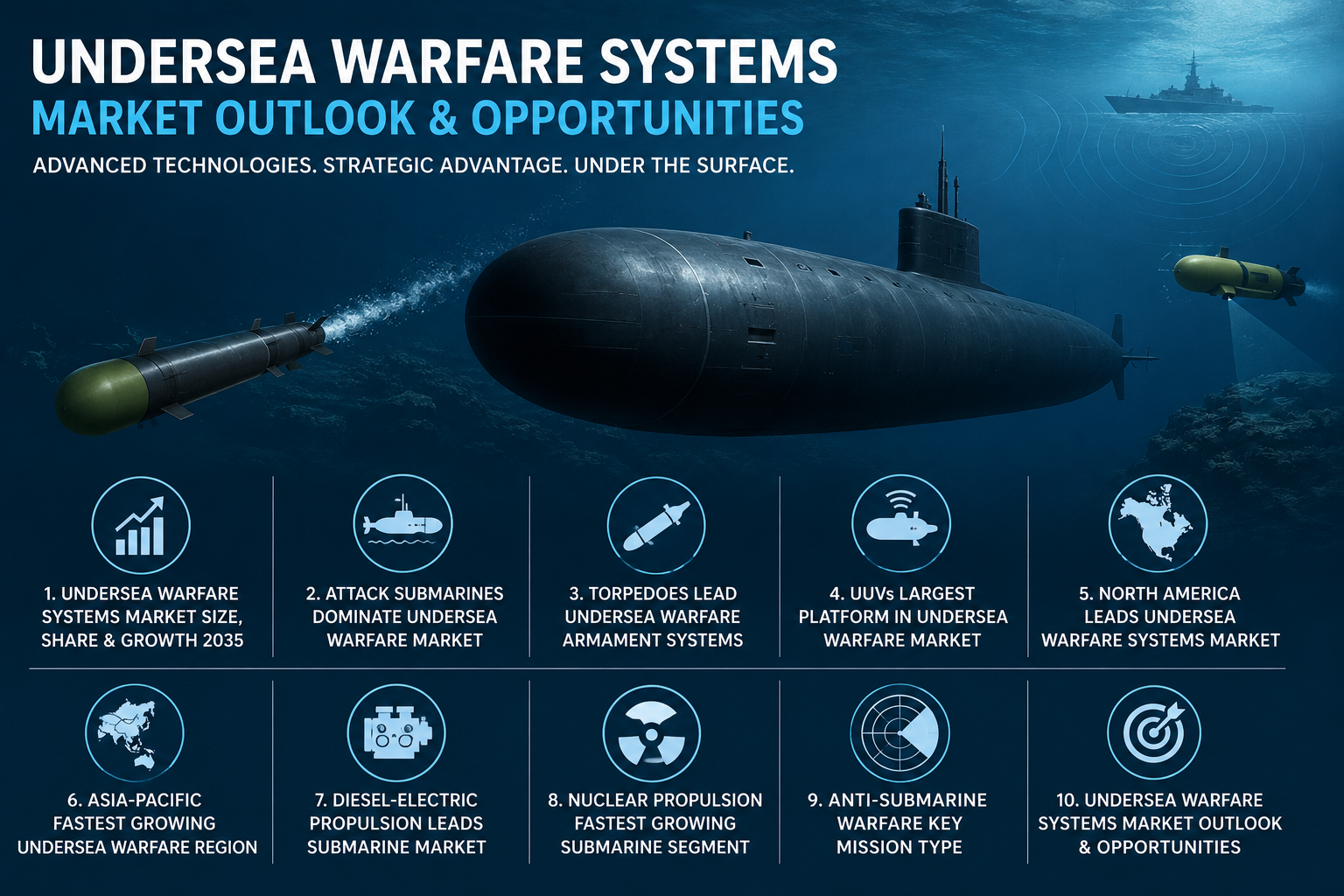
Nuclear propulsion is the fastest-growing segment in the submarine propulsion category of the Undersea Warfare Systems market, driven by its unparalleled endurance and operational capabilities. As per Market Research Future, while currently holding a smaller share compared to diesel-electric systems, nuclear propulsion is recognized for its unmatched endurance and speed on long missions....
Att titta på svenska TV-kanaler utomlands är en av de vanligaste utmaningarna för svenskar som bor eller reser utanför Sverige. Oavsett om du är expat i Spanien, Tyskland, USA, Dubai eller Thailand vill de flesta behålla kontakten med SVT, TV4, Kanal 5, Allsvenskan, SHL och svenska nyheter. Denna Svensk TV streaming guide går igenom de...

When you shop the auction house, you have two ways to NBA 2K27 MT buy: pay the Buy Now price or win a bidding auction. Each has advantages. This guide compares them so you always pick the right approach. What Buy Now Offers Buy Now gives you the card instantly at a set price. There is no waiting and no competition. You know exactly what you are paying the moment you click. What Bidding Offers...

U.S. lifts blockade on Iranian ports as 60-day clock for a final deal starts ticking In this picture obtained from Iran's ISNA news agency on Thursday, vessels are seen anchored in Bandar Abbas along the Strait of Hormuz....

Psykisk hälsa är en viktig del av människans välbefinnande och påverkar hur vi tänker, känner och fungerar i vardagen. När vi mår bra psykiskt blir det ofta lättare att hantera arbete, studier, relationer och vardagliga utmaningar. Men ibland kan stress, oro, nedstämdhet eller andra psykiska besvär börja påverka livet...