The foreign fighters who helped topple Assad — and why China worries about them
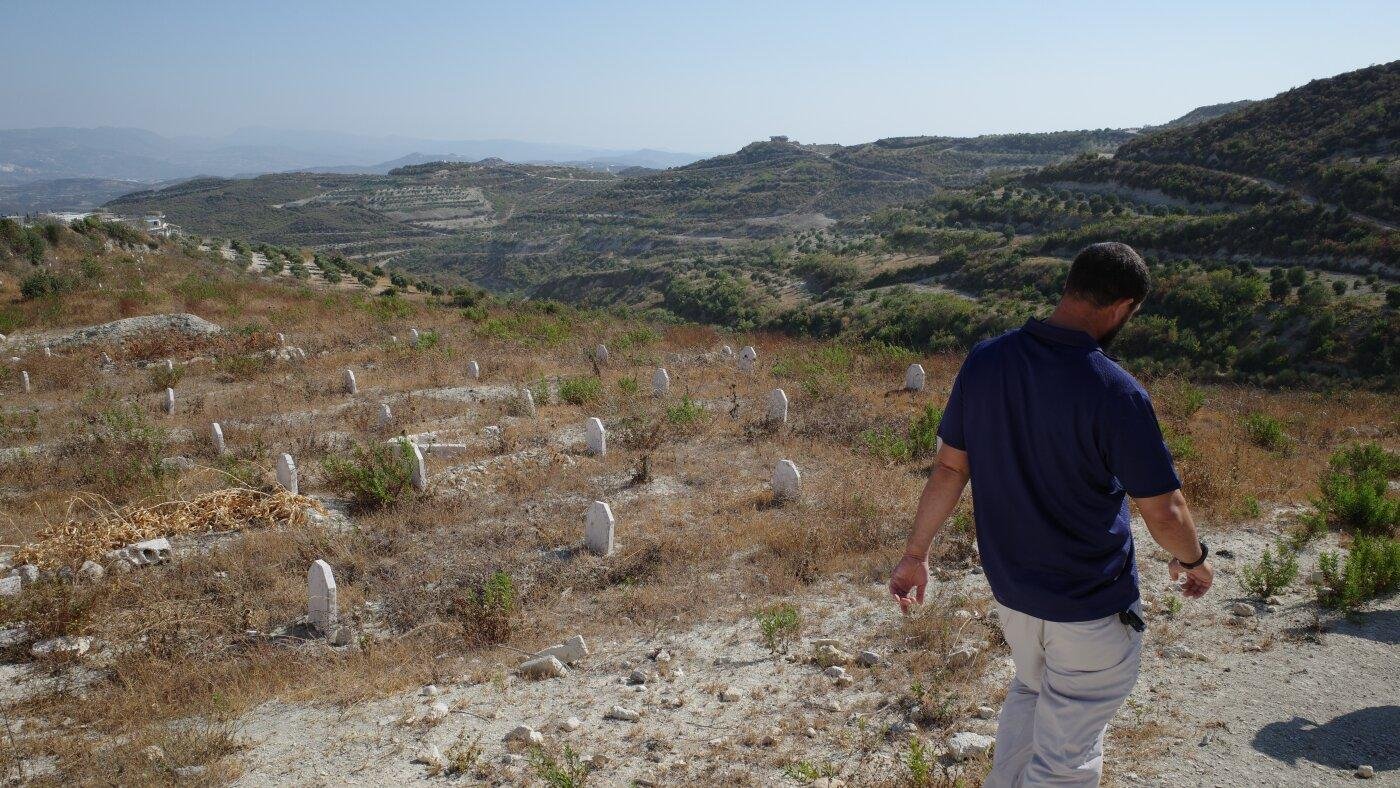
The foreign fighters who helped topple Assad — and why China worries about them
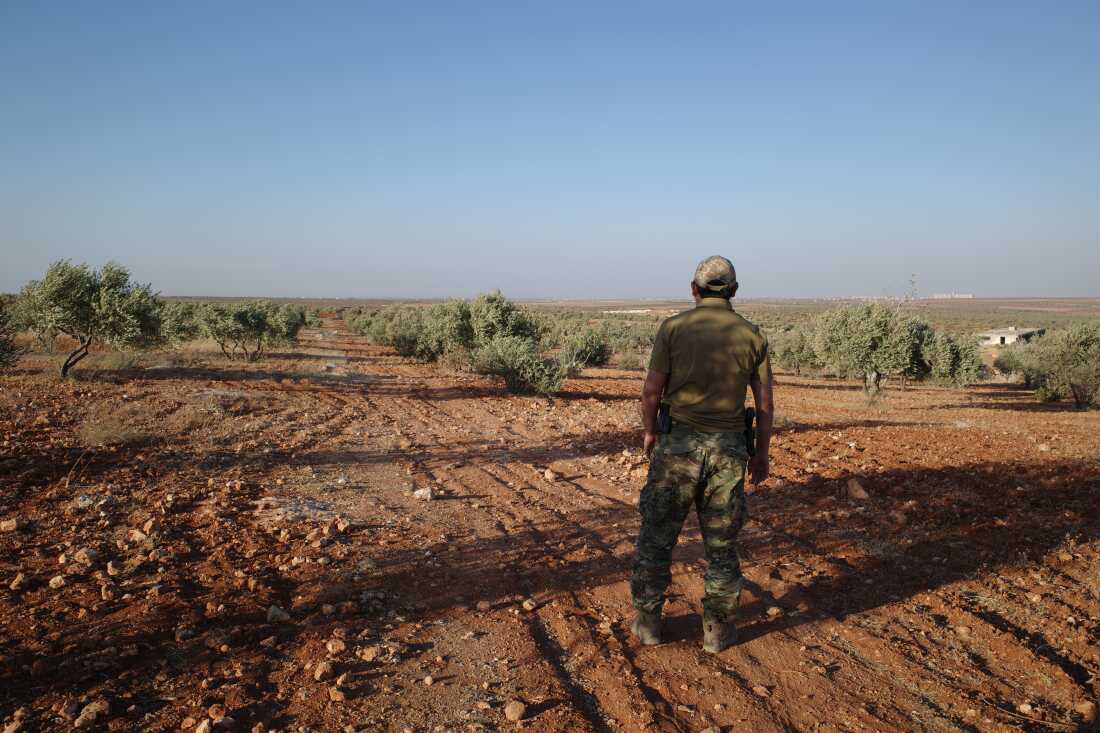
A senior Uyghur militant stands in an olive grove in northern Syria, where Uyghur commanders say their fighters began an ultimately successful assault on Syrian regime forces in November 2024. Emily Feng/NPR hide caption
toggle caption
Emily Feng/NPR
JISR AL-SHUGHUR, Syria — The plan was daring: Under cover of night, an elite group of forces would ambush Syrian government soldiers and cut off strategic supply lines supporting the regime-held northern city of Aleppo.
For months, the fighters had been quietly clearing a disused water tunnel just over 2 miles long, deep behind enemy lines in the countryside around Aleppo.
During a secret meeting with Ahmed al-Sharaa — then the leader of the rebel group Hayat Tahrir al-Sham and now the leader of Syria — they agreed to prepare a joint assault to liberate Aleppo from regime control.
These elite fighters were not from Syria. They were Uyghurs — a largely Muslim ethnic minority long persecuted in China. And when the offensive kicked off one night in November 2024, they went to work.

Hobayd, a senior commander of the Uyghur militants in Syria, crouches in a strategic tunnel used during the 2024 offensive against then-President Bashar al-Assad's regime. Emily Feng/NPR hide caption
toggle caption
Emily Feng/NPR
One unit of soldiers wearing oxygen tanks stationed itself in the poorly ventilated tunnel, which at points was less than a yard high. A second unit lay in wait in olive groves facing Aleppo.
At dawn, the unit in the tunnel emerged behind regime troops, while the second unit hit from the front, causing the government troops to scatter in panic. Meanwhile, other rebel units from various militant groups began attacking Aleppo itself. Within days, Syria's once-largest city was in rebel hands.
"We remained steadfast. Miraculously, all the brothers who charged into death itself came out alive," remembers Hobayd, 31, the commander of the unit inside the tunnel. He recalls the weeks that followed when they chased army soldiers all the way to Syria's capital, Damascus. "Every one of us survived and witnessed the liberation of Syria."

A man in Aleppo, Syria, on Dec. 8, 2024, holds Syrian opposition flags as he celebrates after Syria's army command notified officers that Assad's 24-year authoritarian rule had ended, following a rapid rebel offensive that took the world by surprise. Karam al-Masri/Reuters hide caption
toggle caption
Karam al-Masri/Reuters
Just over a week after Aleppo fell, Syria's recently toppled dictator, Bashar al-Assad, fled to Russia: "From Aleppo, our way to Damascus was clear," adds Hobayd.
This is the story of how the Uyghurs, a Turkic and predominantly Muslim ethnic minority spread across Central Asia but concentrated in China's far-western Xinjiang region, eventually became the largest contingent of foreign fighters in Syria.
"They've been some of the key fighters that have been associated with Hayat Tahrir al-Sham prior to the fall of the [Assad] regime and had an outsized role" in the civil war, says Aaron Zelin, a researcher at the Washington Institute for Near East Policy. "In many ways, they're some of the most battle-hardened folks [in Syria]."
Yet the secretive Uyghur community in Syria has not agreed to grant interviews — until now. Over the course of a month, more than 40 fighters and their families spoke to NPR.
In the rebel-held north, they rapidly established themselves as highly disciplined and effective fighters who would take on tasks that other rebel groups failed to accomplish. Their role in critical battles in the country's nearly 14-year-long civil war helped Sharaa, Syria's current leader, cement enough power to eventually push out the Assad regime.
In gratitude, the new Syrian government this year integrated the largest Uyghur militia into the reconstituted Syrian National Army and appointed several Uyghur commanders as officers within the new defense ministry. There is talk of giving some of the Uyghurs Syrian citizenship.
Despite their clout within the new Syrian government, the Uyghurs' position in Syria is tenuous. Some Syrian Arabs view them and other foreign fighters with suspicion and fear.
Meanwhile, China has ramped up diplomatic pressure on Syria to expel the Uyghurs. For much of the last quarter century, Beijing has considered all Uyghur militants abroad as terrorists and has repeatedly accused Uyghur movements of inspiring or instructing thousands of terrorist attacks, some deadly, inside China over a three-decade period.

This photo taken on May 31, 2019, shows a facility believed to be a reeducation camp where mostly Muslim ethnic minorities are detained, on the outskirts of Hotan in China's northwestern Xinjiang region. Greg Baker/AFP via Getty Images hide caption
toggle caption
Greg Baker/AFP via Getty Images
Chinese authorities have also cracked down on Uyghurs at home, in the Xinjiang region. Starting in 2017, authorities began sending hundreds of thousands of Uyghurs to "reeducation camps," where they were taught Mandarin and forced to memorize Chinese leader Xi Jinping's speeches, according to human rights organizations. Others were placed under house arrest, harassed or subject to extensive surveillance, or had their passports confiscated, according to prior NPR reporting and the findings of the United Nations and rights groups. In 2021, the U.S. labeled China's campaign a "genocide" aimed at eradicating Uyghur identity. Beijing slammed that decision and has defended the detention camps as a necessary facet of a wide-ranging de-radicalization effort in the region.
Loading...
China, a permanent member of the U.N. Security Council, has for now refused to lift terrorism sanctions on Syria, arguing that the country's government must first deal with its Uyghur fighters.
Many of the 40-odd Uyghur fighters and their families that NPR spoke to for this story — all of whom requested that they be identified by only their first names to protect remaining family members in Xinjiang from reprisals by Chinese authorities — say they fled to Syria and fought the way they did because of their deep hatred of the Chinese government.
They say they now hope to preserve their culture and perhaps one day raise an army powerful enough to seize control of Xinjiang, or East Turkestan as the Uyghurs call it, the region that the Uyghurs consider their homeland and that the Chinese Communist Party took control of in 1949.
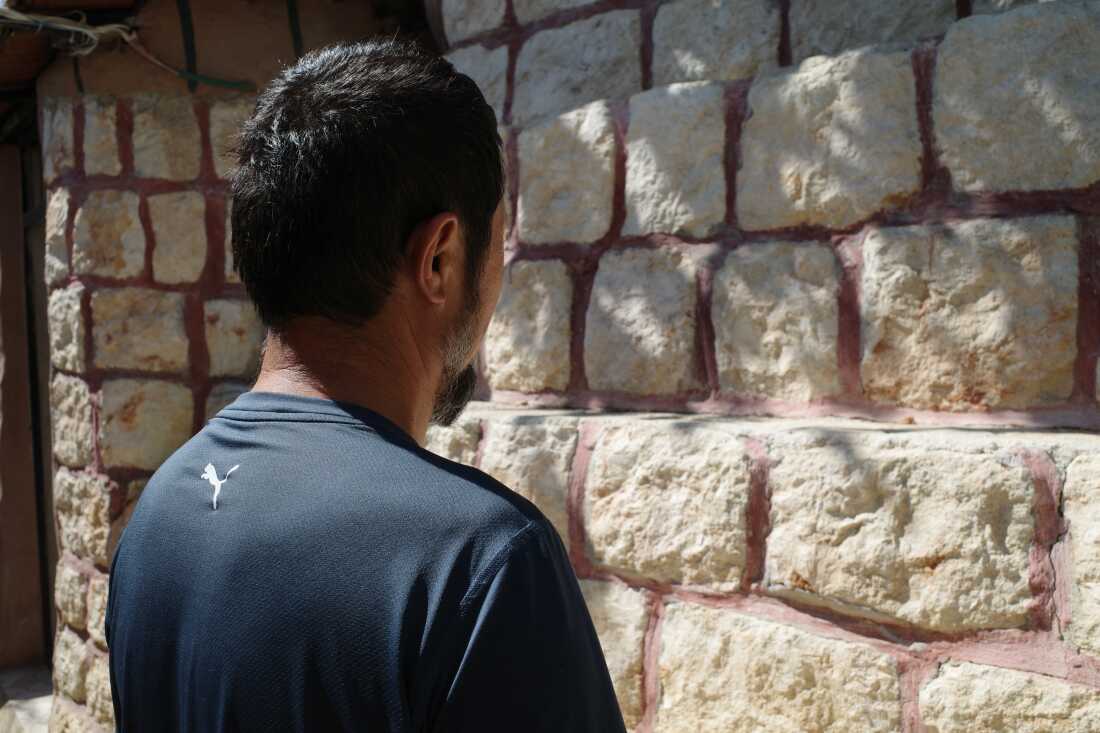
Nurmemet, a Uyghur militant, went to Syria to learn how to use arms after encountering what he described as extreme repression against Uyghurs in China. Emily Feng/NPR hide caption
toggle caption
Emily Feng/NPR
"Our boys, because of their deep and overflowing hatred toward the Chinese — their resentment had grown so intense — they had this stubborn courage, fearless of death, pure-hearted and determined," says Nurmemet, 40, a Uyghur fighter. "The Syrians explained the oppression they had suffered — how they had been tormented by Bashar al-Assad's regime. We thought: If we could first rescue these people from this oppression … perhaps Allah would one day rescue us from China's oppression as well."
China's Ministry of Foreign Affairs and China's cabinet, the State Council, did not respond to questions submitted by NPR in the preparation of this story.
"They drove us out"

A former Uyghur fighter in Syria looks at a Uyghur-language map of the world, which depicts the region of Xinjiang as a separate country, rather than as a part of China. Emily Feng/NPR hide caption
toggle caption
Emily Feng/NPR
In a villa inside a walled compound in the Syrian countryside, Choghtal, 36, deputy commander of the Uyghurs in Syria, recounted how he decided to leave his family and his life behind in China to join a war in Syria.
Choghtal is diminutive and has the manner of someone more suited to an office than a battlefield. He had been a star student in high school and hoped to study chemistry or physics. But he says he rethought his future after July 5, 2009, when police aggressively dispersed Uyghur students protesting in Xinjiang's capital, Urumqi. The students were demanding that authorities investigate a factory brawl from the prior month in southern China, in which two Uyghur men were allegedly beaten to death by ethnic Han workers. The Han are China's largest ethnic group, and they constitute the majority of its population.
The police's alleged heavy-handedness while dispersing the crowds unleashed a violent Uyghur rampage against police and Han civilians on the streets of Urumqi, instigating, in turn, Han reprisals on Uyghurs, who then fought back. From his hometown in southern Xinjiang, Choghtal says, he watched in horror as the spiral of violence unfolded, from the videos his friends in Urumqi sent him.

Uyghur women grab a riot police officer as they protest in Xinjiang's capital, Urumqi, on July 7, 2009. Peter Parks/AFP via Getty Images hide caption
toggle caption
Peter Parks/AFP via Getty Images
The Chinese government estimates that the riots killed at least 192 people, about two-thirds of them Han. Uyghur rights advocates claim thousands of Uyghurs may have died. Hundreds of mostly young Uyghur men were arrested in the ensuing security crackdown. Choghtal began looking for ways to leave the country.
"If I had not left China, I would have died in prison," he says. "They forced me to leave. They drove us out."
Aspects of his story were echoed by the Uyghur fighters and their families whom NPR interviewed in Syria. In their interviews, the Uyghurs described decades of Chinese state repression and state controls that they say led them to believe armed resistance was the only viable way to protect their rights.

People walk past burned-out cars and buses in a street in Urumqi on July 6, 2009, following deadly rioting. The violence in Urumqi on July 5, 2009, involved thousands of people and triggered an enormous security crackdown across Xinjiang, where tensions have long simmered amid Uyghur claims of repressive Chinese rule. Peter Parks/AFP via Getty Images hide caption
toggle caption
Peter Parks/AFP via Getty Images
"Can slogans alone free [my family]? Can I liberate them by mere words or empty statements? China will not stop just because we complain," says Yasir, 37, who is from the ancient Silk Road city of Kashgar.
Some of the older fighters described losing their faith in the efficacy of political activism after Chinese government crackdowns following Uyghur uprisings in 1990, against state-mandated birth control policies, and again in 1997, in protest of a state security campaign.
But most of the Uyghurs in Syria, even those who had been educated within elite Chinese institutions, say the events of July 2009 made them lose faith in China's stewardship of the region and galvanized them to take up arms.
"So many tensions have erupted between Uyghur and Han people, and we used to be colleagues, but after July 5, Han people looked at us [Uyghurs] with scrutiny, as if any one of us would pick up a knife and stab you, which hurt my heart greatly," Guli, a Uyghur doctor in internal medicine, remembers telling one of her Han Chinese supervisors in Xinjiang. She says persistent ethnic discrimination made it impossible for her to do her job well. In the years afterward, her husband became a fighter in Syria and she trained as a war surgeon.
The only way to regain that dignity, according to Uyghurs like Choghtal, was to train to fight and perhaps have the opportunity one day to wrest control of Xinjiang away from the Communist Party.
"We are in fact a nation of our own, that we once had a glorious history and that we were not originally a humiliated or oppressed people. It only became so after the Chinese came and conquered us," says Choghtal.
The fighters say they felt that the Chinese government's policies had to be met with equal brutality and left them no alternative but to take up arms.
"The reason we came here today, taking up arms in foreign lands, the reason we walk with death next to us — China is responsible. China forced us into this," says Moaz, 55, a fighter.
He and most other Uyghurs first headed to Turkey, home to a large Uyghur diaspora community. But many Uyghurs were unable to secure residency documents in Turkey and feared deportation to China. In 2012, they began trickling into northern Syria through Turkey's largely porous southern border.
There in Syria, around the northern city of Idlib, a loose coalition of thousands of Uyghurs and their families began to settle down.
Establishing a stronghold
Sponsorluk
Reklam
Reklam
Reklam
Kategoriler
Read More
Fi Releases the First Pet Collar to Use Starlink to Track Pets Anywhere They GoWhere I live in Oregon, mountain trails and dog owners abound, but cell towers aren't available to use traditional pet tracking collars. Fi's latest Ultra collar, released on Wednesday, offers a unique solution: a Starlink-powered connection that can update you on your dog's location, even when you're camping or...
Prediction Markets Have an Insider Trading Problem. Are They Still Worth the Gamble? A press briefing cut suspiciously short. A long-shot bet on the former Venezuelan president's downfall made just hours before his capture. A flood of trades from brand-new accounts predicting a ceasefire with Iran. As prediction markets like Kalshi and Polymarket...

Disney Plus is reportedly looking into a free streaming tierA free streaming push could help Disney compete with YouTube.A free streaming push could help Disney compete with YouTube.by Emma RothJul 10, 2026, 3:33 PM UTCIllustration by Alex Castro / The VergeEmma Roth is a news writer who covers the streaming wars, consumer tech, crypto, social media, and much more. Previously, she was a writer...

Love Your Air Fryer? Spoil It (And Yourself) With These 9 Accessories Why You Can Trust CNET Our expert, award-winning staff selects the products we cover and rigorously researches and tests our top picks. If you buy through our links, we may get a commission. Reviews ethics statement These goodies just might become your air fryer's new besties. Corin Cesaric-Epple Editor...

Old rivals, new battle: Argentina and England clash in World Cup Semifinal England and Argentina fans sit side by side during the FIFA World Cup match in Sapporo, Japan, on June 7, 2002. England won 1-0. The old rivals meet again this year in a World Cup semifinal showdown....