Elon Musk's SpaceX Is Going Public: Live Updates About What This Means for You
Elon Musk's SpaceX Is Going Public: Live Updates About What This Means for You
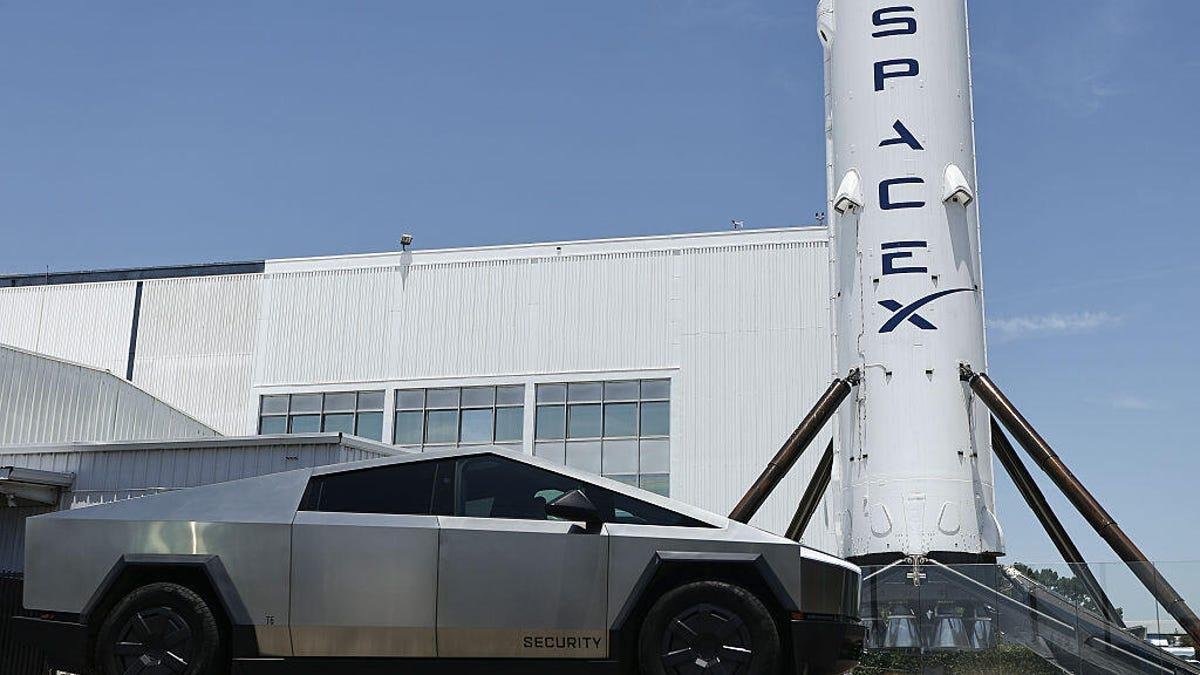
An odd amalgamation of Elon Musk's projects not named Tesla is about to become one of the world's largest publicly traded companies. And while the name SpaceX brings to mind the firm's rockets, it also includes an internet provider, a social media site and (naturally) an AI developer.
SpaceX's initial public offering is expected to be the biggest ever in terms of money raised, with $75 billion in shares going on sale to value the company at roughly $1.75 trillion. By comparison, oil giant Saudi Aramco's 2019 IPO raised more than $25 billion at a valuation of about $1.87 trillion.
SpaceX's IPO isn't just a landmark event in financial history, but tech history, too. While big AI names like Google and Meta have long been public, Musk's megacorporation includes the first major AI company to go public. This should give investors and the general public new insights into how well the business of AI is really doing. Competitors Anthropic and OpenAI have both recently begun to take steps toward their own public offerings.
Unlike Anthropic and OpenAI, however, SpaceX has a more diversified business, if still not really a profitable one. SpaceX, the namesake business unit, launches rockets into space, mostly carrying satellites but also carrying Musk's dream of colonizing the moon and Mars. It includes Starlink, which uses satellites to offer broadband internet access without the necessity of cables. There's xAI, which operates the chatbot Grok, perhaps best known for having guardrails so lax that it allowed users to generate sexual images of minors. And X, the social media site once known as Twitter.
The IPO has ramifications all over the place. It could make Elon Musk, already the world's wealthiest person, the first trillionaire. It could put a complicated and not-profitable company in index funds that make up a lot of our retirement funds -- meaning we all would own part of SpaceX, whether we wanted to or not. And it puts the company further in the public spotlight and under the scrutiny of Wall Street analysts and investors, despite a business structure that ensures Musk maintains full control.
Shares of SpaceX are expected to go on sale on the Nasdaq Friday at a price of $135 per share. Where things go from there is in the hands of the market. We'll be keeping an eye on what transpires and sharing the latest updates here.
Wait, what is an IPO?
By Katelyn Chedraoui
An IPO is an initial public offering.
Erik McGregor/LightRocket via Getty ImagesThere are no dumb questions here. An IPO is an initial public offering, which is when a private company decides to "go public." It's a business and financial process that allows anyone, not just employees, to purchase shares of a company on a stock exchange, like the Nasdaq.
During this process, companies have to disclose previously unpublished information about how their businesses operate -- how much money they make, how they spend it, what risks threaten their work and how they plan to address them. This information is vital to how Wall Street reacts; it determines the success of a launch. It also gives us new insights into how the business operates.
Once a company is public, it is required to publicly share its performance during quarterly earnings calls. These reports, especially recent ones from big tech companies, have been essential sources of light into the black box operations of rapid AI development, spending and future plans. The market's reaction to these reports is also a useful litmus test for understanding how we are all reacting to these changes.
Even if you never interact with SpaceX as a public company -- you don't own stock, you don't have Starlink internet or post on X -- the sheer magnitude of SpaceX's IPO means it will likely impact your life in one way or another. Most likely, SpaceX will become part of big index funds, where many people's retirement and pension plans are invested. So you may be unknowingly tying your financial future to the success, or failure, of Elon Musk's megacorporation.
Demand is high, and so is the risk
By Laura Michelle Davis
SpaceX's $75 billion IPO is expected to be the biggest ever.
Michael Nagle/Bloomberg/Getty ImagesRetail investors have placed over $100 billion in orders for SpaceX's upcoming IPO, underscoring strong interest in the company as it approaches what could be the largest public offering ever. Demand for SpaceX stock is significantly higher than the number of shares being sold, or roughly three to four times oversubscribed.
Why? One reason is that SpaceX, which holds a dominant market share in the global commercial launch and satellite internet industries, has long been a private company. This is the first chance for most of the public to invest.
But behind that is what Wall Street sees as massive growth potential. Goldman Sachs, the lead underwriter for SpaceX's planned public offering, projects SpaceX's AI revenue will skyrocket tenfold in the next several years, from $3.2 billion in 2025 to to $322 billion by 2030. Meanwhile, major industry reports, including those from Novaspace, project the broader global space economy to hit the $1 trillion milestone by 2034.
According to Karee Venema, senior investing editor at Kiplinger, that demand could be why SpaceX and CEO Elon Musk took an unconventional approach. SpaceX launched its IPO marketing by saying that it is selling 555,555,555 shares at $135 per share. Those optimistic projections for growth are probably why "investors are likely willing to pay such a premium for the IPO," Venema told CNET.
But an oversubscribed stock, where demand heavily outweighs supply, comes with risks for investors, like increased volatility and large price moves in the shares once trading begins, according to Venema.
High demand often causes a massive price "pop" on day one, followed by sharp drops when early investors cash out. There's also a degree of underwriter favoritism, where large institutional investors usually get priority over individual retail investors for the limited shares.
Venema also pointed to the so-called Musk effect, which refers to the sudden shifts in a company's valuation and public perception driven by Musk's personal actions, statements and overall branding. That phenomenon can be a double-edged sword, as seen in 2025, when Musk dedicated significant time to the Trump administration's unconventional Department of Government Efficiency, and Tesla's revenue and stock price fell sharply.
That same Musk effect can generate unparalleled market enthusiasm and premium valuations. "Regardless of your personal feelings for Musk, he has done extraordinary things and a lot of folks want to be a part of it -- as evidenced by the excitement around the SpaceX IPO," Venema said.
If you want to buy stock in SpaceX, Venema recommends you understand the dangers associated with IPOs and only buy shares with money you can afford to lose. First and foremost, talk to a financial adviser before investing.
Sponsor
Sponsor
Sponsor
Sponsor
Zoekertjes
Categorieën
Read More
The Scottish Open 2026: TV Schedule, How to Watch All the Golf Action From Anywhere Why You Can Trust CNET Our expert, award-winning staff selects the products we cover and rigorously researches and tests our top picks. If you buy through our links, we may get a commission. Reviews ethics statement A host of big-name PGA Tour stars head across the Atlantic to battle it out at the...

Bluesky embraces long-form content to counter X Articles Elon Musk’s X lets you write long-form content on the platform through its Articles feature, but only if you’re a paid subscriber or business. The decentralized social networking startup Bluesky has a different idea. On Thursday, Bluesky rolled out a new version of its app that integrates with Standard.site, a community project for...

Palestinians in West Bank and some in Gaza vote in local electionsGetty ImagesMakeshift polling stations have been constructed in the central Gazan city of Deir al-Balah, the only city in the territory where elections are taking placePalestinians are voting in local elections on Saturday, including the first poll of any kind to be held in Gaza since 2006.Elections are taking place across the...

US House votes to overturn Trump's tariffs on CanadaKwasi Gyamfi AsieduWashingtonBloomberg via Getty ImagesThe US House of Representatives has voted to rescind US President Donald Trump's tariffs on Canadian goods.In a 219 to 211 vote, six Republican lawmakers joined Democrats to back a resolution that seeks to end the tariffs Trump imposed on Canada last year. The vote is largely symbolic as...
Nigeria says two nationals killed in South Africa amid rise of anti-migrant attacksIn its statement, Nigeria's foreign ministry said Iroegbu was reportedly killed in Pretoria by officers from the Tshwane Metro police department. Joe, killed on 28 June, was attacked outside his shop in the city of eMalahleni, the ministry said.Abuja said it was placing the South African government "on notice"...