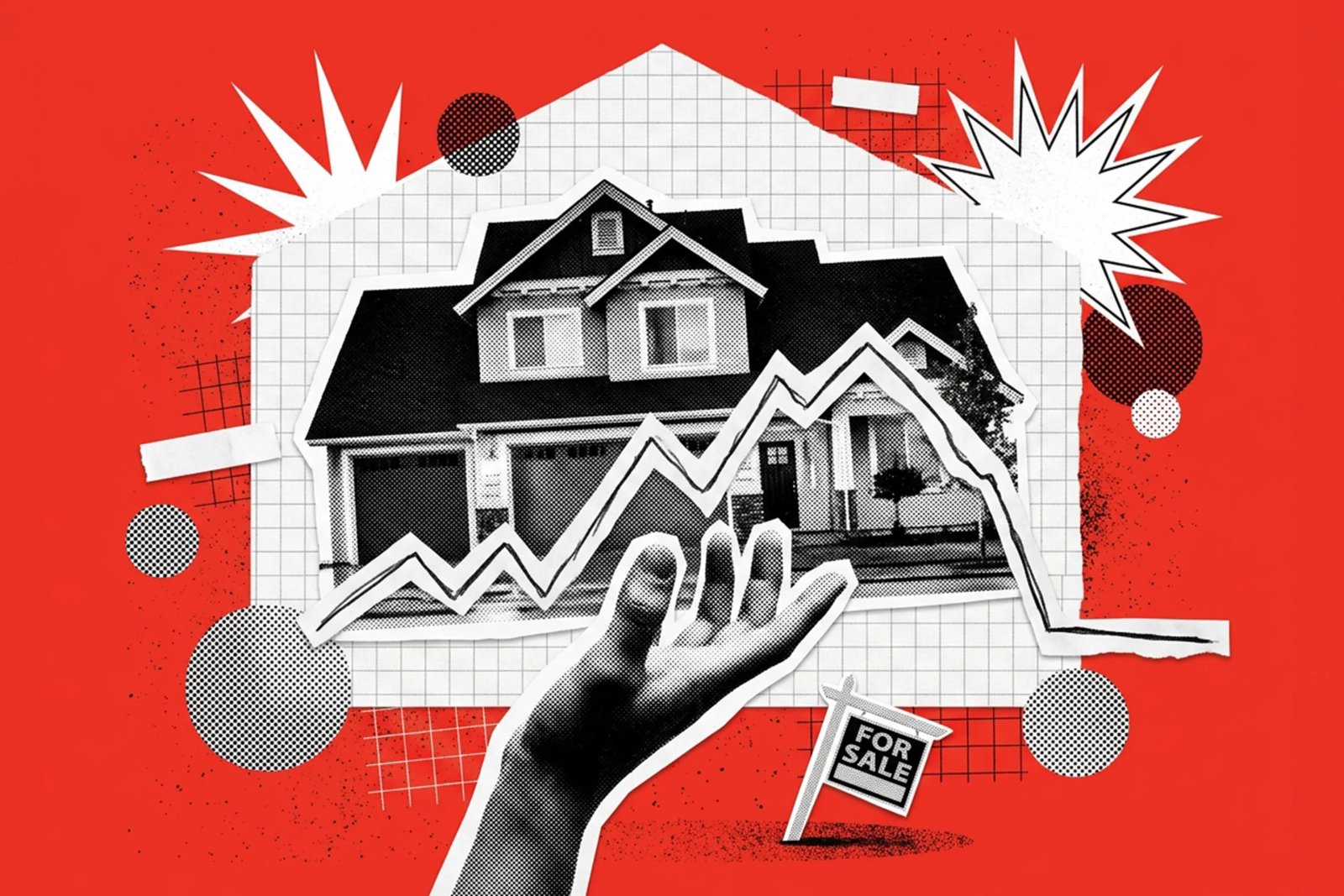
If you were hoping to see the housing market finally thaw out this spring, the past few months likely left you disappointed.
On the surface, all the key factors affecting affordability seemed aligned for the spring homebuying season. The number of homes for sale has been steadily increasing. Home price growth has slowed to a little over 1% year-over-year, well below the historical annual appreciation rate of 3% to 5%. More home sellers have begun slashing prices and offering concessions such as rate buydowns and seller credits. Wage growth was even outpacing inflation.
Must Read
Most important, mortgage rates, which averaged above 6.5% throughout most of 2024 and 2025, dropped significantly, dipping below 6% for the first time in nearly four years at the end of February. The so-called "lock-in effect" appeared to be easing.
"The fundamentals were improving," Odeta Kushi, deputy chief economist at First American, tells Money in an email. "We expected a stronger spring buying season than in 2025, but not a boom."
Indeed, looking at the most recent home sales report from the National Association of Realtors, existing home sales are on pace to end the year at 4.17 million — about 1 million more than in 2025. However, given that last year was tied for the lowest sales volume since 1995, this year's projected sales total represents a gradual recovery rather than a rebound.
Where does that leave us? Well, even though the market is in better shape today than it was a year ago, many prospective buyers still feel that homeownership is out of reach as we head into summer.
Why the 2026 housing market still faces major challenges
Several factors are contributing to the slow pace of recovery. One of the most important is the recent rise in mortgage rates.
Even a moderate rate increase can have an immediate impact on purchasing power, resulting in higher mortgage payments and decreasing overall affordability, especially for first-time homebuyers.
Since the end of February, mortgage rates have increased by about half a percentage point. They are currently hovering around 6.5%. In practical terms, that higher rate translates to an increase of about $260 per month on a $450,000 loan — enough to make a would-be buyer on the fringes of affordability think twice.
"Higher rates create an additional hurdle at a time when affordability remains stretched by historical standards," Kushi says.
Increased interest rates also reinforce the locked-in feeling experienced by many homeowners with existing ultra-low mortgage rates. According to data from Realtor.com, nearly 70% of mortgage holders had interest rates below 5% at the start of 2026. Swapping that low-rate loan for one with a much higher rate results in significantly higher mortgage payments.
For example, a homeowner currently holding a mortgage at a 5% rate who sells their home and takes out a new $400,000 loan at 6.5% would increase their monthly payment by about $381 — an amount that can discourage a home seller from moving unless they have a pressing need to do so.
But rates alone aren't enough to account for the slow recovery. Although home price growth has slowed over the past few years, prices remain significantly higher than their pre-pandemic averages. The median sales price of a single-family home in May was $434,300, according to NAR — about a 57% increase from February 2020.
When high home prices combine with high interest rates, monthly payments rise and affordability drops. A recent analysis by Kushi found that homebuyers lost about $11,000 in buying power between February, when mortgage rates averaged about 6%, and April, when rates were around 6.3%. Rates have only moved higher since then.
Home inventory is increasing, but not at the right price point
Another major factor that contributed to the more muted spring buying season was inventory.
Generally speaking, more homes on the market give buyers more options and help keep price growth in check, resulting in a higher sales volume. The slowdown in price appreciation seen over the past year is due in large part to the steady increase in inventory.
Nadia Evangelou, principal economist at NAR, says that when you have improved affordability and more housing supply, it usually translates into more sales (when the market is healthy, that is). So far, however, the volume of home sales hasn't matched expectations.
In 2026, it seems an uptick in inventory alone isn't enough.
"A listing may count as inventory, but if it's priced beyond what buyers can afford, it's not really helping the market move," Evangelou says.
A new NAR report identifies a mismatch between household incomes and listing prices: There simply aren't enough homes on the market that are affordable for a large sector of the homebuying pool, particularly first-time buyers.
According to Evangelou, buyers earning between $50,000 and $100,000 are the most affected by this lack of income-price alignment. For example, a household earning $75,000 would be able to afford a home of up to $261,000. In a healthy, balanced market, homes in this price range accounted for 44% of the available supply. Today, that share is down to 23%, representing a gap of about 310,000 homes.
Across all income levels, the market is missing nearly 1.9 million homes to meet housing demand. This supply deficit, says Evangelou, is why so many prospective buyers feel "stuck."
Where People Are Tapping Their Home Equity Right Now
What buyers should know for the second half of 2026
After spring, the next-busiest buying season is summer, typically offering plenty of listings and a slightly slower pace of sales before the market slows down during fall and winter.
What happens over the next six months will depend on three major factors, according to Kushi: mortgage rates, the job market (including income growth) and supply.
If mortgage rates remain elevated, there will be continued pressure on affordability, leaving some buyers on the sidelines. Current rates are being impacted by the conflicts in the Middle East, their impact on oil and other consumer goods, and inflation.
As long as the turmoil continues, rates are likely to remain within their current range, potentially higher. Once the war officially ends, buyers can expect rates to dip quickly and then stabilize. However, most experts say they believe mortgage rates will remain above 6% for the remainder of the year and into 2027.
Job stability can help increase buyer demand, too. Prospective homeowners with stable employment are more likely to feel secure about a home purchase and their ability to afford monthly payments than those without. A healthy labor market with strong wage growth and job gains may draw more buyers back. So far, the labor market has remained resilient; the unemployment rate has remained steady at 4.3%.
The recent trend toward rising supply is expected to continue as more sellers list their homes. As more inventory becomes available, home price growth should slow as demand is met and competition diminishes. If wage growth can continue to outpace price appreciation, as it has done since late last year, buying power will increase — even if mortgage rates remain high.
"Overall, we expect pent-up demand to continue emerging gradually," Kushi says. "But the pace of recovery will vary significantly across markets and will depend on the path of rates, labor market conditions and inventory growth."