Lebanese struggle to get by in an ancient city under Israeli evacuation order
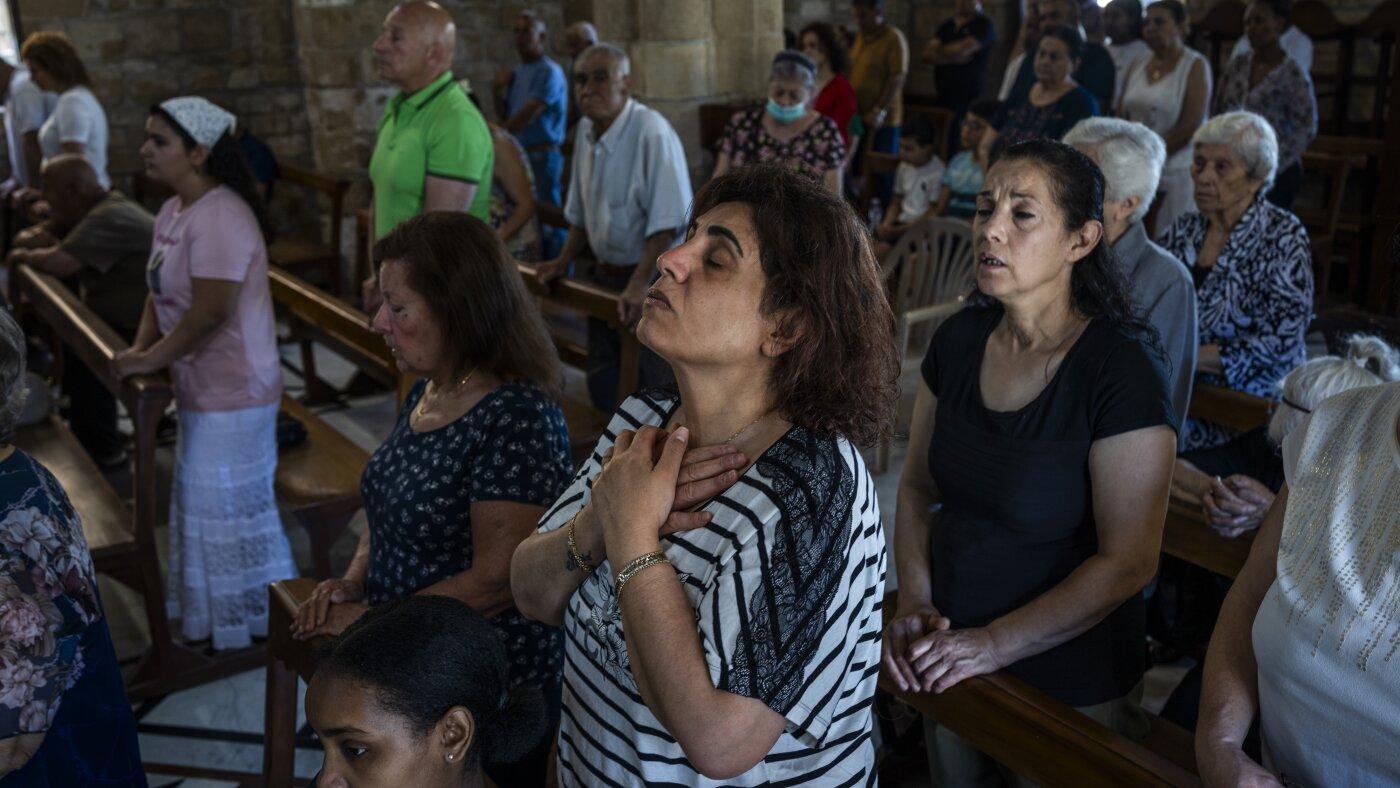
Lebanese struggle to get by in an ancient city under Israeli evacuation order

A resident observes the destruction from his destroyed home in Tyre, Southern Lebanon on June 7, 2026. Diego Ibarra Sánchez for NPR hide caption
toggle caption
Diego Ibarra Sánchez for NPR
TYRE, Lebanon — Twelve miles north of Lebanon's border with Israel, the ancient coastal city of Tyre has become an unlikely battleground in Israel's war with the Iran-backed militant group Hezbollah.
Tyre, one of Lebanon's biggest cities, is a coastal hub and in peacetime a thriving tourist destination.
But in late May, before the current ceasefire began, Israel started targeting the entire city, apart from a small, largely Christian enclave on the seaside, saying it was hitting Hezbollah fighters. Thousands of people streamed into that neighborhood — the last relatively safe place in the city.
Days later, Israel warned residents of the historic Christian neighborhood it could attack there too.
The warning, which came without proof that Hezbollah was operating in the Christian quarter, left residents of the ancient city without any safe haven.

Israeli airstrikes hit residential areas in Tyre on June 7, 2026. The escalation between Israel and Hezbollah has displaced more than one million people, deepening an already severe humanitarian crisis and complicating ceasefire efforts. Diego Ibarra Sánchez for NPR hide caption
toggle caption
Diego Ibarra Sánchez for NPR

A resident walks through the nearly empty, ghost-like streets of Tyre during an evacuation warning on June 7, 2026. Diego Ibarra Sánchez for NPR hide caption
toggle caption
Diego Ibarra Sánchez for NPR
An ancient city facing new destruction
On a recent Sunday, a low-flying Israeli drone buzzed over Tyre's Antiquities neighborhood, where Israeli airstrikes had hit the previous week. The area is named after ancient Roman sites, as well as those associated with Alexander the Great, who built a causeway to conquer the island city.
Later in the day, an Israeli airstrike on a century-old house near the gate of the ancient port — a UNESCO-listed World Heritage site — damaged ancient columns and toppled stone capitals.
On one of the neighborhood blocks, previous strikes over the past two weeks had flattened every building. In a landscape drained of color, building rubble and dead, blackened trees were coated with grey concrete dust.
Metallic letters from an upscale beauty salon were hanging by wires over windows with the glass blown out.
"You can see they destroyed everything," said Ali al-Ra'i, a local policeman. "This building fell, and that building."
Ra'i grew increasingly nervous as the high-pitched whine of an Israeli drone grew louder. "They are above us now. It's dangerous," he said, before urging everyone to leave.
Unable to leave, residents rely on each other
In another neighborhood, a view of the brilliant deep blue of the Mediterranean, a block away, framed the ruins of what had been a famous creamery – Karrit Ice Cream.
"It was an old-established family," said Ra'i. "The ice cream was famous – and tasty."
Rida Karrit, one of the owners, evacuated with his Ukrainian wife after the four-story building was struck at the end of May. He and his brothers and their families lived above the ice cream plant. The family, who trace their ancestry to Crete, was so well known that the neighborhood was named after them.
"I used to think maybe they were right about Hezbollah being in places – and then they hit our house," Karrit told NPR in Sidon as he was leaving. His wife was heading back to Ukraine, where she felt safer, even though a war is being fought there too.

Billboards in Tyre display images of entire families and rescue workers killed in airstrikes. More than 3,500 people have been killed in Israeli attacks, and over one million have been displaced, deepening an already severe humanitarian crisis and further complicating ceasefire efforts. Diego Ibarra Sánchez for NPR hide caption
toggle caption
Diego Ibarra Sánchez for NPR
Despite Israel's warnings that residents were at risk of being killed if they stayed, on these few blocks alone, dozens of families remained. Many of them were elderly or disabled. All of them were poor.
Maysa Tafla and her husband Issa Tafla have a small coffee shop beneath their apartment building overlooking the sea. She said they stayed despite the danger because her husband, a tailor, is partially paralyzed.
More than 1.2 million people in Lebanon have been displaced by the war between Israel and Hezbollah, which began on March 2, according to the United Nations. The crisis-ridden Lebanese government had turned public schools into shelters, but most were filled beyond capacity.
"If he needed the bathroom in a shelter, he would have to wait in line for three or four hours," she said.
Tafla, 55, said after Israel's warnings that it could attack their neighborhood, they stayed in a hotel for a few days until they ran out of money and returned home.
"If there were an attack, he would not be able to run," she said of her husband, 67. "We sit at home with our hands on our hearts," she said, referring to herself and her two daughters. "We will not leave him."
In another apartment building nestled between seaside restaurants, a family that had remained waved to the Taflas from their balcony.
"We know everyone in these apartments," she said. "If you stay in Tyre, you will see life is all about singing, music, the beach, drinking, everything."
With that, Tafla said they would have known if there were Hezbollah fighters in their midst.

A trail of destruction is visible after Israeli airstrikes hit residential areas in Tyre on June 8, 2026. Diego Ibarra Sánchez for NPR hide caption
toggle caption
Diego Ibarra Sánchez for NPR

Displaced people sleep in the Christian area overlooking the corniche, taking shelter after evacuation warnings and destruction caused by Israeli airstrikes on residential areas in Tyre on June 7, 2026. Diego Ibarra Sánchez for NPR hide caption
toggle caption
Diego Ibarra Sánchez for NPR
Despite the danger, the poor, elderly and disabled remain
Alwan Sharafaddine, the deputy mayor of Tyre, said at least 9,000 people — about 15 percent of the population — have remained in the city since Israel issued warnings to evacuate.
The mayor, Hassan Dbouk, said while people are receiving help from U.N. organizations, there was little assistance from the Lebanese government.
Lebanon's long-running economic crisis means most people have no savings.
Here, communities are the safety net.
Hassan Sabbagh was walking home with his 10-year-old son. He held a plastic bag with a large container of rice with shredded chicken and slivered almonds made by his neighbor.
"If we were in Sidon or Beirut and we were in the streets, some people would say 'you're not from here, leave, you know?" said Sabbagh, who has a shop selling and repairing air conditioners.
Sabbagh and his family used their apartment during the day — washing up and eating meals there. But at night, he said, he and his wife rolled out mattresses on the beach, placing the children between them and sleeping on the sand in case their apartment building was hit.
Other families had pitched small tents on the beach, while some had erected makeshift tents using blankets hung from tree branches on the lawns of beachfront hotels.
One woman sat on a sidewalk playing with an orange cat in a cardboard box. She and her family were displaced from villages further south. Her home there has now been destroyed.
"We are trying to manage," said Anaal Slaibi, 50. She said she and her niece tried and failed to find somewhere in the safer Christian quarter to stay.
Now they were renting a storefront for $250 a month so her ill, elderly mother had access to a bathroom. "We looked, we looked everywhere," she said. "We couldn't find anything, and we didn't have money to rent there."
"Whatever happens will happen," said her niece Amina Haidous, 37.

A statue of the Virgin Mary stands in the fishing port of Tyre on June 7, 2026. Diego Ibarra Sánchez for NPR hide caption
toggle caption
Diego Ibarra Sánchez for NPR
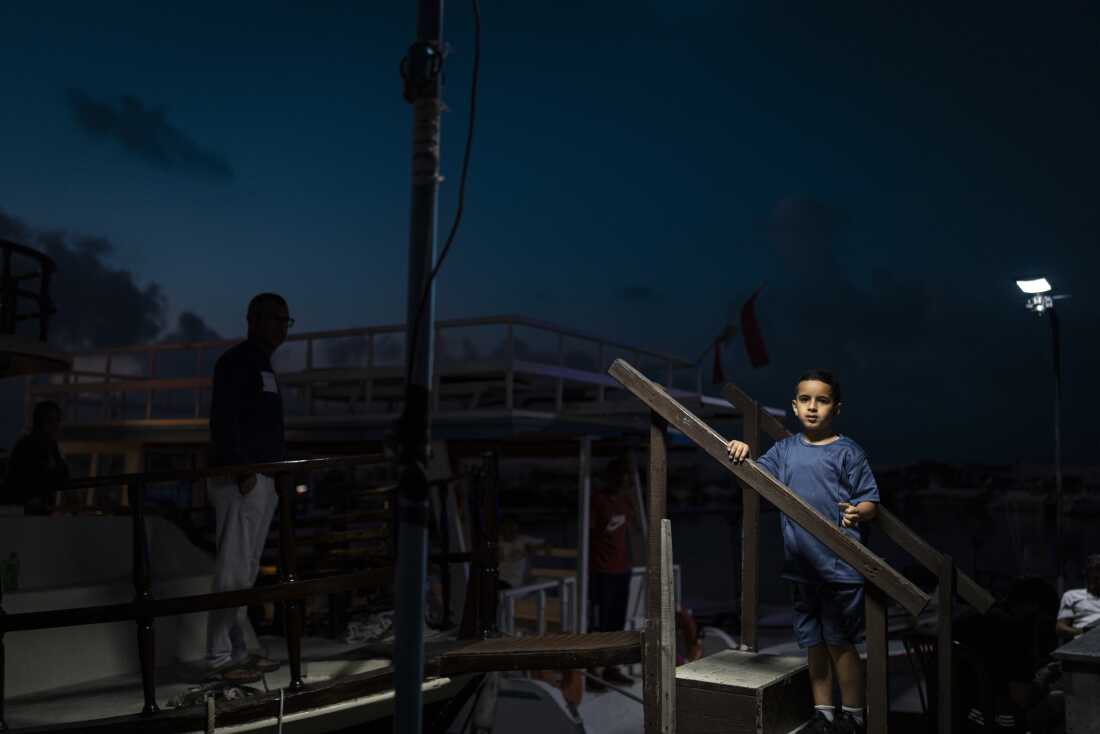
Displaced people spend the evening in the Christian port area of Tyre on June 7, 2026. Diego Ibarra Sánchez for NPR hide caption
toggle caption
Diego Ibarra Sánchez for NPR
An ancient legacy, historic co-existence
Tyre is the site of an ancient Phoenician port city which ruled over colonies in Cadiz and Carthage. It was famous for a purple dye worn only by royalty and that was extracted from murex sea snails.
Alexander the Great conquered it in 332 BCE after building a causeway to what had been considered an impregnable island fortress.
At the modern port in the Christian quarter of Tyre, small wooden tourist and fishing boats were moored to the docks.
One of the fishermen, Mohammad, said he was sleeping on a boat because 14 displaced members of his wife's family were staying at his own home. Mohammad did not want to give his full name because of "the dangerous times" they were going through.
He said Tyre, though remained immune to the sectarian tension that has occurred in other places between Muslims and Christians. In some towns and neighborhoods, Christian residents have prevented displaced Shia Muslims from staying, in fear that they could become a target of Israel — Hezbollah is itself made up of Shia, and backed by the Shia theocratic regime in Iran.
It does not matter "whether you are Ali or Elias," he said, using the example of two common Muslim and Christian names. He pointed out that even the boats named after their owners, bobbing in the harbor, are intermingled.
Just 50 miles from the Lebanese capital, residents here take pride in the city's unique identity.
Jafaar al-Samra had just sold an octopus, minutes after spearing it while snorkeling. Asked how life is in the city, Sumra, 63, played a song on his phone — a love song to the sea — and sang along to it.

Sponsorizzato
Sponsorizzato
Sponsorizzato
Sponsorizzato
Pubblicità
Categorie
Leggi tutto
My favorite Qi2 power bank is cheaper than ever for Verge readersCameron Faulkner is an editor covering deals and gaming hardware. He joined in 2018, and after a two-year stint at Polygon, he rejoined The Verge in May 2025.I recently published a buying guide on the best Qi2 power banks. Out of seven feature-packed batteries, I really dug the Baseus AM52 10,000mAh power bank that has a built-in...

Wearable startup CUDIS launches a new health ring line with an AI-fueled ‘coach’ Wearables startup CUDIS is launching its newest series of health rings this week. The updated ring comes equipped with a number of features, including an AI “agent coach” designed to keep users on track to attain their fitness goals. CUDIS says it differentiates itself from other wearables by not just delivering...

It’s not your imagination: AI seed startups are commanding higher valuations Pete Martin remembers raising a $5 million seed round at a $25 million post-money valuation for his AI-powered cybersecurity company Realm way back in 2024, aka, like a thousand “AI years” ago. That valuation seemed high for that amount at the time, he recalled. But today, “it’s pretty typical” to see a...

Trump tries to make deals in China. And, Senate confirms Kevin Warsh as Fed leader Good morning. You're reading the Up First newsletter. Subscribe here to get it delivered to your inbox, and listen to the Up First podcast for all the news you need to start your day. Today's top stories President Trump arrived in Beijing and met with Chinese President Xi Jinping....

Great Deals Under $25 in Amazon's Big Spring Sale
If you're looking to snag some amazing bargains, Amazon's Big Spring Sale has you covered with a variety of items priced under $25. Whether you're a fan of Lego sets, Fire Sticks, or other popular