Uber’s robotaxi lobbying effort puts it on a collision course with Waymo
Uber’s robotaxi lobbying effort puts it on a collision course with Waymo
A proposed bill that would allow autonomous vehicles to operate in Washington, D.C. has become a test case for Uber’s broader robotaxi strategy. Instead of simply partnering with, and investing in, robotaxi developers, Uber is also trying to shape the rules that govern them, an effort that puts it in direct opposition with its business partner, Waymo.
Uber, which opposes the bill, argues the proposed rule would displace for-hire human drivers and hand Waymo a de facto monopoly. It has lobbied instead for a system that would require robotaxis to operate on a ride-hailing network that also uses human drivers, according to public records viewed by TechCrunch and interviews with industry and company sources.
“We have already seen in other jurisdictions how a flawed, first-party only regulatory approach can disrupt a city,” Javi Correoso, who leads U.S. policy and federal affairs for Uber, said in May during a D.C. Council roundtable on a separate, existing statute regulating for-hire drivers. Correoso argued at the time that robotaxis create congestion by idling or cruising empty, cannot provide the kind of physical assistance to older or disabled adults that human drivers can, and cited data that states one AV displaces roughly four drivers.
When asked about the hybrid model, Correoso shared Uber’s regulatory vision.
“Hybrid model means that consumers should have the ability to access both. If a consumer is on the app, they should be able to choose,” he said, according to a publicly available recording and transcript. “I would go a step further: I think it should be part of the regulatory framework for the industry. There should be a requirement for consumers to be able to take an Uber that’s driven by a human.”
Alphabet-owned Waymo contends the bill, which it backs, will allow for the safe deployment of autonomous vehicles while supporting public transit, equitable access, and workers without restricting companies like Uber.
The two companies will pitch their positions on Monday during a day-long hearing. The bill’s passage is not imminent — many parties told TechCrunch they hope legislation is approved before the end of the year, and before Washington D.C. Mayor Muriel Bowser leaves office in January. Still, the arguments and lobbying efforts surrounding the bill reflect a broader debate that stretches beyond Washington D.C.
The proposed AV bill
The bill, which was introduced by Councilmember Charles Allen in May, would update the existing Autonomous Vehicle Act of 2012 to allow for driverless testing and commercial driverless operations within the district. Today, companies like Waymo and Zoox can test autonomous vehicles, but only with a human safety operator behind the wheel.
The proposed bill would give the District Department of Transportation (DDOT) the authority to issue driverless testing and deployment permits to AV developers that meet certain requirements. Such requirements include holding a minimum of $5 million in liability insurance, and agreeing to report crash data within either 8 hours or 72 hours, depending on whether the vehicle is part of a commercial fleet or a privately owned AV (which doesn’t yet exist in the market).
The bill would also charge robotaxi operators a $0.15 per mile tax, a proposal that robotaxi advocates have argued is too expensive. Revenue from the “vehicles miles traveled” (VMT) tax would be split, with 50% going towards public transit and the remaining used to support education and workforce development for ride-share and taxi drivers at risk of losing their jobs to robot cars.
Uber and Waymo are not the only parties interested in the bill. Numerous organizations and companies, including representatives from Tesla, Lyft, the Teamsters and Service Employees International Union labor unions, disability rights and accessibility advocacy groups, local business and industry groups, highway safety proponents, government officials, and think tanks are all scheduled to speak during Monday’s hearing.
The bill has even prompted an anti-robotaxi campaign, launched by a New York-based organization called Coalition for Accountability and Road Safety, which is canvassing voters and posting on social media.
It’s unclear who is funding the organization, which is registered to an employee of Pitta Bishop & Del Giorno LLC, a New York lobbying and government affairs outfit affiliated with labor and employment law firm Pitta LLP. According to publicly available lobbying documents listed by the city, Pitta has been retained over the past year by several labor unions and the New York Black Car Operators’ Injury Compensation Fund.
The stakes are high for all robotaxi developers, human drivers, and the ride-hailing and taxi companies that employ them in D.C. It’s arguably elevated for Uber and Waymo too, given their considerable market positions. Uber is the largest ride-hailing and delivery network in the United States, and Waymo is the largest robotaxi operator, providing more than 500,000 rides each week across 11 cities.
If Uber is successful and its hybrid network idea is adopted in D.C. — or elsewhere — it would leave AV developers like Waymo with two choices: put their robotaxis on ride-hailing apps like Uber’s, or employ human drivers who provide ride-hailing services alongside the robot cars that have taken years and hundreds of millions of dollars to develop.
If Waymo and other supporters of the D.C. bill are successful, Uber argues it will be pushed out altogether.
Protect and expand

The bill is a local policy fight, but it also highlights one prong of Uber’s strategy to protect its leading position in the ride-hailing and delivery market.
Uber is actively investing in and partnering with autonomous vehicle technology companies — more than 30 globally — while also building AV Labs, a new business unit designed to collect and share real-world driving data with AV developers. The company is hiring dozens of engineers for the division, according to job listings and interviews with sources familiar with the effort.
While Uber stakes its claim in the AV market, it is also championing protective policies that would require autonomous vehicles to operate alongside human drivers within a single platform — much like the Uber app.
Uber’s investment and partnership activity has been underway for several years. The company’s push for a hybrid network is recent, first emerging in a white paper published in May. Since then, Uber has ramped up its rhetoric with policymakers, including the D.C. Council roundtable meeting in May to discuss updates to the district’s Vehicle-for-Hire Innovation Amendment Act of 2014. (That law, which regulates ride-hailing and taxi services through the Department of For-Hire Vehicles, is separate from the AV bill, but multiple sources told TechCrunch that the policies overlap.)
Uber submitted a letter to D.C. Council in June, which TechCrunch has seen, elaborating on Uber’s policy chief Correoso’s earlier comments. The letter stated the hybrid approach would be a single transportation network with traditional drivers that gradually incorporates autonomous vehicles.
“What this means in practice is that if you call an Uber in a market with AVs, you might get matched with an AV or a human driver, depending on the nature of your trip,” the letter reads.
In D.C., Uber is responding to a bill that would effectively ban hybrid networks altogether, company spokesperson Noah Edwardsen told TechCrunch.
Waymo disputes that interpretation, and a representative for the company said Waymo does not support efforts to limit AVs to specific types of networks. “We would welcome changes clarifying that different types of networks can operate in the District,” Waymo spokesperson Ethan Teicher wrote in an emailed statement sent to TechCrunch.
More broadly, Edwardsen said Uber has never taken a one-size-fits-all approach to policy, contrasting it to “advocacy from parts of the AV industry today, where proposals have repeatedly failed to address important issues like labor and transportation equity — or that have tried to cynically lock out competitors and create monopolies — making them largely unworkable.”
While numerous industry insiders have criticized aspects of the D.C. bill — notably the VMT tax and proposed cap on robotaxis — some disagree with Uber’s hybrid proposal.
Greg Rogers, founder and executive director of the nonprofit mobility and tech think tank The Innovation Majority, is scheduled to speak at Monday’s hearing, and he called Uber’s move an attempt at “regulatory capture.”
“Mobility is already a marketplace — people already can make choices on whether to take a bus, or ride a bike, or walk, or take rideshare every day,” Rogers told TechCrunch in an interview. “And any argument that you can improve consumer welfare by forcing certain business models and canceling out others does not improve people’s mobility choices. It does not improve road safety, and what it risks is only further entrenching interests and charging rent on anyone who seeks to operate AVs in the district.”
Uber’s pro-driver, ”let’s compromise” positioning may surprise close followers of the ride-hailing company. The company’s early history was painted by an anti-regulation ethos that sought out loopholes within existing laws, or ignored them altogether.
Uber often opposed union-supported regulations, like AB 5 in California, which would have disrupted its asset-light business model by classifying gig workers as employees. Proposition 22, a 2020 ballot initiative passed by voters and upheld by the California Supreme Court, was backed by Uber, Lyft and others as a compromise that gave workers access to health insurance and other benefits while maintaining their contractor status.
Those fights, and others like it, have taught Uber that it has to consider human workers, and the power of labor unions that support them, if it wants to play a central role in the robotaxi market, according to sources. Uber’s own chief operating officer Andrew MacDonald struck a similar we-learned-our-lesson tone in a LinkedIn post in May that promoted its white paper.
Macdonald noted that the consequences of the company’s grow-at-all-costs approach led to “regulatory battles and a corporate crisis that damaged trust for years. “
“That experience changed us,” he wrote. “Today, we partner with cities instead of confronting them.”
Uber argues its hybrid network proposal is that compromise — one that allows robotaxis and human drivers to coexist on the same platform while easing labor concerns.
The company is committed to pitching the idea in other cities and states as lawmakers develop new AV laws or update existing ones.
Wired published its own report detailing lobbying efforts in New Jersey and D.C.
Uber’s stance, and its active lobbying, puts it on a collision course with Waymo.
Frenemies

Waymo and Uber have squared off over autonomous vehicle technology before.
In 2017, Waymo sued Uber over allegations of trade secret theft. The high-profile trial, in which Waymo accused Uber of using trade secrets downloaded by former Google engineer Anthony Levandowski, delivered memorable testimony and evidence, including phrases like “laser is the sauce.” The trial lasted just five days before Uber agreed to settle, and the two companies stopped sparring, at least publicly.
Six years later, with Uber’s in-house AV development program sold off to Aurora, the former courtroom rivals teamed up. Waymo agreed to put its self-driving vehicles on Uber’s app in Phoenix in 2023. That partnership, which quietly ended in May, has been described as limited and as a “pilot.” Waymo also operates its own standalone app in Phoenix, its first robotaxi market.
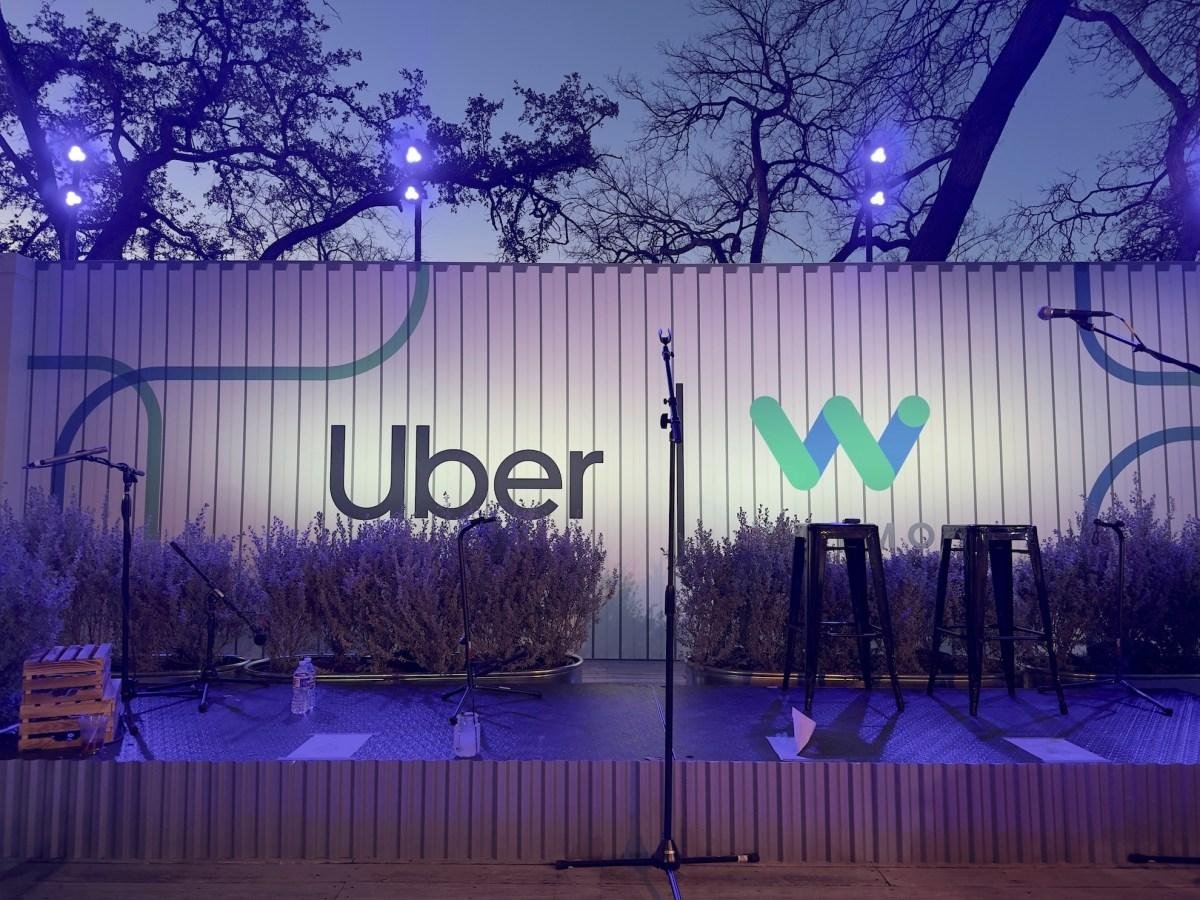
The relationship seemed to solidify by March 2025, when company executives — grasping mugs of prickly pear margaritas and plates of Terry Black’s barbecue at a private party — celebrated the launch of Waymo robotaxis on the Uber app in Austin during the annual music, film, and tech fest, SXSW. The partnership soon expanded to Atlanta. In both of those cities, prospective customers cannot hail a robotaxi directly through Waymo’s app, and have to use the Uber app and hope for a match.
In recent months, the relationship has soured — and publicly.
Earlier this year, Uber chief technology officer Praveen Neppalli openly criticized Waymo on X, posting a video and commentary calling out the unsafe and “scary” behavior of a Waymo robotaxi. During an earnings call in May, Uber chief executive Dara Khosrowshahi directed comments towards Waymo without directly naming the company when he expressed support for regulators.
“They’re asking the right questions, which is how are AVs going to interact with — in situations where the power goes out or interacting in school zones or working with firefighters, etc. in the city,” said Khosrowshahi, referring to recent incidents that involved Waymo robotaxis.
The tension between Waymo and Uber has even gone global, with both companies poised for a looming showdown in London.
As speculation swirls over when Uber and Waymo’s existing partnerships in Austin or Atlanta will implode, both companies are gearing up for a regulatory fight that appears poised to spill into other cities and states.
Uber is betting, and lobbying for, a different future than the one Waymo envisions.
“We think the future of our transportation system will be hybrid,” Uber’s head of AV policy Harry Hartfield said in testimony submitted ahead of Monday’s meeting. “Public policy should be designed around that reality, not around an AV-only future that does not exist.”
When you purchase through links in our articles, we may earn a small commission. This doesn’t affect our editorial independence.
Sponsored
Sponsored
Sponsored
Sponsored
Ads
Categories
Read More
We Did the Math: These 7 Kitchen Tools Pay for ThemselvesPizza delivery, iced lattes and untold amounts of bottled water add up fast. At $20 a pop in many places, a large pie for the family can be key when there's no time to cook, but start relying on these food and beverage shortcuts regularly and your wallet will start to feel the pinch. CNETYour local café and the restaurant...
Kenya Ebola: Health Minister Aden Duale found in contempt of court over US-backed quarantine plan19 minutes agoAkisa Wandera,BBC Africa, Nairobi,Damian ZaneandNatasha BootyGetty ImagesKenya's Health Minister Aden Duale has been found guilty of contempt of court over his handling of the construction of a controversial US-funded Ebola quarantine facility.But on Monday, a judge ruled that Duale...
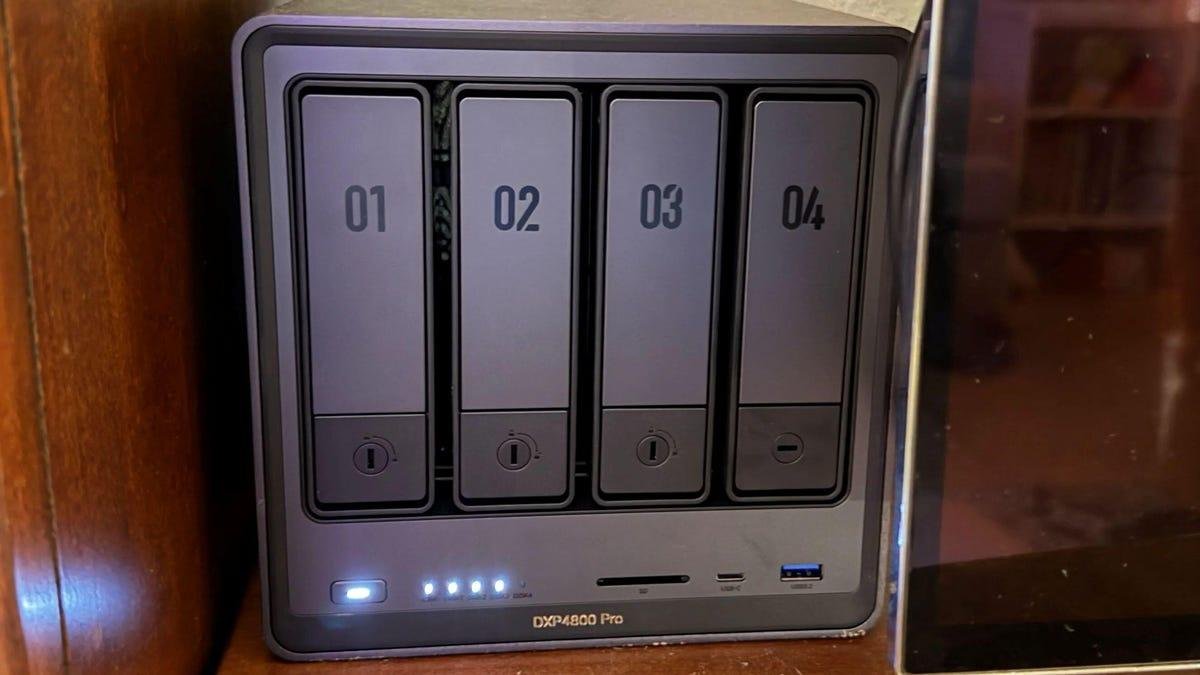
From Photo Backups to My Own Cloud Server: My Trip Into Home Data StorageThe clock started ticking three years ago when I learned Drobo was going out of business. That name not ringing a bell? Drobo made external storage devices that bundled hard drives into an easy, set-it-and-forget-it RAID configuration for people like me who wanted to keep our data safe and in one place.My family...
Trump to address nation after saying U.S. may leave war within weeks U.S. President Donald Trump (R) speaks after signing an executive order to limit mail-in voting as U.S. Secretary of Commerce Howard Lutnick looks on in the Oval Office of the White House on March 31, 2026 in...
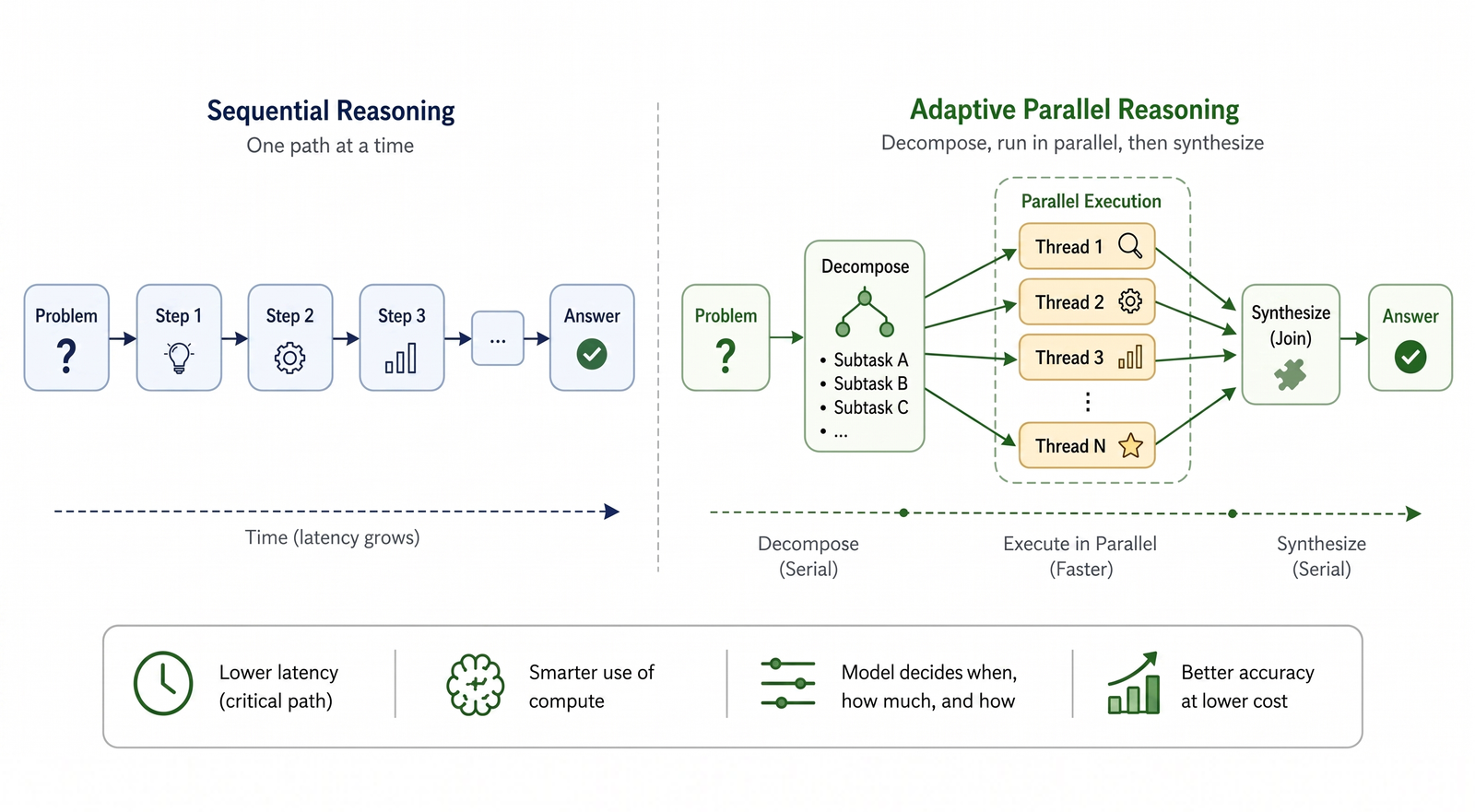
Adaptive Parallel Reasoning: The Next Paradigm in Efficient Inference Scaling Overview of adaptive parallel reasoning. What if a reasoning model could decide for itself when to decompose and parallelize independent subtasks, how many concurrent threads to spawn, and how to coordinate them based on the problem at hand? We provide a detailed analysis of recent progress in the...