


How to Write a Non-Fiction Book That Solves a Real Problem for Readers

Let's be honest for a second. Most non-fiction books never get finished, and the ones that do get finished often never get read past chapter two. Why? Because they were written to sound impressive instead of being written to help someone. If you've ever picked up a book, skimmed the first few pages, and thought "okay, but what am I actually supposed to do with this," you already understand the problem this article is here to solve.
Writing a non-fiction book that genuinely fixes something in a reader's life is a completely different skill than writing a memoir or a novel. It's part teaching, part therapy, part road map. And the good news is, you don't need to be a bestselling author to do it well. You just need to think like a problem-solver first and a writer second.
Grab a coffee, settle in, and let's walk through this properly.
Start With the Problem, Not the Topic
New authors almost always start in the wrong place. They pick a topic: parenting, productivity, personal finance, whatever they know a lot about and then they try to cram everything they know into a book. That's backwards.
Readers don't buy books because they love topics. They buy books because they're stuck somewhere and they want out. So instead of asking "what do I want to write about," ask "what is my reader lying awake at 1am worrying about?" That single question will do more for your book than any outline template ever could.
Here's a small example. Imagine you're a children's illustrator who also happens to know the publishing world inside and out. You could write a broad book called "Children's Book Writing Tips." Or you could write the book that answers the exact question flooding your inbox every week: how to self publish a children's book on amazon. One of these titles gets skimmed. The other gets bought, highlighted, and recommended to a friend by dinner time.
Get Specific About Who You're Actually Talking To
Vague books help nobody. If you're writing for "everyone who wants to write a book," you're really writing for no one. Narrow it down until it almost feels uncomfortably specific.
Picture one real person. Maybe she's a stay-at-home parent with a story she's told her kids a hundred times, and she's finally decided to turn it into something real. She doesn't want a lecture on the history of children's literature. She wants clear, numbered steps on how to self publish a children's book on Amazon without losing her mind over formatting, ISBNs, and royalty percentages. Write for her. Not for a faceless "audience."
When you picture a real reader with a real Tuesday-afternoon problem, your writing naturally becomes warmer, clearer, and more useful. It stops sounding like a textbook and starts sounding like advice from a friend who's already done the hard part.
Structure the Book Like a Journey, Not a Filing Cabinet
A lot of non-fiction books are organized like a filing cabinet. Chapter one is a drawer, chapter two is a drawer, and none of the drawers talk to each other. That's exhausting to read.
Instead, structure your book as a journey with a beginning, middle, and end, the same way you'd guide a friend through a process face to face.
- Beginning: Name the problem clearly and show the reader you understand exactly what they're going through.
- Middle: Walk through the solution step by step, in the order they'll actually need it, not the order that's easiest for you to explain.
- End: Show them what life looks like once the problem is solved, and give them a next step so they don't feel abandoned on the last page.
This is where a lot of self-published authors get stuck, and honestly, it's also where a lot of them start wondering if they need outside help. If you've written the book but the launch feels overwhelming, that's usually the moment people start researching the best book marketing company in USA rather than trying to figure out Amazon ads and press outreach alone at midnight.
Make Every Chapter Earn Its Place
Before you write a single chapter, ask yourself: "If a reader skipped this, would they be missing something they actually need?" If the honest answer is no, cut it. Padding a book to hit a word count is one of the fastest ways to lose a reader's trust.
Every chapter should do one of three things:
- Solve part of the problem
- Remove an obstacle standing in the way of the solution
- Keep the reader motivated enough to finish
Anything that doesn't fit one of those three jobs is decoration, not substance. Cut it without guilt.
Write Like You Talk, Then Edit Like You're a Reader
Here's something nobody tells new authors enough: your first draft is allowed to sound like you're explaining something to a friend over coffee. That's actually the goal. Stiff, formal language creates distance between you and the reader, and distance kills trust.
Say the messy version out loud if you have to. Record yourself explaining the idea, then transcribe it and clean it up. You'll be shocked how much more natural and readable your book becomes when you write the way you actually speak, rather than the way you think a "real author" is supposed to sound.
Then, when it's time to edit, read it as if you know nothing about the subject. Where do you get confused? Where do you feel talked down to? Fix those spots first.
Prove It Works Before You Publish
One of the biggest trust-builders in problem-solving non-fiction is proof. Case studies, small stories, real numbers, even your own mistakes along the way these all tell the reader "this isn't theory, this actually works."
If you're writing that book on self-publishing for children's authors, don't just explain the theory of how to self publish a children's book on Amazon. Show a real timeline. Show what a finished KDP dashboard actually looks like. Show a royalty statement from a real launch. Readers trust evidence far more than they trust confident claims.
Plan the Launch While You're Still Writing
A brilliant book with a silent launch still fails commercially, and that's genuinely heartbreaking after months of work. Start thinking about visibility long before your manuscript is finished, not the week before it goes live.
This is also usually the point where authors start comparing options and searching for the best book marketing company in USA, trying to figure out whether they need professional help with launch strategy, reviews, and advertising, or whether they can manage a smaller, DIY launch themselves. There's no universally right answer here it depends on your budget, your timeline, and how much of this you actually want to learn versus outsource. But deciding early, rather than scrambling after publication, makes an enormous difference in how your book performs in its first critical weeks.
Keep the Promise You Made in the Title
Your title made a promise to the reader. Everything inside the book has one job: keep that promise, completely, without leaving the reader to fill in gaps on their own. If your title promises a solution, don't end the book with vague inspiration and no action plan. Give them the last mile too templates, checklists, exact steps, whatever gets them to the finish line.
Final Thoughts
A non-fiction book that actually solves a problem isn't built from talent alone. It's built from empathy, structure, and a genuine respect for your reader's time. Start with their problem, not your topic. Write like a human talking to another human. Prove your points instead of just stating them. And plan your launch with the same care you gave your writing.
Do that, and you won't just publish a book. You'll publish something people actually finish, actually use, and actually recommend to someone else who needs it just as badly as they did.
Sponsored
Sponsored
Sponsored
Sponsored
Ads
Categories
Read More
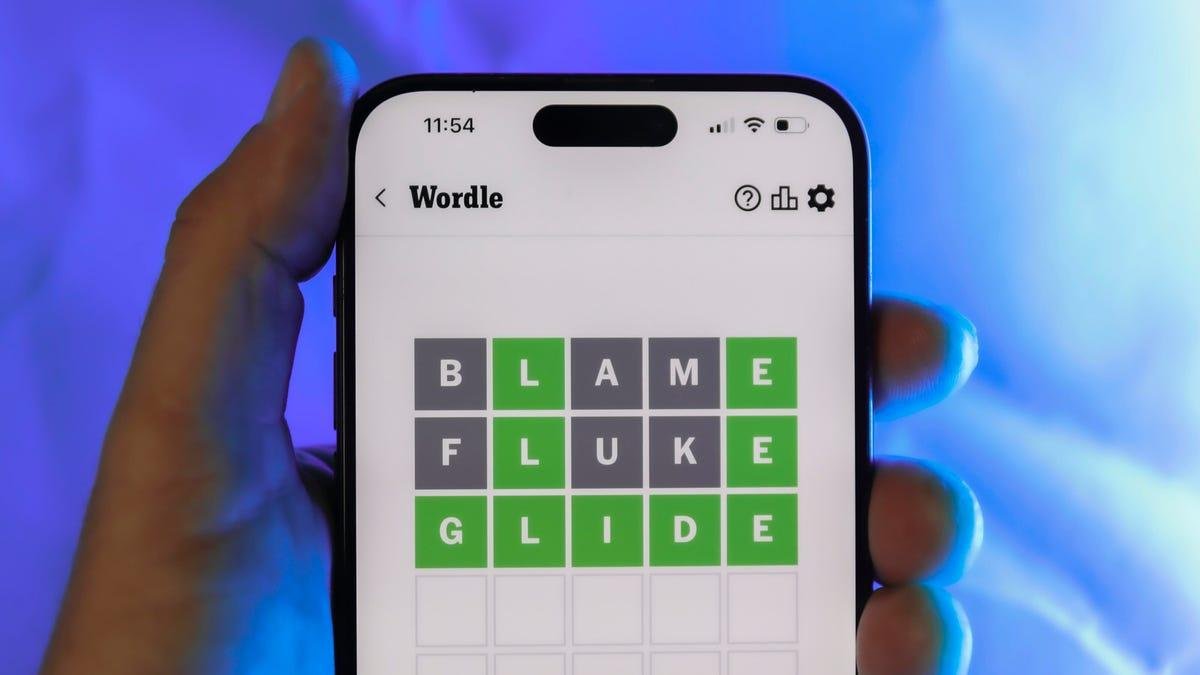
Today's Wordle Hints, Answer and Help for May 18, #1794Looking for the most recent Wordle answer? Click here for today's Wordle hints, as well as our daily answers and hints for The New York Times Mini Crossword, Connections, Connections: Sports Edition and Strands puzzles. Today's Wordle puzzle is a fairly unusual word. If you need a new starter word, check out our list of...
Hermeus raises $350M to build unmanned hypersonic fighters Defense startup Hermeus has raised $350 million to keep developing what it calls the “fastest unmanned aircraft,” in a funding round that has pushed its valuation to $1 billion. The Los Angeles-based startup said Tuesday that it has raised $200 million in equity financing, led by Khosla Ventures. Existing investors Canaan Partners,...

AI research papers are getting better, and it’s a big problem for scientistsJournal editors and peer reviewers are being flooded with AI-generated papers that are almost impossible to detect.by Joshua DziezaMay 15, 2026, 11:00 AM UTCLast summer, Peter Degen’s postdoctoral supervisor came to him with an unusual problem: One of his papers was being cited too much. Citations are the currency of...

Marilyn Monroe auction features star's make-up and gowns on 100th birthdayWatch: Marilyn Monroe's 100th birthday auctions include jewellery and private lettersAn auction with an array of memorabilia from Marilyn Monroe's estate and friends has already brought in thousands of dollars in bids on the 100th anniversary of her birth. The sale, which began on Thursday, features 185 items from the...

আজকের ডিজিটাল যুগে মোবাইল কানেক্টিভিটি আরও সহজ ও দ্রুত করতে eSIM কুপন (eSIM kupon) একটি জনপ্রিয় ধারণা হয়ে উঠেছে। সাধারণ সিম কার্ডের মতো ফিজিক্যাল কার্ড ব্যবহার না করে eSIM সরাসরি ডিভাইসে ইনস্টল করা যায়। এই সেবাকে আরও সাশ্রয়ী করতে বিভিন্ন কোম্পানি এখন কুপন বা ডিসকাউন্ট কোড প্রদান করছে, যাকে আমরা eSIM coupons বলি। eSIM coupons মূলত এমন একটি প্রোমো কোড বা ডিসকাউন্ট অফার যা...

