


Filmmaking Beyond the ‘Slop’ of Generative AI

Filmmaking Beyond the ‘Slop’ of Generative AI
For the better part of two years, the dominant conversation around AI-generated imagery has been summed up in a single derogatory word: slop. It has become a catch-all term used to describe uncanny, mindless, visually assaulting images and videos generated by LLMs from user prompts and published promptly online and on social media.
But is it fair to call all AI-generated content slop?
Google Labs is trying to rewrite that narrative with its Flow Sessions. At New York’s Metrograph theater on Wednesday, Google screened several short films created by the fourth cohort of its Google Flow Sessions artist residency program.
I got an early look at the films created by each of the 11 resident artists. Far from the mindless output that the term “AI slop” implies, the debuting works are deeply and intensely emotional, personal, tactile and imaginative. As someone who spent years taking film classes and studying avant-garde cinema, these projects feel less like traditional shorts and more like cinematic memories or “essay films” that incorporate the use of generative AI tools during production, not as a shortcut to the scrutinous creation and editing process, but as an assistant to create visions that previously required prohibitive budgets and large-scale crews.
At the center of these short films is Google Flow, a generative AI media creation tool designed to serve as a collaborative canvas that brings an artist’s vision to life. Through Flow Sessions, Google organizes a six-week residency program that brings together artists from a range of backgrounds, including fine art, commercial agencies and beyond, to develop passion projects. Brianna Doyle, head of community at Google Labs, told me that Flow Sessions’ mission is to close the gap between the developers who write the code behind these tools and the artists who actually use them.
The aim isn’t to build AI for artists, but to build AI with them, so the tools become a conduit for expression rather than a replacement for human creativity, storytelling and process.
“AI has opened the doors for them as far as creativity goes,” Doyle said. “It hasn’t been stifling at all. It’s actually reframed what they are able to do.”
Lowering the floor and raising the ceiling
The dominant fear among traditionalists is that the use of AI dilutes authenticity, reducing the sanctity of art to machine-made approximations. But for the artists in this cohort, the technology has worked as a catalyst for a new – yet still nuanced – kind of storytelling. The motto, as Doyle says, is to “lower the floor and raise the ceiling.” It’s about reducing the barrier to entry for newcomers to filmmaking while expanding what an independent artist can make and refine.
That shift shows up in the way the tool itself has evolved over time. Flow began as a video-focused system, but artists reported spending most of their time wrestling with images and storyboards rather than footage. In response, Flow incorporated image generation and an organizational interface — folders, labels and structure – that helps ideas move from concept to production without losing momentum, according to Doyle.
For the resident artists, like Ikenna Mokwe, founder of OnGen Studio, that efficiency changes what’s possible. After 15 years in traditional media, he has developed a new workflow in which LLMs and video generation help bridge the gap between an abstract pitch and his vision. His process is built as a loop: he uses Gemini via voice commands to transform late-night brain dumps into structured scripts, cutting out the physical bottleneck of typing, and then relies on custom micro-tools within the flow to automate repetitive camera movements.
Still, Mokwe is clear about what matters most. “Storytelling is at the heart of everything,” he said.
To Mokwe, AI doesn’t write the story, but it provides a faster path from conception to completion.
“I’ve had absolutely zero hesitation,” he said. “I jumped right on it. I took it, and I just haven’t let go, you know? I think [AI] is absolutely amazing. I think it is super empowering.”
Human touch at the forefront
If the work of the resident artists proves anything, it’s that the use of AI doesn’t mean the absence of humanity and intimacy.
Consider artist Dion Lee’s film Two Chairs, a devastatingly moving meditation on the decision women make about whether to have children. In the film, Lee writes two letters – one to her 18-year-old daughter and one to a version of herself that never became a mother. Using two chairs as a visual anchor, she stages parallel lives side by side, creating an emotionally resonant internal debate.

Other artists are exploring the boundary between digital and physical mediums. Artist Adam Brumley, who leads Studio Heartfelt, uses Flow to translate his poems and drawings into 3D needle-felted characters that he then animates. What’s most striking is that Brumley’s engagement with AI tools sends him back to physical needing felting to complement his digital work.
For Brumley, AI sits at the end of a deeply human process, helping him nail down specific textures and lighting in his projects, while agents expand his world without breaking his vision for his characters.
“I think the thing that excites me about AI is just the ability to explore so many possibilities quickly,” Brumley said. “As a one-man band over here, being able to take an idea through the finish line […] it just would not be possible to do that if I had fabricated all the sets, done everything and done the characters and all that.”
Though the 11 artists come from a range of backgrounds, methods, aesthetics and inspirations, their artistic impulses read similarly: There is a shared insistence on personal authorship in each film.

Toward a new future of AI and art
You’ve heard of renowned artists and filmmakers critiquing AI use in their art. “I’d rather die,” Guillermo Del Toro proclaimed when asked whether he’d use AI in his films. But with AI tools becoming more prevalent and refined, a new era of filmmaking may be on the horizon – one where AI and humans intersect to create art.
In this cohort, generative tools and gents aren’t used to bypass craft or process, but to storyboard with more freedom, iterate with less friction and refine until the emotional depth of the film is reached. The question is less about whether a machine can produce an image and whether the film can still carry meaning.
That’s where the “beyond slop” argument lands. Flow Sessions is not a flood of outputs; these films treat generative AI tools as instruments of their vision, helping to sharpen narrative intention and retain human perspective in every frame, still and moment.
You can learn about each resident artist and watch their projects below:
- Man VS Hairline by Ikenna Mokwe: This British comedy follows a man’s life as he navigates his hair journey and searches for identity.
- Mascot by Daniel Garcia: In this horror-thriller that models after a fable, a tourist realizes the true cost of stealing a photo of a street performer dressed as an off-brand mascot.
- FRIK by Mehdi Saqi: A unique creature struggles to fit in until a strange encounter leads him somewhere that changes everything.
- Nothin’ Beats a Cheeseburger by Andrew Nethery: Borg, an interplanetary explorer, discovers the World’s Best Cheeseburger in a small Michigan town.
- Wobbles by Matt Slamowitz: A grief-ridden woman experiences an extraordinary journey when a creature emerges in New York.
- Two Chairs by Dion Lee: A woman, Dion, writes two letters — one to her 18-year-old daughter and one to a future version of herself that doesn’t have children — depicting the internal debate of motherhood.
- One Breath At a Time by Santiago Carrasquilla: This unconventional narrative film visualizes the first-person experience of meditating.
- 2ndskin by Kat Vlasova: A lab-grown human’s cybersuit takes her on a journey of connection in this dance film.
- The Call by Ariel Rosso: A woman follows a pink light and an unseen pull through an empty coastal town to the space between memory and dream.
- Atoms in Me by Adam Brumley: A creature reflects on his atoms, pondering the mystery of his existence, and he arrives at a quiet realization.
- Where Did The Love Go by Nina Menzel: A poetic and lyrical experimental short film that explores memory, grief, longing, loss and the traces that love leaves behind.

Macy is a writer on the AI Team. She covers how AI is changing daily life and how to make the most of it. This includes writing about consumer AI products and their real-world impact, from breakthrough tools reshaping daily life to the intimate ways people interact with AI technology day-to-day. Macy is a North Carolina native who graduated from UNC-Chapel Hill with a BA in English and a second BA in Journalism. You can reach her at mmeyer@cnet.com. See full bio
Patrocinados
Patrocinados
Patrocinados
Patrocinados
Publicaciones
Categorías
Read More
German broadcaster removes TV intro after Elon Musk takes legal action1 hour agoJessica ParkerBerlin correspondentAlex Wong/Getty ImagesElon Musk reacted to the ZDF broadcast after it was highlighted by a German journalistGerman public broadcaster ZDF has removed part of a report that claimed tech trillionaire Elon Musk had called for migrants to be hunted in Northern Ireland.ZDF conceded its...

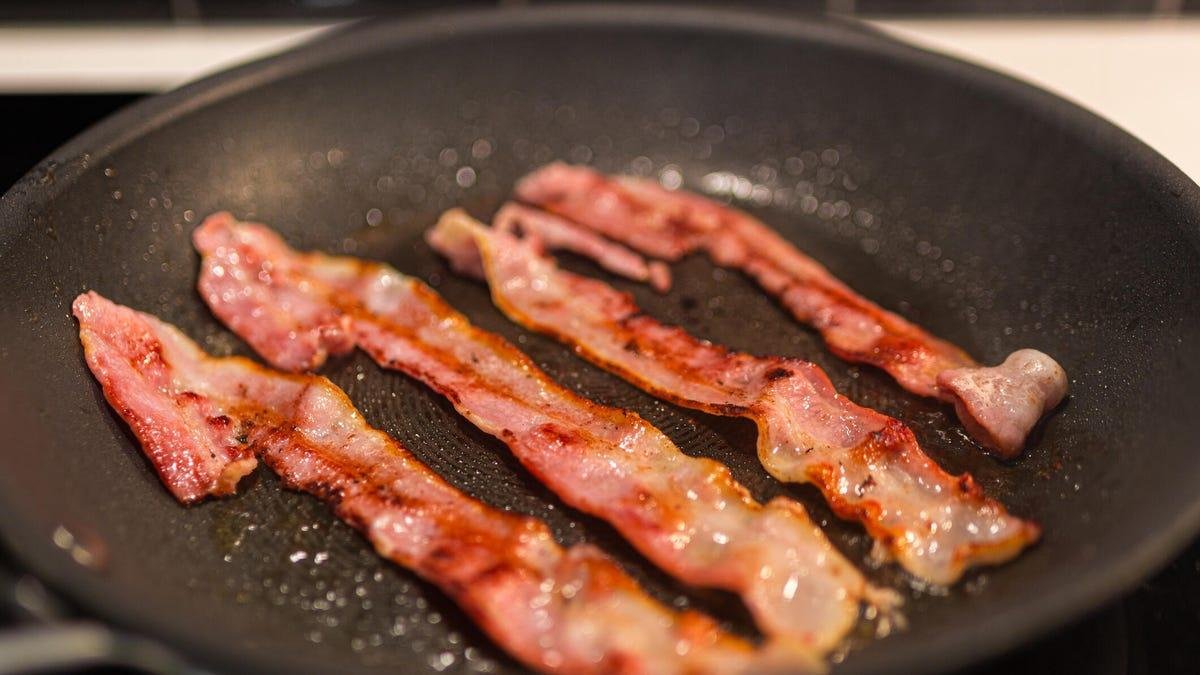
I Tried Cooking Bacon 3 Ways. It Turns Out I've Been Doing It All Wrong Why You Can Trust CNET Our expert, award-winning staff selects the products we cover and rigorously researches and tests our top picks. If you buy through our links, we may get a commission. Reviews ethics statement I put three methods for making bacon to the test in my own kitchen. One prevailed and it's my new...
Thailand cuts visa-free stay period for more than 90 countries including UKEPATourists from 93 countries have been able to visit Thailand without needing a visa for 60 days since July 2024UK citizens are among dozens of nationalities who will soon have to apply for a visa if they wish to stay in Thailand for more than 30 days.Tourists from 93 countries have been able to visit without needing a...

You May Not Know About This Rule That Could Boost Your Retirement Savings We research all brands listed and may earn a fee from our partners. Research and financial considerations may influence how brands are displayed. Not all brands are included. Learn more. Saving smartly for retirement could be the difference between having enough money...

Essentials est devenu un choix populaire pour les personnes qui recherchent un style simple, moderne et confortable. En France, la tendance des vêtements minimalistes continue de séduire toutes les générations. Les collections Essentials permettent de créer des tenues faciles à porter chaque jour sans perdre en élégance. Le...

