


Decoding Global Governance: Strategic Perspectives from a Leading Comparative Politics Book
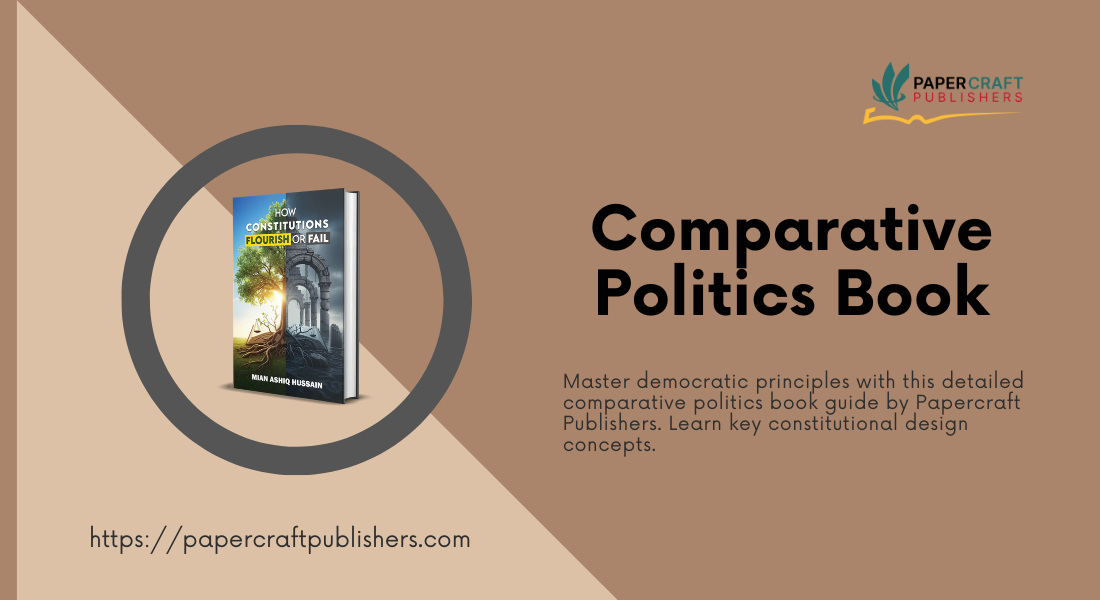
Statecraft is driven by a constant balancing act between authority, liberty, and legal order. Around the world, sovereign nations rely on formal institutions to structure public authority and preserve social harmony. When evaluating why certain governance systems maintain long-term stability while others stumble, researchers often turn to comparative analysis. Reading a well-researched comparative politics book gives students, policy advisors, and legal practitioners a structured way to compare different administrative systems and evaluate how constitutional principles work in practice.
A nation's legal backbone does far more than list rights; it sets up the machinery of public decision-making. It details how laws are made, defines judicial limits, and protects civil rights against executive overreach. Yet, even the most thoughtfully drafted document depends heavily on the political culture and institutional integrity of the society it governs.
Analyzing Institutional Stability and Governance Frameworks
Evaluating constitutional design requires looking closely at how legal mandates interact with social realities. Stable governance depends on institutional frameworks that adapt smoothly to socioeconomic changes without compromising fundamental rights.
Core Foundations of Resilient Statecraft
Key elements that support institutional longevity include:
- Judicial Autonomy: Courts must render decisions free from administrative pressure or political retaliation.
- Divided Powers: Distributing authority across separate branches keeps power balanced and prevents autocratic overreach.
- Civic Engagement: Democratic health relies on open channels for public feedback and legislative input.
- Flexible Amendment Mechanisms: Constitutions must offer clear, structured ways to update laws as society changes.
Common Causes of Governance Failures
Administrative systems frequently run into trouble due to recognizable structural defects:
- Excessive Power Concentration: Centralizing decision-making weakens provincial administration and breeds local discontent.
- Statute Inflexibility: Frameworks that resist legal updates create deadlocks during political or economic crises.
- Administrative Inefficiency: Weak enforcement bodies turn constitutional promises into empty declarations.
Critical Overview: Evaluating How Constitutions Flourish or Fail
In his comprehensive analysis titled How Constitutions Flourish or Fail, legal scholar Mian Ashiq Hussain explores the complex mechanics of constitutional evolution and governance. The text compares democratic developments across different regions, identifying why certain legal systems maintain order while others struggle with institutional instability.
The author examines how historical transitions, post-colonial challenges, and institutional design choices impact national governance. By contrasting global administrative systems with local legal experiences, the work highlights the importance of tailoring constitutional frameworks to fit real-world socioeconomic contexts. It stands out as an indispensable resource for law students, public policy researchers, civil service candidates, and legal scholars alike.
Academic and Professional Applications of Legal Studies
Analyzing constitutional history and global statecraft offers clear advantages across several fields:
- Legal Practice: Deepens statutory understanding and improves arguments in constitutional litigation.
- Policy Formulation: Helps legislative teams draft laws that withstand judicial review and administrative hurdles.
- Higher Education: Supplies political science students with clear tools to analyze international developments.
- Civil Service Administration: Provides public administrators with valuable insights into effective policy delivery and institutional governance.
Comparative Dimensions in Modern Legal Research
Relying on a comprehensive comparative politics book allows scholars to examine domestic governance challenges within a broader global context. Looking at how historical legal traditions developed across different regions helps clarify universal administrative standards.
For legal scholars analyzing South Asian legal developments, reading an authoritative Pakistan constitution book helps make sense of local governance challenges. Tracing historic legal milestones clarifies modern debates on provincial autonomy, power distribution, and judicial review. Studying these comparative dynamics prepares researchers to propose realistic, well-informed structural reforms.
Primary Benefits of Engaging with Constitutional Literature
Studying literature focused on governance and public policy provides key analytical tools for researchers and legal specialists:
- Refined Critical Thinking: Readers evaluate legal frameworks through global comparisons instead of isolated regional perspectives.
- Practical Policy Knowledge: Direct analysis demonstrates how institutional design influences economic growth and legal equity.
- Comprehensive Exam Readiness: Thorough coverage of legal history aids candidates preparing for competitive civil service exams.
- Accessible Legal Concepts: Clear writing breaks down intricate administrative mechanisms into easy-to-digest ideas.
Conclusion
Understanding why political institutions succeed or decline is essential for anyone engaged in legal practice, policy formulation, or academic research. Examining constitutional design through a comparative lens provides scholars with the perspective needed to navigate complex administrative challenges. Rigorous academic publishing plays a vital role in elevating public discourse by connecting abstract political concepts with practical governance solutions. For readers seeking high-quality legal and political texts, exploring the extensive catalog at Papercraft Publishers offers direct access to key insights on constitutional history, statecraft, and public administration.
Frequently Asked Questions
Who is the author of How Constitutions Flourish or Fail?
Mian Ashiq Hussain wrote How Constitutions Flourish or Fail, offering a scholarly and detailed study on constitutional evolution, institutional balance, and democratic governance systems worldwide.
Is this text appropriate for competitive exam candidates and law students?
Yes, this work is an excellent study companion for law students, political science researchers, public administration candidates, and policy analysts preparing for competitive examinations.
What makes this publication an essential comparative politics book for legal studies?
The text offers a deep cross-national comparative analysis of legal systems, examining how institutional design, court autonomy, and legislative accountability influence state stability across various political traditions.
How does the publication address post-colonial legal frameworks?
The book delivers insightful commentary on post-colonial constitutional history, examining power-sharing between central and provincial bodies, legislative development, and the ongoing trajectory of democratic reforms.
Why should public policy researchers study legal structures?
Studying constitutional structures helps policy analysts understand the legal and historical context behind statutory drafting, enabling them to design public policies that are both effective and constitutionally sound.
Sponsored
Sponsored
Sponsored
Sponsored
Ads
Categories
Read More
We saved £6,000 on holidays by swapping homes with strangersImage source, Henry VanderpumpImage caption, The Vanderpump family on holiday in Denmark last yearWould you swap homes with a stranger in exchange for a cheaper holiday? Or would the idea of someone sleeping in your bed and using your kitchen while you were away put you off?Henry Vanderpump, 42, his wife Elliw, 39, and their two young...

Spotify launches an ElevenLabs-powered audiobook creation tool Alongside tools for AI-generated podcasts, Spotify on Thursday introduced a new, ElevenLabs-powered AI tool for self-publishing audiobooks within the Spotify for Authors platform. The company said at its Investor Day event that the feature will launch in beta this June on an invite-only basis, initially with support for the English...

Watch: Runners v robots at China half marathonRobots competed in a half marathon race in Beijing on Sunday, with the winning machine leaving its human rivals for dust.The winning robot, Lightning, was developed by Chinese smartphone maker Honor and finished the race in 50 minutes and 26 seconds, according to race organisers. Uganda's Jacob Kiplimo holds the men's half marathon world record,...

Introduction Fiber optic networks have become the foundation of modern communication systems, supporting everything from internet services and cloud computing to telecommunications and enterprise connectivity. As organizations continue to demand faster data transmission and more reliable connections, every component within a fiber optic system plays an important role in maintaining...

For most of modern medical history, healthcare has been reactive. A patient experiences symptoms, books an appointment, undergoes diagnosis, and receives treatment. While this model has served the industry for decades, it is increasingly inefficient in a world where technology can identify risks long before symptoms become severe. In 2026, healthcare is undergoing a major transformation toward...

