Smooth Motors Stepper Motor Actuators: Understanding Microstepping and Resolution Benefits
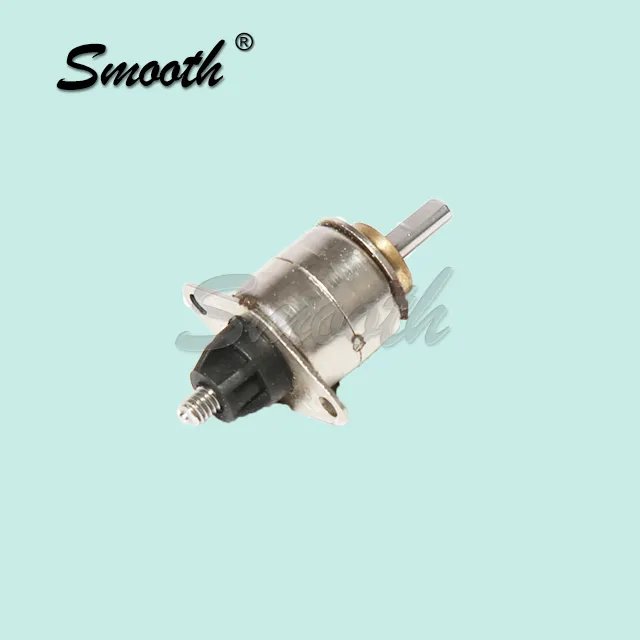
Microstepping is one of those technical concepts that sounds more complicated than it actually is, yet understanding it properly can meaningfully improve how an engineer specifies and tunes a motion system. At its core, microstepping allows a stepper motor to move in increments finer than its native full-step resolution, opening up a range of practical benefits that extend well beyond simply achieving more precise positioning.
What Microstepping Actually Does
A standard stepper motor moves in fixed full or half steps determined by its physical construction, typically corresponding to a specific number of degrees per step. Microstepping divides each of these physical steps into smaller electrical increments by precisely controlling the current supplied to each motor phase, effectively allowing the rotor to settle at intermediate positions between the full mechanical step points. This electronic subdivision happens entirely within the driver circuitry, meaning the same physical motor can achieve significantly finer resolution simply through a different control approach rather than any change to the motor's internal construction.
Smoother Motion and Reduced Vibration
Beyond finer positioning resolution, microstepping's most immediately noticeable benefit is smoother overall motion. Full-step operation moves the rotor in relatively large, discrete jumps that can introduce audible vibration and mechanical resonance, particularly at certain speeds where the step frequency aligns unfavorably with the mechanical system's natural frequency. Microstepping smooths out these abrupt transitions considerably, producing quieter, less jarring motion that reduces mechanical stress on connected components over the actuator's operational lifetime.
Improving Apparent Positioning Accuracy
While microstepping technically improves resolution, it is worth understanding that it does not necessarily improve absolute accuracy to the same degree, since factors like manufacturing tolerances and magnetic detent characteristics still influence exactly where the rotor settles at each microstep. That said, for many practical applications, the smoother motion and finer control microstepping provides translates into genuinely improved real-world positioning performance, particularly when combined with a well-matched mechanical system that does not introduce additional backlash or compliance of its own.
Trade-offs Engineers Should Understand
Higher microstepping resolution does come with some trade-offs worth considering during the specification process. Torque output at very fine microstep resolutions can decrease slightly compared to full-step operation, and the electrical noise floor becomes more significant relative to the smaller current changes involved at very high resolution settings. Engineers researching stepper motor actuators for a precision application should test actual performance at their intended microstepping resolution rather than assuming maximum available resolution automatically produces the best possible outcome for every use case.
Matching Resolution to Real Application Needs
Not every application benefits from the highest available microstepping resolution, and overspecifying resolution can introduce unnecessary cost and complexity without delivering meaningful real-world improvement. Reviewing the actual required tolerance for the finished application, and working backward to determine the minimum resolution needed to comfortably achieve that tolerance, keeps the specification both practical and cost-effective rather than chasing an impressive-sounding number that offers little genuine benefit.
Getting the Most From Microstepping in Practice
Properly configured microstepping delivers genuine, measurable benefits in motion smoothness, noise reduction, and practical positioning performance across a wide range of applications. Engineers who take the time to test their specific mechanical system at several candidate resolution settings, rather than defaulting to a single assumed value, consistently find the sweet spot that delivers smooth, quiet, and accurate motion without introducing unnecessary cost or unwanted torque reduction into their final design.
Sponsored
Sponsored
Sponsored
Sponsored
Ads
Categories
Read More
Larger, More Spacious 2027 Kia Seltos Debuts With New Hybrid VariantKia's combustion-powered Seltos has grown up and glowed up with more space and bigger tech inside.Antuan started out in the automotive industry the old-fashioned way, by turning wrenches in a driveway and picking up speeding tickets. He now has nearly 20 years of expertise and experience behind the wheel of hundreds of cars,...
Oura acquires Doublepoint, a startup that specializes in gesture recognition technology Oura announced on Thursday that it has acquired Doublepoint, a startup that specializes in technology that enables users to control wearables through simple, natural movements using a combination of artificial intelligence and biometric data. The financial terms of the deal were not disclosed. The move...
Samsung’s 2TB 9100 Pro SSD is actually somewhat reasonably pricedCameron Faulkner is an editor covering deals and gaming hardware. He joined in 2018, and after a two-year stint at Polygon, he rejoined The Verge in May 2025.Next to buying RAM, finding a fast, high-capacity NVMe SSD at a reasonable price has been a challenge during RAMageddon. I don’t want to say it’s getting easier, but one of...

We're All Copyright Owners. Welcome to the Mess That AI Has CreatedYou probably rarely, if ever, think about copyright law. But if you want to understand why there are so many lawsuits being filed against AI companies, knowing a bit about copyright law is key. And whether you know it or not, these issues affect you.If you've ever written a blog post, taken a photo or created an original video,...

Zelensky condemns Russian 'utter cynicism' as it strikes ahead of truceDSNS UkraineOvernight combined missile and drone strikes killed five and injured dozens across UkraineUkraine's President Volodymyr Zelensky has condemned Russia's "cynicism" for continuing to launch deadly attacks despite seeking a pause in hostilities.Russia, which is preparing to hold celebrations to mark victory in World...