The only instant cameras worth your money
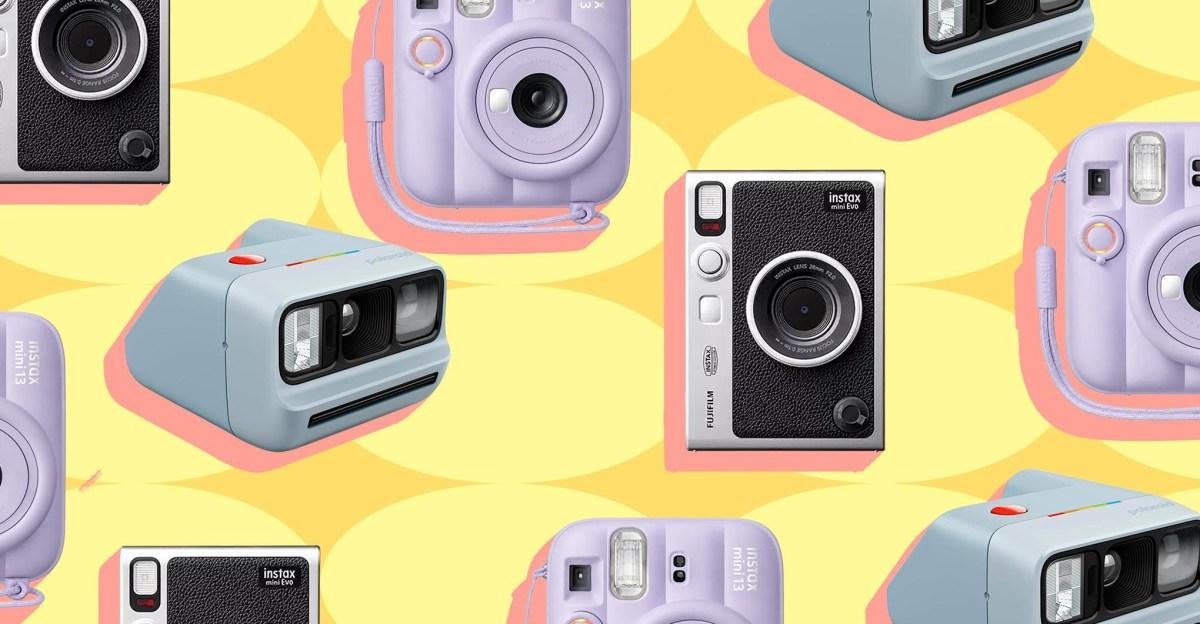
The only instant cameras worth your money
There’s something magical about using instant cameras that smartphones can’t match. You can capture a moment, print it out, and then give the photo as a gift or hold onto it. Image quality won’t be all that good, but imperfections are part of the allure.
We tested instant camera models from popular brands and landed on a handful that we think are the best. Some aim to preserve the classic experience above all else, while others support companion apps and the ability to print stored photos.
Fujifilm’s latest Instax cameras are the best out there for most people. The company’s Instax Mini Evo is a bit pricey, but it produces great-looking images and offers a lot of creative control. If you’re shopping on a tighter budget, the Instax Mini 13 also takes good photos but has fewer features. The Polaroid Flip is the best retro-focused experience (be warned: prints are pricey!), while Kodak’s Mini Retro 3 might be a better purchase for some because its prints are quite affordable by comparison.
Featured Products
The best instant camera


The best instant camera if you’re on a budget


The best instant camera for retro fans


The best instant camera
$213
The Good
- Great use of dials and buttons
- Lots of printing flexibility
- Good battery life
The Bad
- Internal storage is limited
- No viewfinder
Film type: Fujifilm Instax Mini film / Film size: 2 x 3 inches / Weight: 285 grams / Charging method: USB-C / Companion app: Yes / Other features: LCD screen, smartphone printing
Fujifilm’s Instax Mini Evo is a hybrid instant camera that bears a resemblance to its premium X100 line of cameras that cost hundreds more. Its vintage dials and buttons look so stylish that they caught the attention of passersby as I walked around Los Angeles.
It’s easy to balk at its price tag, but this camera offers a level of flexibility that sets it apart (and could save you from wasting a bunch of prints). The camera’s dials also let you apply lens options and effects, from retro filters to monochrome shades, and you can even remotely trigger shots from the app. Its 3-inch LCD screen can be used as a viewfinder, and it also lets you preview and select which images you want to print. The camera’s internal storage tops out at 45 images, which is more limited than we’d prefer, though you can send photos from a smartphone to print. Plus, unlike the Instax Mini 13 (a more budget-friendly pick mentioned below), the Evo uses a USB-C port for charging.

The best instant cameras if you’re on a budget


$94
The Good
- Produces relatively true-to-life photos
- Terrific ease of use
- Very affordable
The Bad
- Instax film can get pricey
- Minimal creative control
- Flash can be overpowering
Film type: Fujifilm Instax Mini film / Film size: 2 x 3 inches / Weight: 327 grams / Charging method: AA batteries / Companion app: None / Other features: Built-in selfie mirror, self-timer, film counter
Fujifilm’s Instax Mini 13 is a more budget-friendly option that can take great photos mostly on par with the Mini Evo. It’s easy to use (just twist its lens to turn the camera on or off), it outperforms other budget instant cameras we tested, and we like its bright, playful designs. Its biggest improvement over the Mini 12 is its self-timer, with both two- and 10-second countdown options. Meanwhile, the Instax Mini 41 looks more sleek, but it lacks the Mini 13’s self-timer and costs about $23 more usually.
The Mini 13 produced more true-to-life photos than the non-Fujifilm instant cameras I tested. I also appreciated the Mini 13’s generously sized physical viewfinder and that it shows your remaining shots, which is useful given that each print costs about $1.

Like many instant cameras, it struggles in low light, though the built-in flash brightens dark scenes. The flash can’t be disabled, and it’s very powerful, which resulted in a handful of overexposed shots during testing. It lacks Bluetooth connectivity along with creative shooting modes found on pricier cameras, so you can’t edit photos, apply filters, or choose from different lens effects before printing.


1/2
Fujifilm’s Instax cameras produce excellent-looking photos, but each print costs around $1. Kodak’s hybrid Mini Shot 3 Retro is pricier up front (it retails for $159.99 but it often on sale for much less) but much cheaper to buy film for, making it the better budget pick (or beginner-friendly pick). Replacement cartridges are often around $20 for a 60-print pack. And, because you can preview photos before printing, you’re less likely to waste prints.
The Mini Shot 3 Retro affords you more controls than the Instax Mini 13; it sports an LCD screen for previewing photos, it lets you print photos from your phone via Bluetooth, and you can upload ones you shoot to social media using Kodak’s Photo Printer app. The companion app features frames, stickers, filters, and other effects that would look great in a scrapbook. There’s even a beauty mode and Snapchat-style filters. However, photos taken with the Mini Shot 3 Retro lack sharpness and sometimes have an excessive pink tint, and the prints also feel flimsier.
The best instant cameras for retro fans

Sponsorluk
Reklam
Reklam
Reklam
Kategoriler
Read More
Artemis II Astronauts Get Personal About Historic Mission Senior editor Steven Musil joins a small group of reporters given access to the Artemis crew as they prepare for Friday's splashdown. Steven Musil Night Editor / News Steven Musil is a senior news editor at CNET News. He's been hooked on tech since learning BASIC in the late '70s. When not cleaning up after his daughter...

Snapchat brings AI-powered conversational advertising to its app Snapchat announced on Tuesday that it’s rolling out “AI Sponsored Snaps,” which will allow users to interact directly with brands’ AI agents. Sponsored Snaps are the ads placed directly into the app’s main Chat tab. Until now, users couldn’t interact with these ads, but with the launch of AI Sponsored Ads, they’ll be able to do...

In today's digital world, having a website is not enough. Your customers are searching for products and services online every day, and if your business does not appear on the first page of Google, you are losing valuable opportunities. This is where search engine optimization and professional search engine optimization services become...

Trump administration permits Volvo to keep selling connected cars in the US Volvo Cars reached an agreement with the Trump administration that exempts the automaker from a U.S. crackdown on Chinese-connected vehicle technology. The Swedish automaker, which is majority owned by China’s Geely Holding, said Tuesday that it received specific authorization from the U.S. Department of Commerce to...
What is a 'safe death'? Mentally ill woman asks for assisted dying in Canada8 hours agoNadine YousifSenior Canada reporterToronto Star via Getty ImagesClaire Brosseau has travelled the world doing stand-up comedy and acting in television shows, films and plays. She has also been struggling with diabilitating mental illness from a young age, and has been treated by psychiatrists in four major...