


ShiJingTools Aluminium Base Plate Manual Tile Cutter 45-Degree Bevel Capability
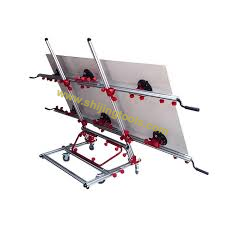
The 45-degree bevel cut stands as one of the most demanding operations in tile installation, transforming a simple rectangular tile into a mitred edge that fits seamlessly into corners and wall transitions. This angled cut requires the tile to intersect the scoring wheel at a precise inclination while maintaining consistent pressure along the entire cut length. Any deviation in the angle translates into visible gaps, uneven joints, or the need for excessive grout to mask imperfections. The equipment must guide the scoring wheel along a fixed axis while the tile sits at a predetermined angle relative to that axis. The cutting mechanism then delivers sufficient force to scribe the glaze and body without causing edge chipping. The angle accuracy depends on the rigidity of the guide system, the precision of the angular stop, and the stability of the base plate. A rigid aluminium foundation resists flexing under load, preserving the geometric relationship between tile and wheel. The lateral stop with its angled reference surface positions the tile at exactly 45 degrees, while the breaker bar applies pressure to separate the waste section cleanly. Without this functionality, installers resort to angle grinders or wet saws, which introduce dust, noise, and slower workflow. The question confronting every tiling contractor remains: can an Aluminium Base Plate Manual Tile Cutter achieve 45-degree bevel cuts or other angled cuts? ShiJingTools, a specialist in veneering tools since 2009, answers this question through a design approach that prioritizes guide rail precision and angular stop durability.
The company's manufacturing facility in Zhejiang Province provides the production foundation for consistent angle cutting performance. However, factory capability alone does not guarantee bevel accuracy. The true differentiator lies in the systematic integration of the guide rail system, angular stop mechanism, and scoring wheel geometry. A typical angle cut initiates with the operator setting the tile against the lateral stop, which incorporates a precisely machined 45-degree reference surface. The scoring wheel then travels along the guide rails, maintaining a fixed relationship to the tile face. The wheel's carbide tip contacts the glaze at the prescribed angle, creating a continuous scribe line. The operator then engages the breaker bar, which applies downward pressure to separate the tile along the scored path. This sequence demands precise coordination between each component. Any play in the guide rail system allows the scoring wheel to wander off the intended line. Any wear on the angular stop permits the tile to shift during scoring. The factory's engineers evaluate these variables through repeated test cycles, measuring cut angle consistency, edge quality, and breaker force distribution. This iterative refinement process transforms a standard frame into a precision bevel cutter.
The scale-up from prototype to production introduces complexities that affect angle consistency. The laboratory's hand-fitted guide system must reproduce in factory assembly without variation. This transition demands precision. Manufacturing technicians calibrate each unit's rail parallelism and angular stop alignment to specified tolerances. The assembly line incorporates test stations where every cutter undergoes angle verification trials. The unit scores and breaks test tiles at 45 degrees while technicians measure the resulting edge angle with protractors. A unit that deviates beyond tolerance returns for adjustment. These quality gates prevent field failures that could compromise corner joints or delay project completion. The manufacturer's established protocols dictate the sampling frequency and test duration for these assessments. Consequently, the total lead time from order to shipment reflects the thoroughness of these quality checks.
The product portfolio includes a comprehensive range of tile cutting tools that demonstrate this engineering approach across various formats. For those seeking practical examples of bevel functionality in action, the dedicated application article at https://www.shijingtools.com/ presents real-world scenarios that illustrate the equipment's capabilities. Clear specifications lead to faster selection, which in turn reduces project delays. The selection process starts when the contractor matches the tile thickness and required angle to the cutter's capacity and angular stop range. Transparent communication about each parameter eliminates guesswork. An aluminium base plate manual tile cutter's ability to achieve 45-degree bevel cuts ultimately depends on the manufacturer's commitment to rail rigidity and angular stop precision. The right equipment partner invests engineering effort in mapping the exact relationship between guide geometry, tile positioning, and scoring consistency. Does your current manual tile cutter supplier provide that level of angle control for your bevel installation projects?
Sponsorluk
Reklam
Reklam
Reklam
Kategoriler
Read More
Why the economics make this the craziest World Cup ever7 hours agoFaisal IslamEconomics editorBBCFootball World Cups are rarely completely politics-free but never has the beautiful game navigated a geopolitical high-wire act of this kind. The main host is at war with a participant, whose team must commute in on match days from another country.Add to that the quite astonishing coincidence of the...

When you need reliable Metal Fabrication NYC services, choosing an experienced fabrication company makes all the difference. TG Metal Works delivers custom metal fabrication solutions for residential, commercial, and industrial projects. Whether you require structural steel, custom railings, welding, or precision metal components, our skilled team focuses on quality craftsmanship, durability,...
Nigeria's herder-farmer conflict: Deadly mix of religion, cattle and land in Plateau state'Peace is a gradual thing': How land, cattle and identity fuel a deadly Nigerian conflictAFP via Getty ImagesCountless families have been devastated by the violence that continues as the security forces have no presence in much of Plateau state"Around midnight, I heard the first gunshots," recalls Joseph...

The World Cup of adverts: How brands are competing to entertain, not simply sell2 hours agoPaul GlynnCulture reporterNike/Palace/England/Adidas/Irn-BruClockwise from top left: Wayne Rooney, Kim Kardashian and son Saint West, Susan Boyle and Timothée Chalamet have all featured in adverts in advance of the World CupAlmost six minutes into Nike's frenzied recent football-themed advert, Norwegian...

Custom Specialty Rigid Packaging for Premium Product Presentation Custom specialty rigid packaging is one of the best choices for businesses that want to present their products in a premium way. Unlike standard folding cartons, rigid packaging is made from thick and durable paperboard that provides excellent protection while creating a luxurious unboxing experience. Whether you sell cosmetics,...

