Tributes paid to Jason Arday after ex-Cambridge professor found dead
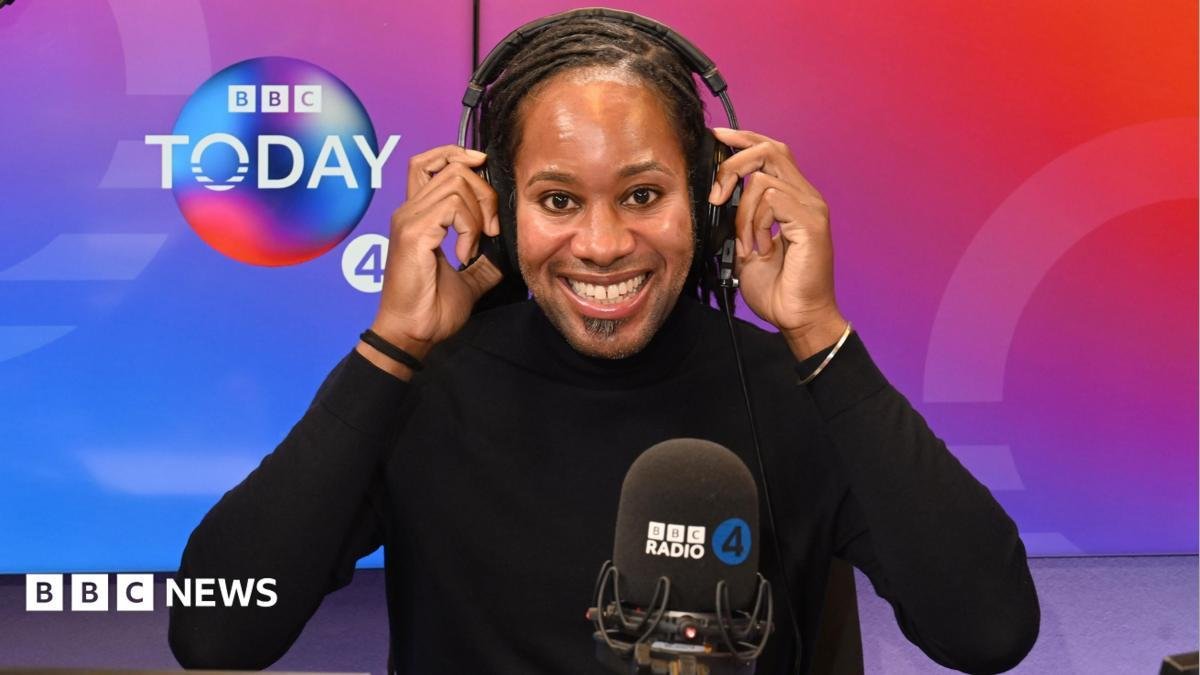
Tributes paid to Jason Arday after ex-Cambridge professor found dead
Tributes have been paid to Jason Arday, the former Cambridge professor, after he was found dead at an address in Battersea, south London, on Friday afternoon.
In a statement issued by his publisher Simon & Schuster UK, Prof Arday's family said they were "in shock to have lost this amazing father, partner, brother, uncle and son".
They said a "campaign of misinformation" had been too much for him.
Arday, 41, resigned as a Cambridge professor of sociology of education last week after allegations of plagiarism and questions about some of his achievements. He had denied the claims.
The University of Cambridge vice-chancellor Prof Deborah Prentice led the tributes, saying the faculty was "desperately saddened" to learn of his death.
"Our heartfelt sympathies go to Jason Arday's family and friends at this incredibly difficult time."
Education Secretary Lucy Powell said she was "deeply shocked and saddened" to hear about the death and she urged people to "remember there are real people with loved ones involved".
Mayor of London Sir Sadiq Khan is among those who have said Arday was subjected to unrelenting media scrutiny.
He said Arday had faced "an unacceptable public hounding and campaign of abuse", adding that he was a victim of "a pernicious public shaming that other people in his position simply wouldn't have faced".
"His death was a tragedy, but once again it should be a wake up call for all of us," he posted on X.
Director of the Autism Research Centre at the University of Cambridge, Prof Simon Baron-Cohen said he spoke to Arday the morning of his death, and said the academic had felt unable to leave the house.
"He has experienced what he described as a campaign against him, for the last three years," he told BBC News.
"What he was saying to me was 'they've destroyed my life' - it's not clear who they were but I think he was referring to the media."
"The personal attacks on him have been so immense.
"This isn't to point fingers, and its not a single media outlet, but in the last few weeks since he resigned, I must have received a hundred new requests - to comment on his life."
Speaking to BBC Newsnight, Professor of Black Studies Kehinde Andrews, a friend of Arday, described him as "very down" after resigning from Cambridge.
"He was very upset. He felt that there was no way out. He effectively wasn't leaving the house. He had lost a lost of weight," Andrews said.
"There should be a wakeup call to just how bad black academics actually have it in academia."
Labour MP Bell Ribeiro-Addy also told the programme "the idea that an academic would be dragged through this amount of media scrutiny is unheard of".
Shadow communities secretary Sir James Cleverly said he was angered by the "tragic" death and said "a number of people at a number of academic institutions have serious questions to answer".
"His whole world fell apart," he said in a post on X.
Arday had denied any plagiarism - but admitted errors in his work - and said the recent controversy about his work had led to "an unrelenting level of public scrutiny and personal attack".
The row first erupted after another academic - self-defined "race realist" Nathan Cofnas, who was sacked from his Cambridge role in 2024 - said he found numerous instances of plagiarism in the professor's work.
Arday said some errors in his early academic work arose because of his autism, as he relied on using mimicry to make sense of information. Similar scrutiny would find similar errors in work by other academics, he said.
Arday's appointment as Cambridge's youngest ever black professor at the age of 37 in 2023 was hailed at the time as a progressive moment.
Announcing his resignation last week, Arday said the "personal cost" of the scrutiny of him had become "too great".
He said: "While criticism is an inevitable part of academic life, what I have experienced has gone far beyond scholarly disagreement.
"The relentless accusations, speculation and public commentary have taken a profound toll on me and on those I love."
He stressed that his resignation should not "be mistaken for an acceptance of the narratives that have surrounded me".
Cambridge initially said claims of plagiarism regarding Arday's thesis and some journal publications had been investigated by Liverpool John Moores University (LJMU) and the journals in question.
LJMU - which awarded Arday his PhD in 2015 - concluded that he had not plagiarised work.
Sponsorluk
Reklam
Reklam
Reklam
Kategoriler
Read More
Remains of lost arctic explorers identified with DNA, nearly two centuries later Remains of lost arctic explorers identified with DNA, nearly two centuries later New research shines a light on the lost Franklin Expedition, a 19th century voyage to the Canadian Arctic gone awry.

Xbox Set to Bring Tony Hawk's Pro Skater to Game Pass Soon Why You Can Trust CNET Our expert, award-winning staff selects the products we cover and rigorously researches and tests our top picks. If you buy through our links, we may get a commission. Reviews ethics statement This came after Xbox announced thousands of layoffs at the company. Zachary McAuliffe Senior Writer...

Apple's Next Vision Pro Headset Is Reportedly Years AwayIf you've got a Vision Pro headset, you're set for now. If you want the next model, you'll have to wait, possibly two years or more.Bloomberg managing editor Mark Gurman said in his Power On newsletter that he doesn't expect the next Vision Pro edition until 2028 at the earliest. Gurman believes that, even though the next iteration of the...
Uber wants to be a Swiss Army Knife for robotaxis Uber has a pitch for autonomous vehicle makers: we got this. The ride-hailing and food delivery company has launched a new division called Uber Autonomous Solutions designed to take on all the tasks associated with operating a robotaxi, self-driving truck, or sidewalk delivery robot business, including software and support services. The...

Recursive Superintelligence signs $410M compute deal with Amazon On Tuesday, the AI company Recursive Superintelligence announced a $410 million compute deal with Amazon Web Services. The company, which emerged from stealth in May with $650 million in funding, is focused on building open-ended self-improving systems, a potentially compute-intensive approach to AI research. This multiyear deal...