China censors public mourning as it holds former premier's funeral
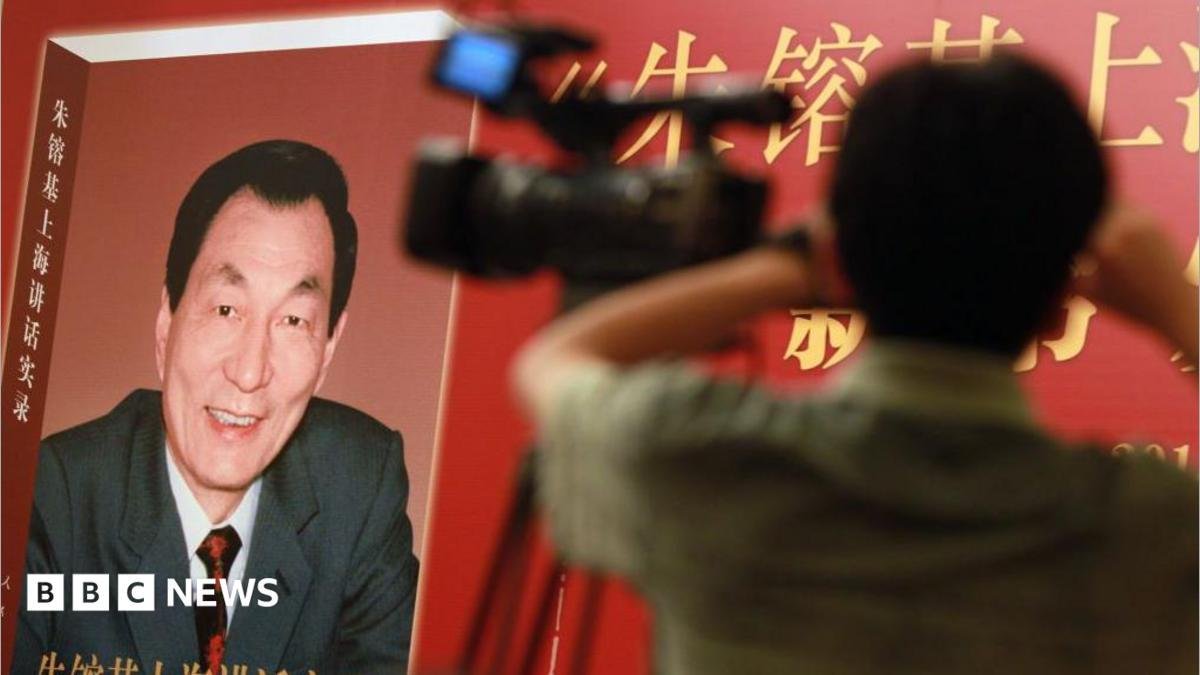
Zhu Rongji: China censors public mourning as it holds former premier's funeral
Flags at government sites are flying at half-mast and security vehicles are parked in the heart of Beijing, as China mourns former Premier Zhu Rongji.
Zhu died of an illness last week at 97 and was cremated at a funeral in Beijing on Tuesday. The ceremony, attended by senior leaders including President Xi Jinping, was kept low-key. No footage has been released.
Zhu, who served as China's premier from 1998 to 2003, is remembered as one of the country's most important economic reformers.
While hailing the late premier as a "loyal" party member, the Chinese state is also wary that public mourning for his era of reform can easily turn into veiled criticisms of the current government under Xi.
Xi was among the leaders who had visited Zhu in hospital or sent condolences after his death, Chinese state media reported on Tuesday. Others included incumbent premier Li Qiang and ex-president Hu Jintao.
After his death, state media described Zhu as an "outstanding member of the Chinese Communist Party" and a "time-tested and loyal Communist fighter".
He was cremated at Babaoshan Revolutionary Cemetery, an exclusive resting place for high-ranking officials and other prominent figures.
Meanwhile, online, posts about Zhu have been contained and censored - including an essay written by economist Zhao Jian, which remembered Zhu's era as a time when people were "properly poor" but saw a clear future ahead.
"There were no smartphones then, no short-form videos and no screens filled by the purveyors of anxiety," he wrote.
"The sky was blue, life moved slowly and people could say what they really thought."
Zhao's comments were removed from WeChat the day after they were published.
The party has long been fearful of public reaction to deaths of senior officials and public figures.
The deaths of former premier Zhou Enlai in 1976 and former CCP general secretary Hu Yaobang in 1989 prompted widespread outpourings of grief that morphed into protests.
Zhu died just days before the Communist Party leadership gathered to commemorate the birth centenary of President Jiang Zemin, who died in 2022.
The death of Zhu and Jiang, two prominent leaders from the same era, has prompted a wave of nostalgia among many Chinese people for a time when the country looked as if it was going in a different direction - when it appeared that it may open to the world and allow more freedom for its people.
Previously purged under Mao Zedong's regime, Zhu was brought back into the fold after Mao's death in 1976.
Zhu served as premier alongside Jiang Zemin, who became Communist Party chief in 1989 and president in 1993.
The two men served alongside each other at the top of China's leadership from 1998 to 2003, leading China through an era of rapid economic growth and entry into global trade.
During that time, China pushed through painful changes: shuttering chronically unprofitable state firms, dismantling the old housing system in favour of a commercial property market, weathering the Asian financial crisis of the late 1990s and joining the World Trade Organization in 2001.
But what appears to captivate Chinese people from that era was that both had a certain style - a common touch.
A Chinese state media documentary about Jiang Zemin's life shows him banging on tables one minute and erupting in laughter the next.
Zhu, meanwhile, once labelled rogue bankers as "half-wits" and described the flood dykes lining the Yangtze River as "flimsy and porous as tofu dregs".
He was also known for his deadpan humour, like at a news conference in 1999, when he was asked about allegations that China had donated to US President Bill Clinton's Democratic Party.
"If the political contribution were to be really that effective, and I have $146 billion of foreign exchange reserve, I can put out at least $10 billion for that purpose. Why just $300,000? That would be too foolish," he said, drawing laughter from the crowd.
The day he died, the Jiang Zemin documentary featured Zhu explaining how he persuaded his comrades to implement tough reforms.
"I'm not here to talk about pros and cons. I am here to talk about how to get things done," he is heard saying.
Circulating on social media is a picture of Jiang laughing together with Zhu and praised their candid communication.
"They told the truth, shouldered the responsibility and spared no effort in serving the people," the post read.
It's a style that has captivated Chinese audiences and stands in contrast with the current carefully choreographed leadership style.
The passing of the two leaders into China's history books marks a definitive end to the breakneck reforms of the 1990s and early 2000s, with an emphasis on private entrepreneurship and wealth creation.
That stands in contrast to President Xi, who has exerted greater central control and pressed a state-driven economic policy focused on technological autonomy and strategic industries.
In a 40-minute speech on Monday, Xi called on the Communist Party to carry forward Jiang's legacy, presenting the current leadership as the continuation of his political and ideological project.
"On the new journey ahead, we must heighten our sense of vigilance against potential dangers," he said during Monday's event.
"With an indomitable fighting spirit and superb skill in struggle," we must "proactively meet the major tests posed by high winds and rushing waters, or even by raging storms," he added.
He also praised Jiang's crackdown on a reformist Shanghai newspaper in 1989 after it voiced support for the pro-democracy demonstrations that culminated in the bloody Tiananmen Square crackdown in Beijing.
"Xi is committed to the great renaissance of the Chinese nation," says Kerry Brown, Professor of Chinese Studies and Director of the Law China Institute at King's College London.
"He's trying to put forward a unified historic narrative - any idea that their leadership offered or suggested a different future path will not be allowed a public airing," he adds.
"Instead, their lives will be knitted into the narrative that everything they did transformed China into what it is now, rather than dwell on any other 'What If's'."
But Xi now faces considerable challenges as China is facing slower economic growth and demographic decline.
House prices have plummeted, youth unemployment is high and factory output is becoming more sluggish.
The days of double-digit economic growth have gone.
This mourning for a bygone era is a mourning for a time when Chinese families felt that if they worked hard, their lives would improve.
For many, that certainty has gone.
As Zhao Jian wrote in his essay: "life was hard, but it was hardship sustained by hope."
He admits now many in China have "material abundance" and "skylines bristling with high-rises and streets teeming with traffic."
But why then, he asks, "do we feel so empty inside?"
Sponsored
Ads
Ads
Ads
Categories
Read More
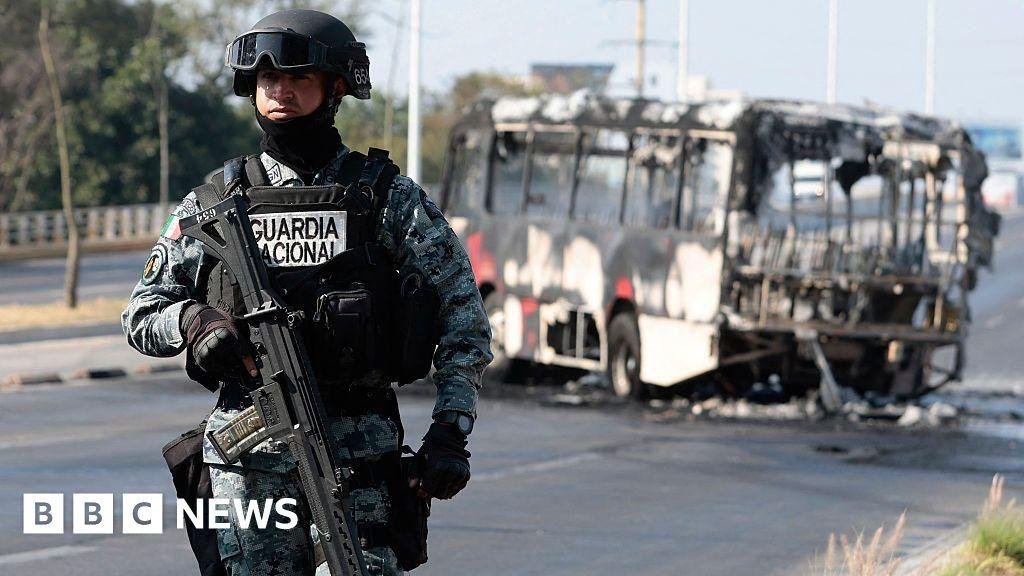
El Mencho: Mexico sends thousands of soldiers to stop violence after drug lord's deathGetty ImagesA member of Mexico's National Guard stands near the charred wreckage of bus that appears to have been set on fire by organised crime groups in Jalisco state on SundayMexico has deployed thousands of soldiers to bolster security after a wave of violence erupted following the death of a powerful drug...
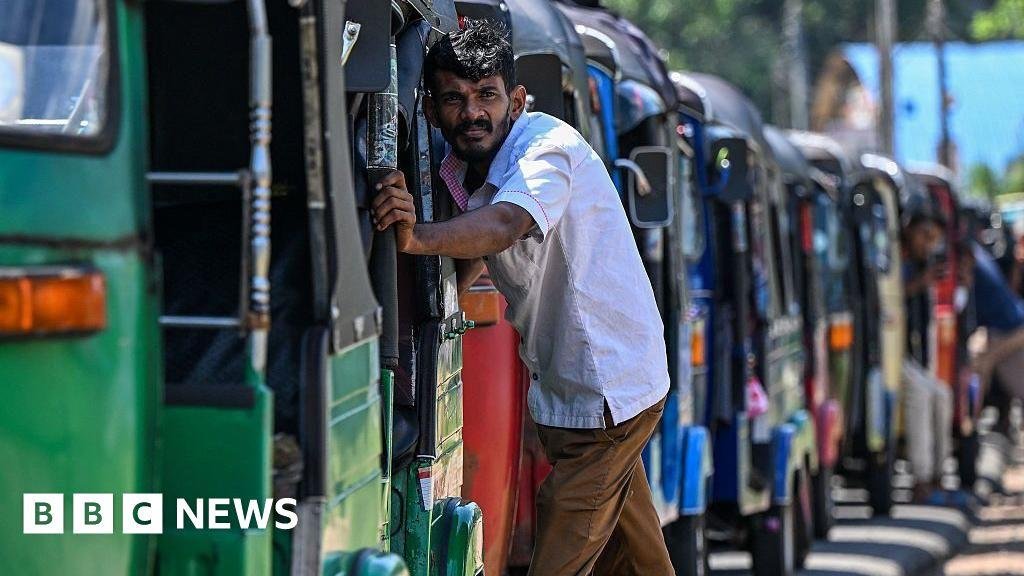
Iran war lands 'triple blow' to flood-ravaged Sri Lankans53 minutes agoAnbarasan EthirajanGlobal Affairs CorrespondentAFP via Getty ImagesThe Iran war has pushed prices up and caused long queues for fuel in Sri LankaAfter floods devastated their village, Indrani Ravichandran and her family are back in their house, living in the only section that is still standing.They are among the many victims...
Under strain, Australia's world-leading disability support faces major restructureImage source, SuppliedImage caption, Annabelle Shaw relies on NDIS funding to support activities that help her live a normal life ByKaty WatsonAustralia correspondent Annabelle Shaw is hockey-obsessed and on a winning streak, scoring eight goals this season for her team, the Panthers."I don't give up," she says...

Hugging Face’s CEO on why companies are done renting their AI Image Credits:TechCrunch 7:00 AM PDT · July 10, 2026 Open source AI is booming, according to Hugging Face CEO Clem Delangue. The company has grown into something like a GitHub for AI in recent years, where AI builders can share and download open models and datasets, now used by...
Today's NYT Strands Hints, Answers and Help for May 16 #804Looking for the most recent Strands answer? Click here for our daily Strands hints, as well as our daily answers and hints for The New York Times Mini Crossword, Wordle, Connections and Connections: Sports Edition puzzles. Today's NYT Strands puzzle is an especially delicious one. Some of the answers are difficult to...