Here's how to take advantage of the final days to save tax in 2025

Here's how to take advantage of the final days to save tax in 2025
Article content
If you’re not immediately sure of the charities you wish to support, you might consider making the gift by Dec. 31 to a donor advised fund (DAF), which is an account at a public foundation that holds your donation. You will get a tax receipt for your donation in the year that you contribute to the DAF. Each year you can recommend distributions to be made from your DAF to other registered charities.
Article content
Take TFSA withdrawals
Article content
Thinking about tapping into your TFSA in early 2026? If so, consider withdrawing the funds by Dec. 31. Doing so will allow you to recontribute any funds withdrawn beginning the following calendar, i.e. Jan. 1, 2026. After Dec. 31 you can’t recontribute the amount withdrawn until 2027.
Article content
Convert a portion of your RRSP to a RRIF once you turn 65
Article content
If you’re at least 65 but don’t have any pension income, consider transferring (on a tax-deferred basis) $14,000 (which is $2,000 per year × 7 years from age 65 to age 71) of your RRSP to a registered retirement income fund (RRIF) in the year you turn 65. You can then withdraw $2,000 annually from age 65 through age 71 to take advantage of the annual pension income credit.
Article content
Article content
Open up a first home savings account
Article content
If you’re a first-time home buyer who is a resident of Canada and at least 18 years of age, the first home savings account (FHSA) allows you to save on a tax-free basis toward the purchase of a home in Canada. Starting in the year that you open an FHSA, you can contribute (or transfer from RRSPs) a total of $8,000 plus any carryforward available from the previous year (for a maximum of $16,000 in any year), and up to $40,000 during your lifetime.
Article content
If you don’t open up the FHSA you don’t accumulate the contribution room. This way you can build $8,000 of contribution room, even if you don’t make a contribution this year, which can then be carried forward to 2026, allowing you to make a $16,000 FHSA contribution next year.
Article content
Make renovations for home accessibility
Article content
The non-refundable home accessibility tax credit (HATC) assists seniors and those eligible for the disability tax credit with certain home renovations. The tax credit is equal to 14.5 per cent of expenses toward renovations that permit these individuals to gain access to, or to be more functional and safe within, their home. The amount of eligible expenses is $20,000, so this credit could be worth up to $2,900 in 2025.
Article content
Article content
The HATC applies for payments made by Dec. 31 for work performed or goods acquired in 2025. Until Dec. 31 a single expenditure may qualify for both the HATC and the medical expense tax credit and both may be claimed. But as a result of changes announced in the recent federal budget, this is the last year your expense may qualify for both credits.
Article content
Optimize tax-free RESP withdrawals for students
Article content
If the beneficiary under a registered education savings plan (RESP) attended a post-secondary educational institution in 2025, consider having educational assistance payments (EAPs) made from the RESP before the end of the year. Although the amount of the EAP will be included in the student’s income, if the student has sufficient personal tax credits, such as the basic personal amount ($16,129), the EAP income will be effectively tax-free.
Article content
Note that the maximum EAP that can be taken in the first 13 weeks of post-secondary education is $8,000 for full-time students and $4,000 for part-time students.
Article content
Jamie Golombek, FCPA, FCA, CFP, CLU, TEP, is the managing director, Tax & Estate Planning with CIBC Private Wealth in Toronto. Jamie.Golombek@cibc.com.
Article content
Article content
If you liked this story, sign up for more in the FP Investor newsletter.
Article content
Patrocinado
Patrocinado
Patrocinado
Patrocinado
Anúncios
Categorias
Leia Mais
Tinder Users Must Start Logging In With Their Faces, Starting NationwideUS Tinder users will find a new feature when they open up the dating app starting Wednesday: A mandatory Face Check on their phones will be required before they can log into their profiles. The Face Check step will begin with a new request to record a video of your face, a more casual version of setting up Apple's...

The tooth fairy just got reimagined for the tech-savvy generation Move over, Santa. Now there’s another magical character for kids to track: the Tooth Fairy. After making a personalized Tooth Fairy video for his nephew, Oliver Finel noticed a gap. While there are plenty of Santa trackers, nothing similar existed for the Tooth Fairy. Recognizing that Generation Alpha is growing up with...

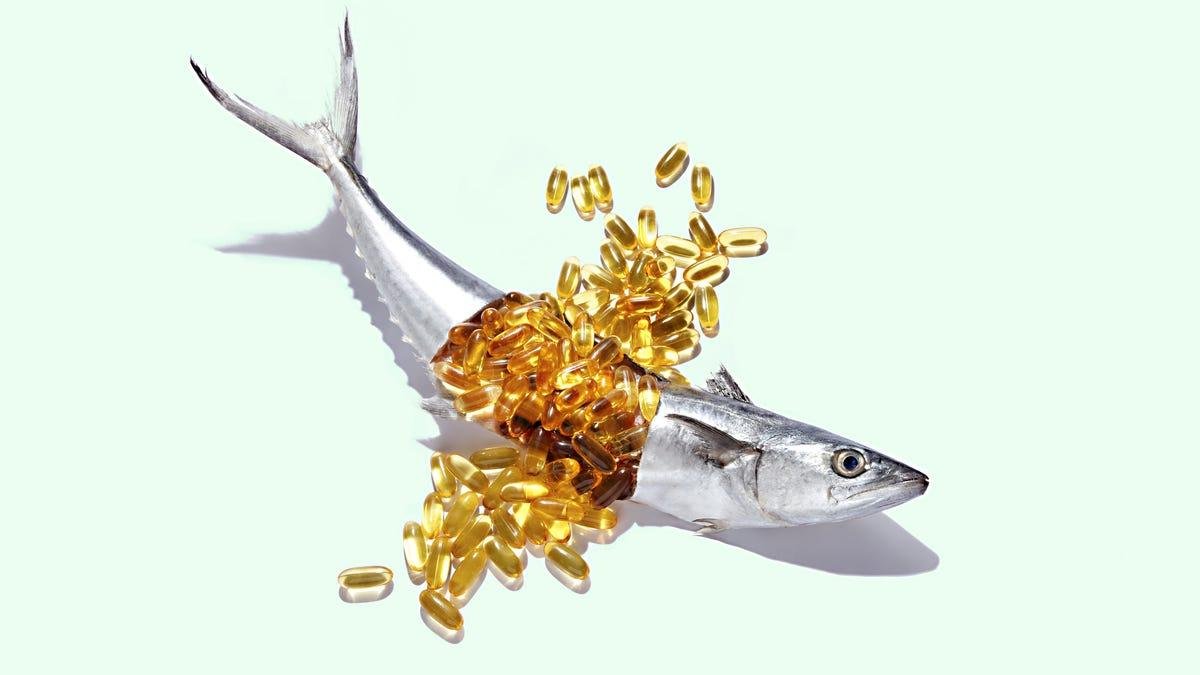
Are Omega-3s Good for You? Here's My Take on Its Benefits, Drawbacks and MoreOmega-3s are known to offer health benefits, the most popular being improved cardiovascular and cognitive health. It's also known to help reduce inflammation. Since your body cannot produce omega-3s on its own, adding them to your diet or increasing intake with supplements is very common. I'm sure you know at least one...
Zelenskyy says he's open to pull back troops if Russia does too UKRAINE-PEACE NEGOTIATIONS Ukraine's president says he open to pulling troops back from parts of the east if Russia also pulls back its forces.

If These 8 Rumored iPhone 17 Pro Max Features Turn Out to Be True, I Just Might SwitchNow that we have a confirmed Sept. 9 date for when Apple will introduce the next fleet of iPhone models, it's time to get serious about about preparing for a phone switch. Do I hold onto my current iPhone Pro or jump to the latest iPhone 17 Pro based on what I'm hearing from the rumor mill? And just...