


Key Themes for 2026

Key Themes for 2026
Talking Trends
The EU AI Act introduces a new baseline of accountability for how companies develop and use AI. Business leaders should care because their major stakeholders care: Investors want to know AI is well-governed, employees want to trust how AI is used in decisions about them, and boards are now asking for assurance that AI systems are explainable and fair. Furthermore, companies have the opportunity to build a real competitive differentiation through AI.
Helena Almeida, VP & Managing Counsel & AI Legal Officer at ADP, Maria Colacurcio, CEO of Syndio, and Stephanie Penner, US & Canada Leader at Mercer, join Nasdaq TradeTalks to discuss preparing for the EU AI Act and how to turn regulations from a cost center to a competitive advantage.
How Companies Are Strategically Adapting to the M&A Environment
M&A experts share what’s powering the next wave of M&A in 2026, the impact of regulations and tariffs, and how companies are strategically adapting to the environment.
Where the Gaps Exist With Enterprise AI Adoption
Industry and academic experts explore where the gaps exist with enterprise AI adoption and how companies will make it work in 2026.
The Importance of Transparent, Reliable Climate Data
Industry leaders discuss the importance of transparent, reliable climate data for retailers, manufacturers and consumers.

This Week's Guest Spotlight
Alex Gunz, Fund Manager at Heptagon Capital
To start, let’s reflect upon this past year. In your Future Trends Volume 11 report, you identified several major trends that will have an impact on the markets, such as: AI, Cybersecurity, Warehouses, Renewables, Quantum Computing, and more. How have those trends played out over the course of the year?
Our approach has always been long-term and multi-thematic, and we have consistently stated that as themes intersect and overlap, they should become mutually reinforcing. Clearly, AI has continued to dominate much of the investment narrative over 2025, but it has been pleasing to see investors incorporating a broader range of related themes. To take two from your list, cyber needs to remain top of mind. AI gives both attackers and defenders a new set of tools, but the asymmetry remains – the bad actor has to be right only once, while defenders need to secure their perimeter constantly. At the core of our data thesis is the idea that data have no value unless secured. Related, given how AI is spurring increasing data analysis and, hence, data center investment, then these data centers will need to be powered. Renewables will form an important part of the equation, especially since the cost and time required to build solar farms makes them substantially more efficient relative to other energy sources.
Were there any other trends that emerged in 2025 and surprised you?
To build on the prior question, we have been pleased to see that the Trump administration recognizes the importance of all energy sources – solar included – to help power the American economy. The One Big Beautiful Bill Act included provisions for solar that were more favorable than we had anticipated. On an unrelated note, the rate of change in quantum progress has been impressive. Consensus seems to be building that commercial quantum solutions could be available before decade-end.
In your Future Trends Volume 12 report, which looks at key themes for 2026 and beyond, you identified several major trends, such as: the Space Race, Cybersecurity, Warehouses, Geothermal Energy, Humanoid Robots, and more. Can you describe how you selected these major themes and briefly outline their potential impact in the years to come?
Our process remains unchanged: Seek to identify long-term themes that we believe will grow in importance broadly regardless of GDP growth and where government intervention – if present – will act as an industry tailwind as opposed to headwind. Cyber and robotics both feed into the AI theme, while geothermal will be another crucial energy input, especially when it comes to baseload power provision. The commercialization of space is exciting – a new frontier for both defense and data.
You noted that 2025 has been the year of the AI agent, but “embodied” or physical AI comes next. What developments are you watching for when it comes to humanoid robots?
We need more robots given a shrinking workforce and a growing need to care for the elderly. Today’s humanoids are the most expensive and least efficient than they will ever be. As costs come down, the industry scales and people become more familiar with the potential of humanoids, the number of use cases should increase. Watch for more deployments in 2026.
Do you have any unique predictions on the outlook of the markets?
Two observations: First, diversify. AI will change the world, but investors need to be mindful of implied expectations and related valuations. There are multiple other uncorrelated ways of playing the future, through for example, healthcare or real assets such as warehouses. Next, and related, do not forget that while most tend to over-estimate the near-term potential of many future trends, they still may under-estimate how important they are over the longer-term.
This article was originally our TradeTalks newsletter. Sign up here to access exclusive market analysis by a new industry expert each week. We also spotlight must-see TradeTalks videos from the past week.
Create a Nasdaq.com account to get access to exclusive content and best-in-class insights.
Sponsorizzato
Sponsorizzato
Sponsorizzato
Sponsorizzato
Pubblicità
Categorie
Leggi tutto
OpenAI Strikes Back at Google's Nano Banana With ChatGPT Images The latest AI image model from OpenAI is out now, with a focus on editing tools. Katelyn Chedraoui Writer I Katelyn is a writer with CNET covering artificial intelligence, including chatbots, image and video generators. Her work explores how new AI technology is infiltrating our lives, shaping the content we consume on...

Microsoft's Chief Technology Officer, Kevin Scott, recently took the stage at TechCrunch Disrupt 2025 to discuss the company's big investment in artificial intelligence (AI). He shared insights on how Microsoft is adapting to the rapidly changing tech l
During his talk, Scott highlighted the opportunities and challenges that come with the AI revolution, particularly for startups looking to make their mark. He encouraged entrepreneurs to embrace these changes and explore how AI can enhance their ideas and products. With Microsoft at the forefront of this movement, Scott's message was clear: the future of innovation is bright, and embracing...

Turkey is in the crosshairs over Russian's ghost fleet Turkey is in the crosshairs over Russian's ghost fleet Audio will be available later today. Russia's ghost fleet of sanctions-busting oil tankers are using the Turkish-controlled Bosphorus to reach the Black Sea, causing headaches for Turkey.

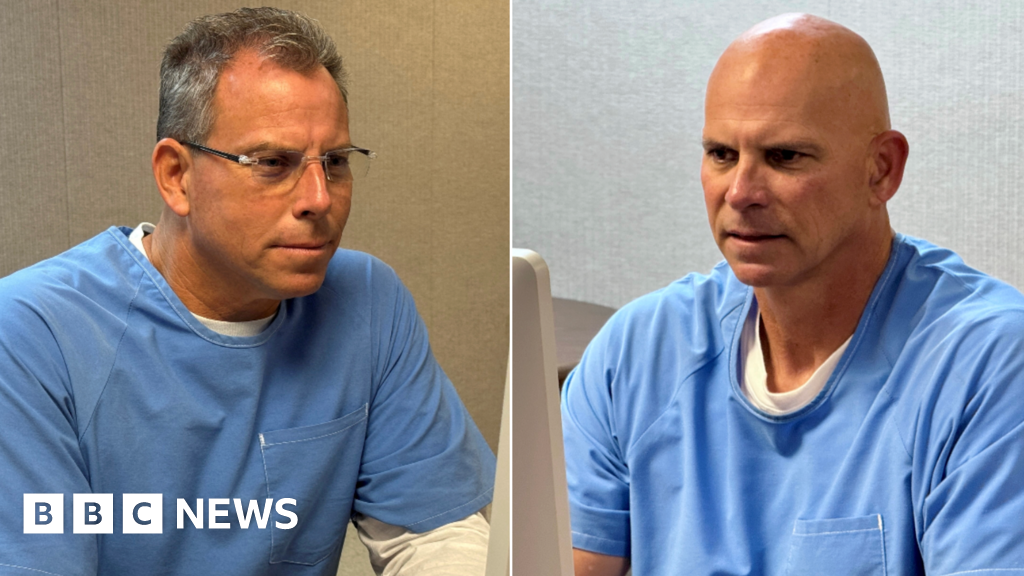
Prison conduct and contraband: What we learned from Menendez parole hearingsJames FitzGerald & Henri AstierBBC NewsReutersErik (left) appeared before his parole board a day before his brother Lyle (right)Erik and Lyle Menendez were denied parole after appearing before separate boards in California this week.The brothers have spent decades behind bars for killing their wealthy parents in...
Bite Into These Black Friday Savings With EveryPlate Meals Starting at Just $2Signing up for a meal kit delivery service can make lunches and dinner super easy and convenient. With some services, it actually costs less than buying the groceries yourself, especially as tariffs and food inflation are causing prices to rise. One option that we love is EveryPlate.In...

