Lunar Energy raises $232M to deploy home batteries that prop up the grid
Lunar Energy raises $232M to deploy home batteries that prop up the grid
Forget EVs — stationary batteries are getting all the buzz, and investment, in the U.S. these days.
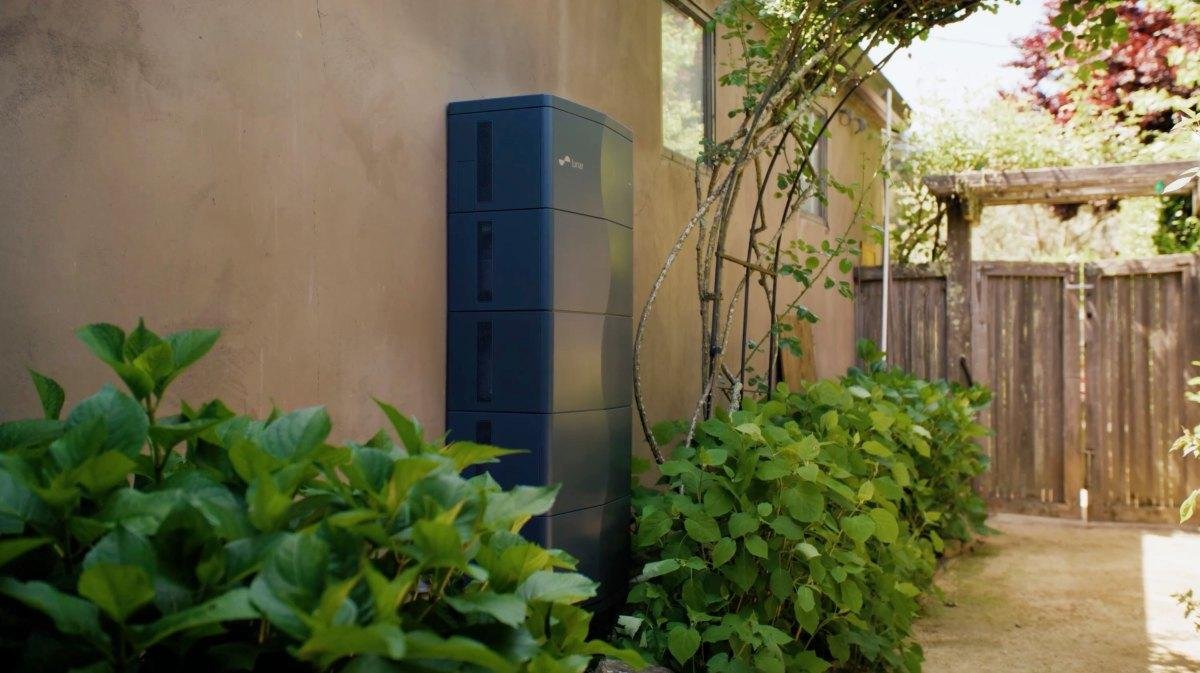
Startup Lunar Energy is the latest example. The six-year-old company, which builds battery packs for homeowners in California, Georgia, and Washington, said Wednesday it has completed two large funding rounds. The startup shared it raised a previously unannounced $130 million Series C and a $102 million Series D. The Series C was led by Activate Capital, while the Series D was led by B Capital and Prelude Ventures.
The startup plans to use the funds to scale manufacturing to 20,000 units by the end of this year before rampaging to 100,000 by the end of 2028. In total, Lunar has raised more than $500 million from investors.
Stationary storage has become a bright spot for battery manufacturers that have been subject to policy whiplash after the Trump administration and GOP-controlled Congress gutted large parts of the Inflation Reduction Act, which had incentivized companies to build batteries in the U.S. to supply the automotive industry.
As the grid strains under the weight of an increasingly electrified economy — along with the boom in data center demand — grid-connected batteries have become one of the most versatile ways to boost its resiliency.
Lunar can call on its fleet of batteries, which come in 15 kilowatt-hour and 30 kilowatt-hour modules, to deliver juice to the grid when needed. It’s virtual power plant (VPP) software can also control EV chargers and appliances, allowing it to both supply electrons while tamping down demand.
Such VPPs are expected to be able to replace costly and polluting peaking power plants in a matter of years.
Techcrunch event
Boston, MA | June 23, 2026
Competition in the space has been heating up lately. In October, Base Power raised $1 billion, less than six months after raising a $200 million round for its residential battery-based VPP. Tesla operates its own Powerwall-based VPP, too.
Outside of residential settings, Tesla’s storage business has been growing in leaps and bounds, while former Tesla executive J.B. Straubel’s startup Redwood Materials has launched its own energy storage division. Even Ford wants in on the action.
Batteries have transformed from bit players just five years ago to major assets on the grid. Their modularity makes them quick to build and easy to deploy, and while they’re still costly relative to some fossil fuel power sources, prices have been dropping quickly. No wonder investors are piling in.
Tim De Chant is a senior climate reporter at TechCrunch. He has written for a wide range of publications, including Wired magazine, the Chicago Tribune, Ars Technica, The Wire China, and NOVA Next, where he was founding editor.
De Chant is also a lecturer in MIT’s Graduate Program in Science Writing, and he was awarded a Knight Science Journalism Fellowship at MIT in 2018, during which time he studied climate technologies and explored new business models for journalism. He received his PhD in environmental science, policy, and management from the University of California, Berkeley, and his BA degree in environmental studies, English, and biology from St. Olaf College.
You can contact or verify outreach from Tim by emailing tim.dechant@techcrunch.com.
Sponsored
Sponsored
Sponsored
Sponsored
Ads
Categories
Read More
Two US service members reported missing in Morocco, officials sayUniversal Images Group via Getty ImagesThe surroundings of Tan Tan, Morocco, which is near where the Americans went missingTwo US service members have gone missing during military exercises in Morocco, the US African Command (Africom) has said.The missing Americans were participating in African Lion 2026, an annual joint exercise...

Today's Wordle Hints, Answer and Help for April 4, #1750Looking for the most recent Wordle answer? Click here for today's Wordle hints, as well as our daily answers and hints for The New York Times Mini Crossword, Connections, Connections: Sports Edition and Strands puzzles.Today's Wordle puzzle should be easy, but it took me more guesses than I thought it would. If you need a...

Rivian R2 launch: Here’s what $57,990 gets you Two years after revealing what its affordable next-generation EV would look like, Rivian has shared all of the pricing, colors, and performance specs for its upcoming R2 SUV. And like so many new car releases, it’s complicated. The bottom line: Rivian’s bid to sell a more affordable EV that is accessible to a broader market will cost between...
Morning news brief Middle East conflict enters Day 6, clerics convene to replace Iran's supreme leader, China to send special envoy to help mediate the US-Israel-Iran war.

Amazon-backed X-energy files to raise up to $800M in IPO Nuclear startup X-energy began its investor roadshow Wednesday as it works toward its IPO, setting its target price between $16 and $19 per share, according to documents filed with the U.S. Securities and Exchange Commission. If it lists at the high end, the startup could net $814.3 million. X-energy and its peers have been riding a...