Doctor who treated Bondi Junction mass killer referred to health regulator

 Rohan Anderson
A psychiatrist who treated the man behind a fatal stabbing rampage at a crowded Sydney shopping centre will be referred to health investigators after a coronial inquiry.
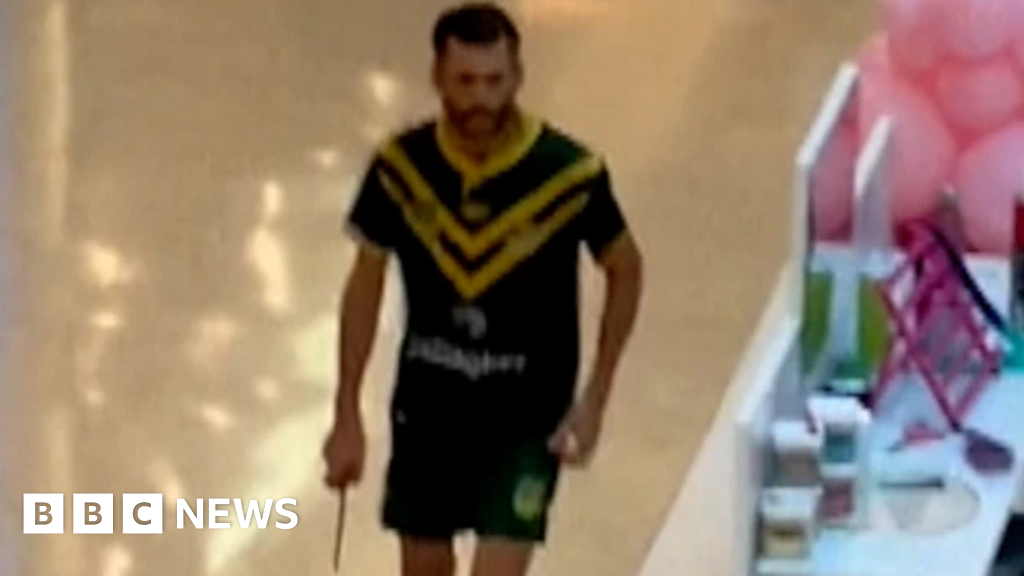
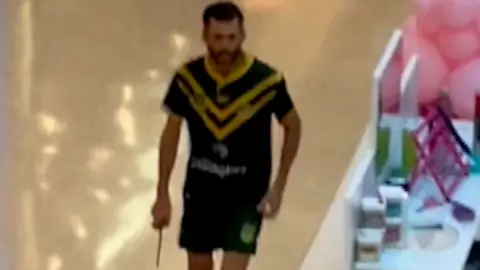
Joel Cauchi, first diagnosed with schizophrenia in his teens, was unmedicated and homeless when he stabbed 16 people inside Westfield Bondi Junction in 2024, killing six.
The New South Wales coroner said Dr Andrea Boros-Lavack had provided 40-year-old Cauchi "exemplary" care over a long period, but failed to heed warnings from family that he may be relapsing, years before the attack.
This mistake was one of many that led to the tragedy, the coroner said, also pointing to a series of actions by police and shopping centre security.
Six people - Dawn Singleton, 25; Yixuan Cheng, 27; Jade Young, 47; Ashlee Good, 38; Faraz Tahir, 30; and Pikria Darchia, 55 - died during the attack in April 2024.
Ten others, including Good's baby, were injured in the three minutes before Cauchi - who was suffering a psychotic episode - was shot dead by New South Wales (NSW) police inspector Amy Scott.
During a five-week coronial inquest that finished last May, the coroner heard from dozens of witnesses including doctors, police, survivors and the families of victims in a bid to unearth the events leading up to the attack and prevent such a tragedy occurring again.
The coroner's 800-page plus findings were due to be released at the end of 2025 but they were delayed as a mark of respect for the victims of the Bondi Beach attack, in which 15 people were killed by two gunmen on 14 December.
On Thursday, Teresa O'Sullivan told the coroner's court that Boros-Lavack had provided "personalised, consistent and compassionate treatment" for Cauchi for many years after she first took him on as a private patient in 2012.
Between 2018 and mid-2019, the Queensland psychiatrist had worked closely with Cauchi to wean him off the medications he had been taking to treat his condition, a move that was not criticised by the coroner.
However, in late-2019 when Cauchi's mother raised concerns that her son was possibly relapsing, Boros-Lavack "failed to take more active steps or to recognise the seriousness of the situation that was unfolding before her".
She said it was a "major failing" for the doctor to "not do more to proactively urge Cauchi to resume his medication".
When Cauchi moved to another city and and came under the care of a different doctor, a discharge letter from Boros-Lavack also failed to provide enough information to prompt intervention, the coroner said. It didn't emphasise the need for Cauchi to see a psychiatrist or that an urgent review of his case should be a priority.
O'Sullivan's recommendation that Boros-Lavack be investigated by Queensland health authorities followed calls by some of the victim's families for such action.
She also found there was a missed opportunity for police intervention after an email raising concerns about Cauchi's mental health was not acted upon due to staff shortages .
The officer "overlooked a single email amidst a significant workload", O'Sullivan said.
The inquest heard a security guard who was the sole person in the CCTV control room at the Westfield when Cauchi attacked his first victim was "not competent" for that role. However, O'Sullivan said this was the fault of the shopping centre, which has since improved its processes.
Among her 23 recommendations, O'Sullivan also called on the NSW government to improve its mental health outreach services and provide short-term housing for people with mental health issues.
The coroner praised the police and emergency services response to the stabbings, describing them as "commendably rapid and extensive" but said there were issues with the "inter-operability" between various agencies that could be improved.
She also recommended a public awareness campaign with the message of "escape, hide, tell" when there is a situation with an armed offender.
O'Sullivan, though, did criticise some media coverage, which she said "exacerbated the trauma already being suffered" by victims and families affected, and said she would be making recommendations to the Australian Press Council on how reporters should cover incidents that involve mass casualties.
The coroner also recommended bravery awards for the police officer who shot Cauchi, two Frenchmen who tried to stop Cauchi during the attack, the husband of victim Jade Young, and Ashlee Good, who died while trying to shield her baby.