How to decide what to invest in a TFSA versus an RRSP in volatile markets
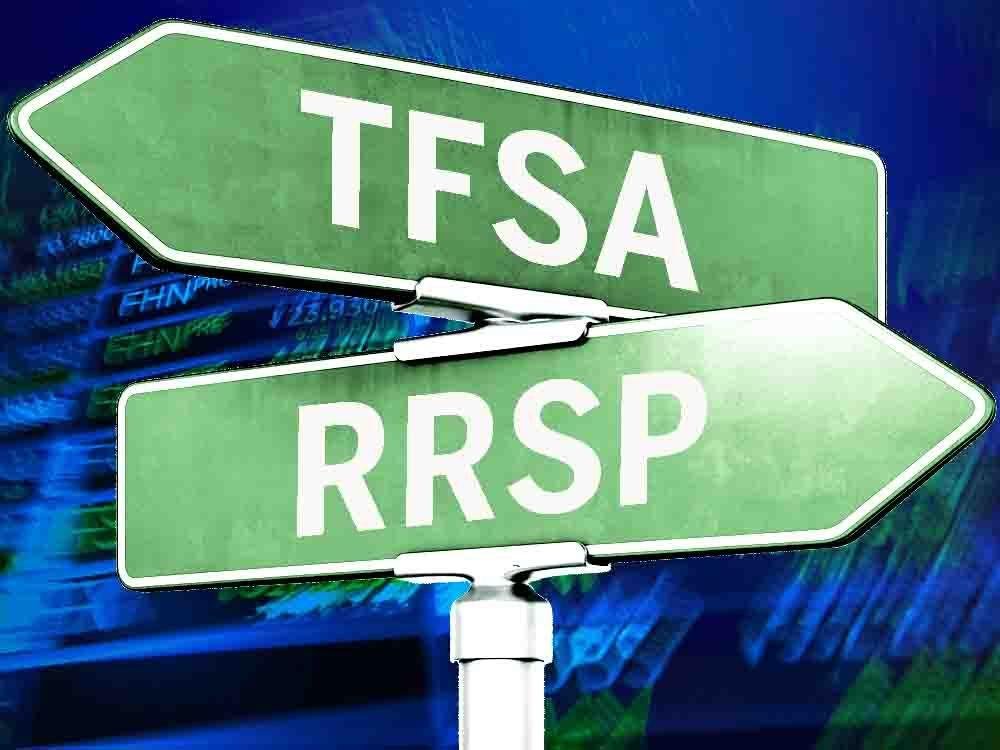
How to decide what to invest in a TFSA versus an RRSP in volatile markets
Article content


THIS CONTENT IS RESERVED FOR SUBSCRIBERS ONLY
Subscribe now to read the latest news in your city and across Canada.
- Exclusive articles from Barbara Shecter, Joe O'Connor, Gabriel Friedman, and others.
- Daily content from Financial Times, the world's leading global business publication.
- Unlimited online access to read articles from Financial Post, National Post and 15 news sites across Canada with one account.
- National Post ePaper, an electronic replica of the print edition to view on any device, share and comment on.
- Daily puzzles, including the New York Times Crossword.
SUBSCRIBE TO UNLOCK MORE ARTICLES
Subscribe now to read the latest news in your city and across Canada.
- Exclusive articles from Barbara Shecter, Joe O'Connor, Gabriel Friedman and others.
- Daily content from Financial Times, the world's leading global business publication.
- Unlimited online access to read articles from Financial Post, National Post and 15 news sites across Canada with one account.
- National Post ePaper, an electronic replica of the print edition to view on any device, share and comment on.
- Daily puzzles, including the New York Times Crossword.
REGISTER / SIGN IN TO UNLOCK MORE ARTICLES
Create an account or sign in to continue with your reading experience.
- Access articles from across Canada with one account.
- Share your thoughts and join the conversation in the comments.
- Enjoy additional articles per month.
- Get email updates from your favourite authors.
THIS ARTICLE IS FREE TO READ REGISTER TO UNLOCK.
Create an account or sign in to continue with your reading experience.
- Access articles from across Canada with one account
- Share your thoughts and join the conversation in the comments
- Enjoy additional articles per month
- Get email updates from your favourite authors
Sign In or Create an Account
or
Article content
Deciding between a registered retirement savings plan (RRSP) and a tax-free savings account (TFSA) can be a complicated calculation involving tax rates, timelines and how one plans to use the funds involved. But for Canadian savers, the choices don’t end with simply prioritizing one account over the other.
Article content
Article content
Strategizing about what kind of investments to put in each in order to maximize the tax benefits while keeping your overall portfolio in the right balance adds another layer of complexity.
Article content
Article content
The key to deciding what should go where usually comes down to how each vehicle is taxed, said Colin White, chief executive and portfolio manager at Verecan Capital Management Inc.
Article content
By signing up you consent to receive the above newsletter from Postmedia Network Inc.
Article content
“The money you make in your TFSA is 100 per cent tax-free and the money you make inside your RRSP is going to be taxed in the future,” White said, noting that those using both accounts would thus lean toward the TFSA for equities and fixed-income in an RRSP.
Article content
Martin Pelletier, a senior portfolio manager at Wellington-Altus Private Counsel Inc. and columnist for the Financial Post, is even more specific, suggesting that growth stocks in particular are better suited to the TFSA.
Article content
“If you have the S&P 500, or even some of the (Magnificent Seven Big Tech) stocks, those are good names to hold within that TFSA,” Pelletier said. “It obviously depends on when you’re buying and the market conditions, but anything where you see any sort of market upside on the equity growth side, that should be within your TFSA.”
Article content
That’s because, as White points out, you keep 100 per cent of the gains in the TFSA. The downside, of course, is that higher risk stocks can cost you as well.
Article content
Article content
You can also use a TFSA to balance risk and growth, Pelletier said, outlining a strategy his company uses to capture the upside of equities during volatile markets while still protecting some or all of the capital on the downside.
Article content
Article content
“What you want to do is harvest volatility and take more growth in your TFSA. And you can do that through rebalancing (during) market pullbacks, buying assets or investments when volatility expands,” he said. The protection in this case can come through structured note products.
Article content
Structured notes are hybrid investment products tied to the performance of various underlying assets, which Pelletier said helps mitigate the downside while still making money.
Article content
“These notes are taxed as income outside of a registered vehicle, so that’s why they’re an excellent instrument to use within tax sheltered TFSAs and RRSPs,” said Pelletier.
Article content
As investors get older and closer to retirement, most will gradually shift toward taking volatility off the table, said Pelletier.
Article content
“An RRSP is going to smooth your cash flows, it’s going to provide a predictable return … and then allow you to reinvest interest and coupons during periods of market distress,” he said.
Commandité
Commandité
Commandité
Commandité
Annonces
Catégories
Lire la suite
Whoop launches a new blood test focused on women’s health Fitness wearable maker Whoop is launching a new panel focused on women’s health through its Whoop Labs blood testing service. The company is also adding a new feature to its app that surfaces information about hormonal changes during menstrual cycles. The startup said the panel includes 11 blood biomarkers that can give insights into...

Meta is adding ridiculous ‘rate limits’ and a soft paywall to its smart glassesWould you pay $20 a month for access to AI hardware you already own? That appears to be one of Meta’s next bets. This week, it quietly announced that your glasses’ Conversation Focus feature will soon be limited to three hours of use per month, unless you pay for a $19.99 Meta One Premium subscription.In a help...

The best Prime Day deals we found on our favorite gearUpdatedPrime Day has begun, and here we’ve included dozens of our favorite picks across a range of categories.Prime Day has begun, and here we’ve included dozens of our favorite picks across a range of categories.by Cameron FaulknerUpdated Jun 23, 2026, 11:22 AM UTCCameron Faulkner is an editor covering deals and gaming hardware. He joined...

Your home's exterior is the first thing people notice, and a fresh coat of paint can dramatically improve its appearance while protecting it from the elements. If you've been searching for Exterior painter near me, you're likely looking for a trusted professional who can deliver quality workmanship, long lasting results, and excellent customer service. Choosing the right painter is about much...

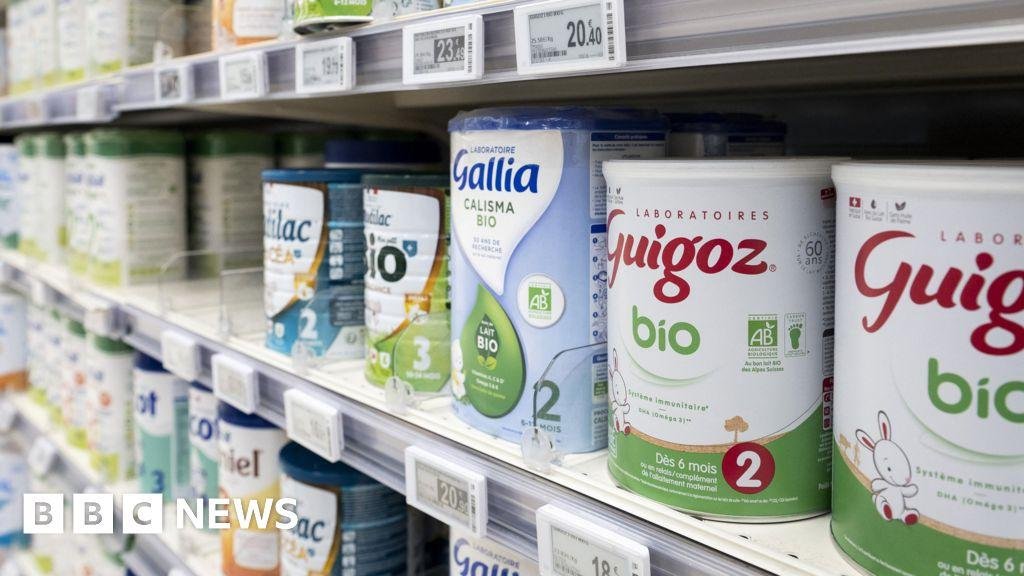
France probes baby formula producers over contamination recallsGetty ImagesProsecutors in Paris have opened investigations into five baby formula manufacturers after several issued mass recalls over concerns their product contained a toxin.Nestle, Lactalis, Danone, Babybio and La Marque en moins will be probed over whether there was any criminal wrongdoing in distributing baby formula that may...