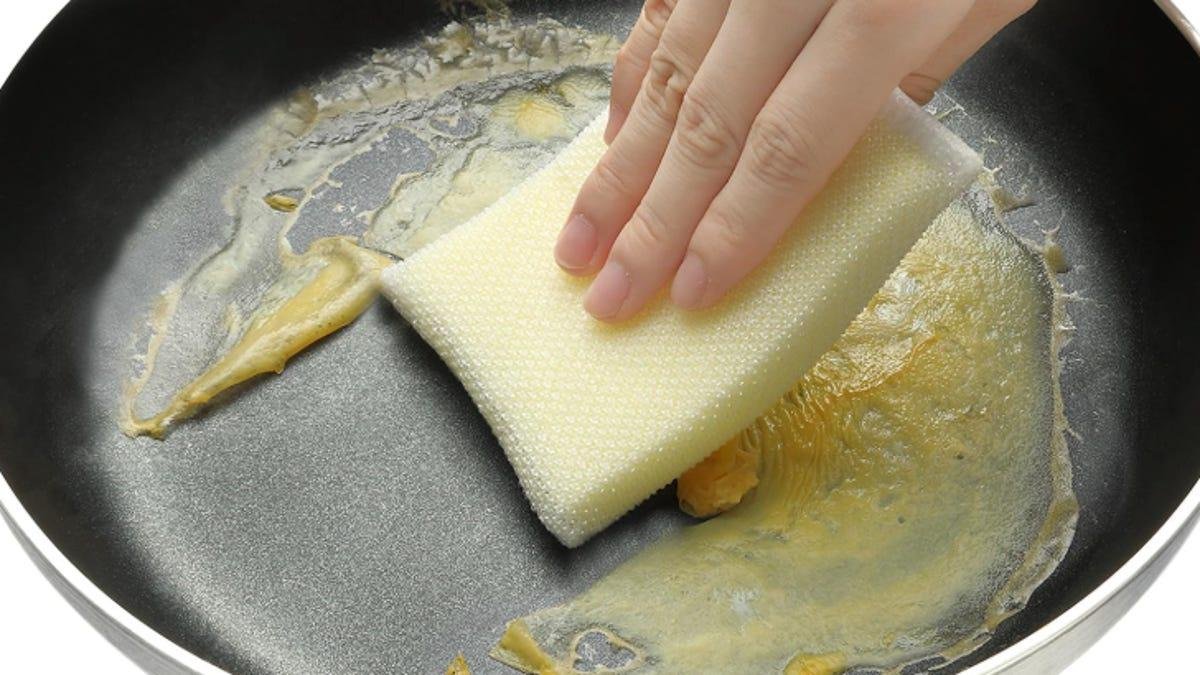



Sponges are sold in a spectrum of colors but these bright hues serve a purpose beyond aesthetics.
It took me 40 years to stumble upon this information, and it explains why a few of my stainless-steel appliances have become scratched beyond recognition.
Those bright greens, yellows and blues form a practical coding system that signals each sponge's designated function, surface texture and absorption capacity. Learning to decode these colors helps protect your surfaces from scratches and minimizes cross-contamination risks throughout your household.
Choosing the right sponge for specific tasks protects your kitchenware and your family's health while also prolonging the lifespan of appliances and home surfaces.
Below you'll find a guide to sponge colors and their intended uses.
Green: The all-purpose workhorse
Greens sponges are tough and versatile.
Scotch-BriteThese scouring pads are the workhorse of the home cleaning world: multipurpose, dependable and ready to tackle just about anything.
Often designated for general cleaning and dishwashing, they offer enough scrubbing power to remove midrange residue but can be used for tougher stains or even outdoor cleaning tasks. Basically, if you're not sure which sponge to grab, green means go.
They're too rough for glass, stainless steel and other sensitive surfaces, but for caked-on cast iron and a filthy fridge, nothing works quite as well.
Yellow: Medium coarseness for sensitive surfaces
Yellow sponges are meant for more sensitive surfaces.
Mr. ScrubYellow sponges are right in the middle -- not too rough, not too soft but often overlooked. They represent a step down in abrasiveness from green. They are suitable for cleaning more delicate surfaces, such as glassware, countertops and kitchen sinks, which require careful treatment to avoid scratches but still develop significant stains and buildup.
Blue: A softy for glass and stainless steel
A blue sponge will coddle your most delicate wares.
LavexWhen you're dealing with delicate surfaces, reach for a blue sponge. It's the least abrasive option and is ideal for very delicate surfaces such as glass or stainless steel, where a scratch-free shine is the goal. Blue is basically the spa day of sponges -- gentle, calming and leaves everything looking refreshed.
Red and pink: High-risk areas and bacterial messes
These colors are typically reserved for the danger zones, such as cleaning tougher, baked-on food or areas that pose a higher bacterial risk, like the sink where you just rinsed raw chicken (you know, your kitchen's version of a crime scene).
Their color is less an indication of their coarseness than a visual reminder to never, ever use them on clean tableware, unless you enjoy living dangerously.
And because they're often employed in hazardous jobs, you may want to stock up on a bundle and simply toss them more often than their counterparts in alternative colors.
Black: Heavy-duty scrubbing
These highly abrasive, heavy-duty sponges are for serious scrubbing of stubborn, baked-on stains on tough surfaces. You might not go through them as often as the others, but for certain gnarly cleaning jobs, only the bristly black sponge will suffice.
Color-coding sponges reduces the risk of contamination
Using sponges strategically will reduce wear on kitchen surfaces.
SimpleImages/GettyA systematic approach to kitchen hygiene often involves color-coding cleaning tools to ensure proper organization and cleanliness. This simple, visual system ensures a sponge used only for heavily soiled areas (or biohazard jobs) is never mistakenly used on clean glassware, silverware or plates. Because trust us, your guests will notice.
By establishing and following this clear color-coded system, you can reduce the spread of germs, keep your kitchen safer and ensure that your most delicate items are treated with the gentlest care. Plus, you'll finally have a legitimate reason to own a rainbow of colorful sponges.
For more cleaning tips, see a former custodian's tips for cleaning the bathroom like a pro and discover which all-purpose cleaner fared the best in our testing.