Secondary sales shift from founder windfalls to employee-retention tools

Secondary sales shift from founder windfalls to employee-retention tools
In May, AI sales automation startup Clay said it was allowing most of its employees to sell some of their shares at a $1.5 billion valuation. Coming just months after its Series B, Clay’s offer of liquidity was a rarity in a market where tender offers, as these types of secondary transactions are known, were still uncommon for relatively young companies.
Since then, several other newer, fast-growing startups have allowed their staff to convert some of their stock into cash. Linear, a six-year-old AI-powered Atlassian rival, completed a tender offer at the same valuation as the company’s $1.25 billion Series C. More recently, the three-year-old ElevenLabs authorized a $100 million secondary sale for staff, at a valuation of $6.6 billion, double its previous value.
And just last week, Clay, which has tripled its annual recurring revenue (ARR) to $100 million in one year, decided it was again time for its employees to cash in on the company’s fast growth. The eight-year-old startup announced that its staff can sell stock at a valuation of $5 billion, a more than 60% increase from its $3.1 billion valuation announced in August.
These secondary sales at increasingly higher valuations for young, perhaps still-unproven companies may initially appear to be a premature “cash out” reminiscent of the 2021 bubble. The most infamous example of that time was Hopin, whose founder, Johnny Boufarhat, reportedly sold $195 million worth of his company’s stock just two years before the company’s assets were sold for a tiny fraction of its peak $7.7 billion valuation.
But there is a critical distinction between the 2021 boom and today’s market.
During the ZIRP era, a large portion of the secondary deals provided liquidity almost exclusively to founders of buzzy companies like Hopin. In contrast, the recent transactions from Clay, Linear, and ElevenLabs are structured as tender offers that also benefit employees.
While investors these days largely frown upon the outsized founder payouts of the 2021 boom, the current shift toward employee-wide tender offers is viewed far more favorably.
Techcrunch event
Boston, MA | June 23, 2026
“We’ve done a lot of tenders, and I haven’t seen any drawbacks yet,” Nick Bunick, a partner at the secondary-focused VC firm NewView Capital, told TechCrunch.
As companies stay private longer and talent competition intensifies, allowing employees to turn some of their paper gains into cash can be a powerful tool for recruiting, morale, and retention, he said. “A little liquidity is healthy, and we’ve certainly seen that across the ecosystem.”
At the time of Clay’s first tender offer, co-founder Kareem Amin told TechCrunch that the main reason for giving employees a chance to cash some of otherwise illiquid stock was to ensure that “the gains don’t just accumulate to a few people.”
Some fast-growing AI startups are realizing that without offering early liquidity, they risk losing their best talent to public companies or more mature startups like OpenAI and SpaceX, which regularly offer tender sales.
While it’s hard not to see the positive aspects of allowing startup employees to reap cash rewards from their hard work, Ken Sawyer, co-founder and managing partner at secondary firm Saint Capital, pointed to unintended second-order effects of employee tenders. “It is very positive for employees, of course,” he said. “But it enables companies to stay private longer, reducing liquidity for venture investors, which is a challenge for LPs.”
In other words, relying on tenders as a long-term substitute for IPOs could create a vicious cycle for the venture ecosystem. If limited partners don’t see cash returns, they will be more reluctant to back the very VC firms that invest in startups.
Marina Temkin is a venture capital and startups reporter at TechCrunch. Prior to joining TechCrunch, she wrote about VC for PitchBook and Venture Capital Journal. Earlier in her career, Marina was a financial analyst and earned a CFA charterholder designation.
You can contact or verify outreach from Marina by emailing marina.temkin@techcrunch.com or via encrypted message at +1 347-683-3909 on Signal.
Sponsorluk
Reklam
Reklam
Reklam
Kategoriler
Read More
In College Football 26, few quarterbacks generate as much chaos in the open field as Denard Robinson CFB 26 Coins. Built for speed, acceleration, and improvisation, he thrives in systems that emphasize decision-making on the move rather than traditional pocket passing. In this gameplay session, the focus shifts away from the pass-heavy approach and into a fully run-oriented scheme designed to...

Keeping your home fresh and welcoming starts with choosing the right Carpet Cleaning Lakewood CO service. A clean living space not only looks better but also feels more comfortable for everyone in the family. Whether you are preparing for guests or simply enjoying a relaxing weekend at home, finding a trusted professional makes a noticeable difference. Many homeowners begin their search with...

Taiwan says Chinese pressure over the island is the "new normal" FILE - Fish swim near coral on the ocean bed near Shimoni, Kenya, June 13, 2022. Brian Inganga/AP hide caption...

One startup’s pitch to provide more reliable AI answers: crowdsource the chatbots John Davie wanted Buyers Edge Platform, the hospitality procurement enterprise he founded and still leads, to benefit from the AI wave. When he looked around, the CEO wasn’t satisfied with the options. The answer was CollectivIQ, a Boston-based company incubated at Buyers Edge Platform that gives users more...

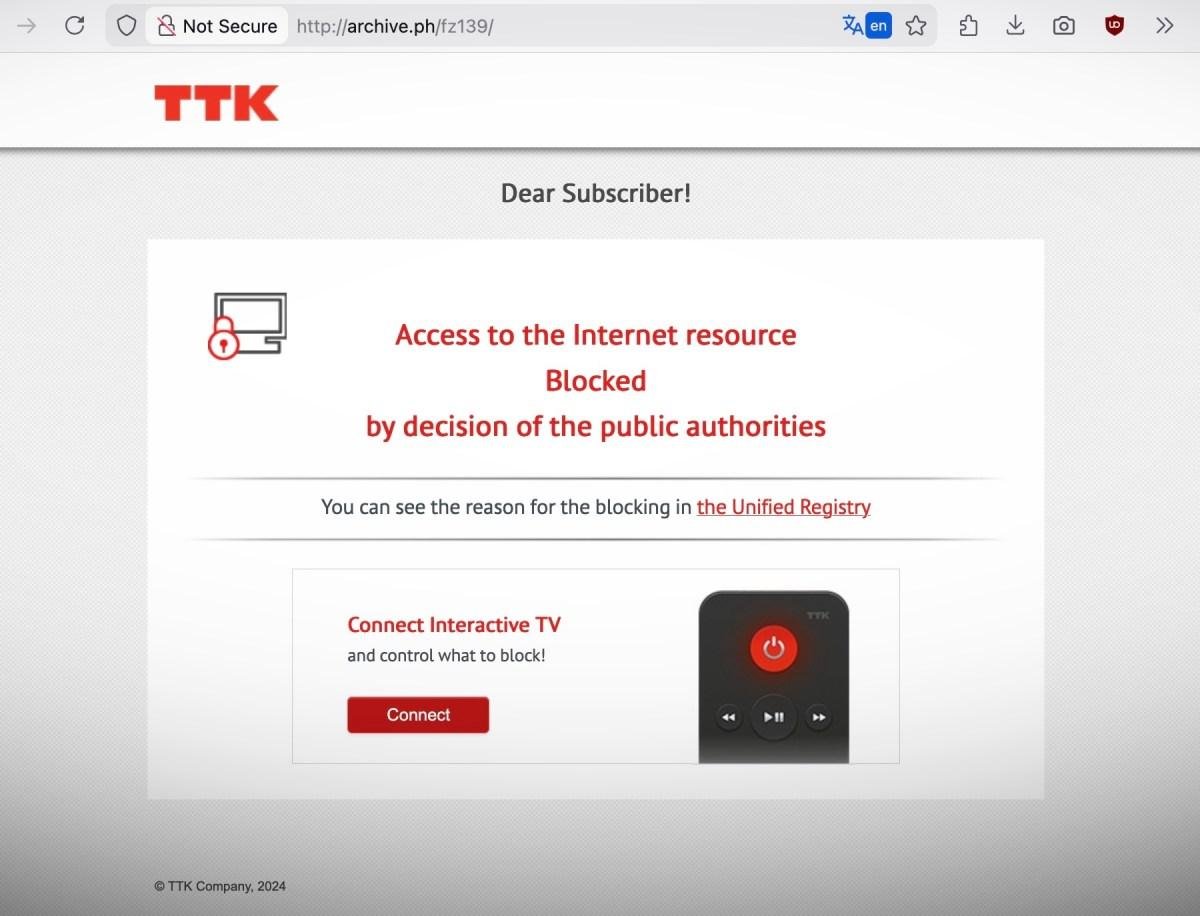
Russian authorities block paywall removal site Archive.today In Brief Posted: 12:08 PM PDT · March 23, 2026 Image Credits:TechCrunch Paywall bypass website Archive.today and several of its associated domains (including .is and .ph) have been blocked by Russian authorities, according to error pages that appeared when loading its websites....