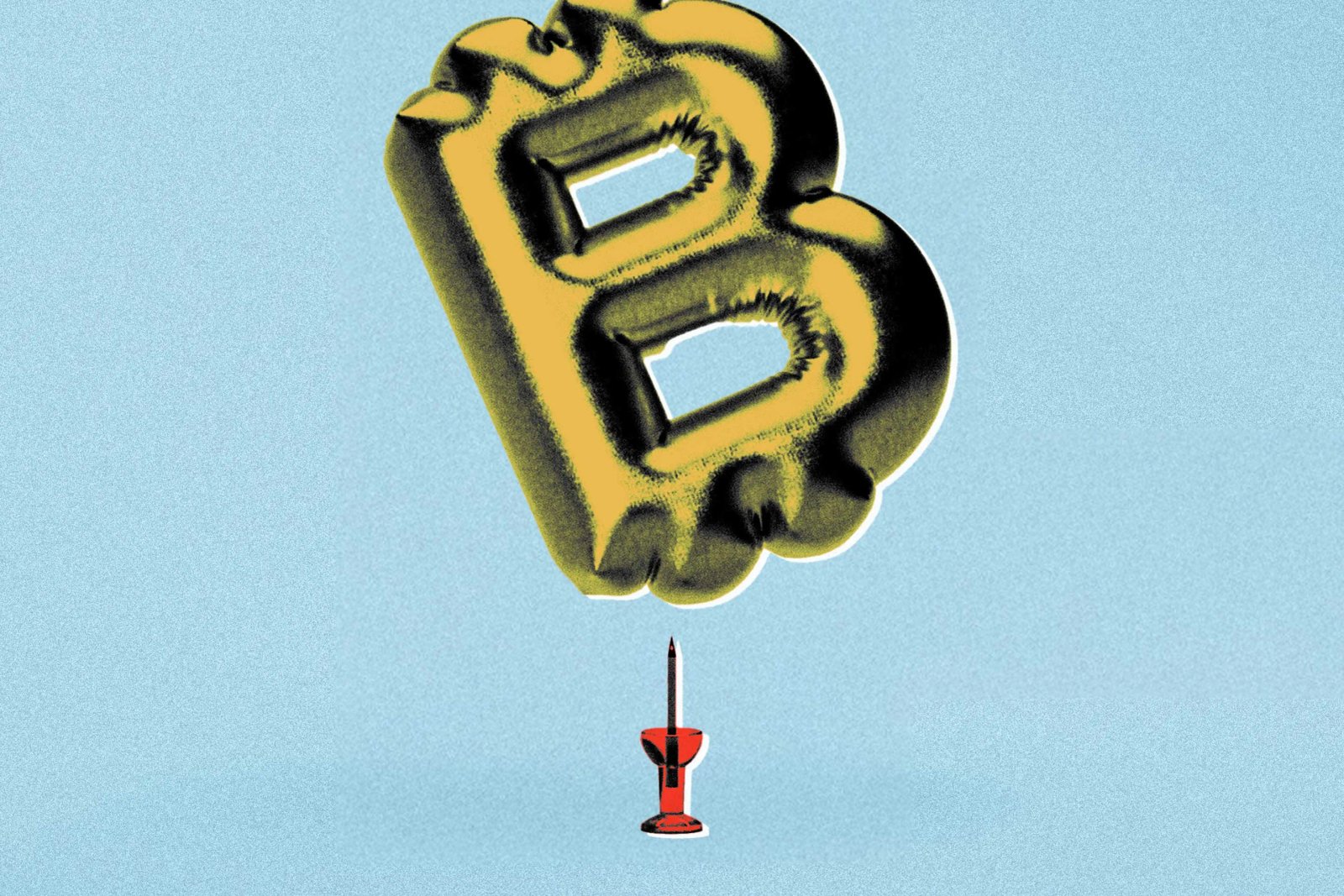
A flight to safety that began with a tech sell-off in late October has spilled over into other asset classes, driving down the price of bitcoin and other digital assets in the process.
Over the past month, precious metals including gold and silver have corrected, while shares of the Magnificent Seven continue to struggle. But since the start of the rotation out of high-risk, high-reward assets, nowhere have the losses been more pronounced than with crypto.
Since Jan. 6, the price of bitcoin has fallen more than 25% as investors continue to abandon risk-on strategies in favor of safe havens. Ethereum, the second largest crypto by market cap, is down more than 33%, and XRP — perhaps 2025's most hyped coin — is down more than 37%.
Here's why the crypto market is selling off and when a reversal could take root.
What's going on with the price of bitcoin and other crypto
When President Donald Trump's second term began last year, crypto markets had high hopes for a White House that had vowed to support the decentralized finance, of DeFi, community.
Bitcoin hit a then-all-time high on Jan. 25, 2025, just days after Trump's inauguration, and again in May and July before reaching an all-time high of $126,210.50 on Oct. 6.
But now, at the time of writing, bitcoin is trading for $70,673.54. That's nearly 43% lower than its record high.
The most recent headwind came from Kevin Warsh's nomination as the next chair of the Federal Reserve. As an inflation hawk, Warsh is rumored to want to keep consumer prices low by keeping interest rates higher for longer. While that is good news for the U.S. dollar and fixed income yields, it is bad news for risk-on assets like crypto.
After Trump formally nominated Warsh for Fed chair last week, the greenback jumped more than 2% while fueling ongoing outflows from bitcoin and bitcoin-backed equities, like spot bitcoin exchange-traded funds (ETFs). As of Thursday, bitcoin ETFs had seen outflows of $2.9 billion this year.
Accelerating crypto's losses is institutional selling. More specifically, forced liquidation — wherein risk managers require the sale of assets under a certain price to safeguard against further losses — has fueled the flight from bitcoin. CNBC reported that on Thursday alone, more than $2 billion worth of crypto was liquidated.
When will bitcoin prices bottom out (and recover)?
As fear takes over, panic-selling can induce more panic-selling. However, for investors looking for a rebound, bitcoin may be trying to establish a bottom before reversing in price. As of press time Friday, the largest crypto by market cap had recovered over 12% in value, rising by $7,872.27.
From a technical perspective, the Relative Strength Index (RSI) — a momentum indicator that can determine if an asset is overbought or oversold by assigning it a score from 0 to 100 — shows that bitcoin's RSI is currently 28.10 and firmly in oversold territory.
While an RSI over 70 suggests an asset is overbought and due for a bearish price reversal, an RSI under 30 suggests it could be oversold and due for a bullish price reversal. Bitcoin's RSI bottomed yesterday at 15.72. The indicator was as high as 70.30 as recently as Jan. 14.
While crypto volatility is expected throughout the year as the Fed undergoes leadership change and the Trump administration's tariff policies continue to introduce market uncertainty, price swings could settle down once clarity on interest rates is established.
In the near term, the $60,000 price level continues to serve as critical support for bitcoin. The leading crypto has seen drawdowns of 40% to 70% numerous times in the past, implying the current price crash could be part of a cyclical correction after bitcoin's all-time high last October.
Ads by Money. We may be compensated if you click this ad.Ad
More from Money:
7 Best Crypto Wallets of February 2026
Crypto Launchpads: How to Find and Buy Upcoming ICOs and IDOs