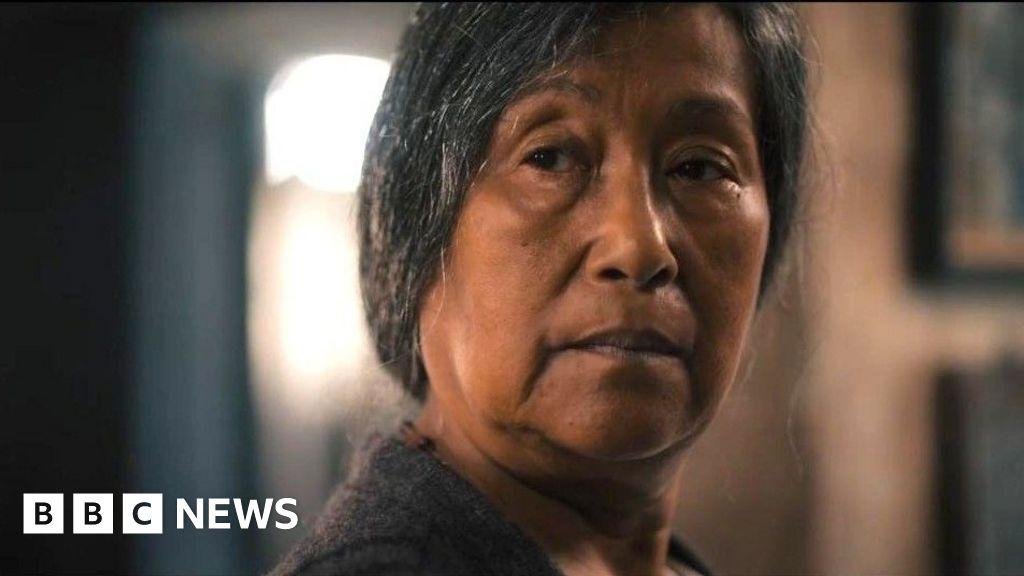
From classroom to camera: A teacher who has become a sensation in Indian cinema

 BBC
BBC
At 70, Biana Watre Momin took a leap far from home.
The retired college teacher left the Garo Hills in north-eastern India's Meghalaya state, where she led a quiet family life - caring for four dogs and doting on her grandchildren - and travelled more than 3,000km (1,864 miles) south to Kerala to act in a film.
She was dealing with a language she did not understand, embracing a role whose meaning would only reveal itself once the camera began to roll.
The film was Eko, a Malayalam-language film that would change the course of her life.
For Momin, a member of the Garo tribe - one of the indigenous communities of Meghalaya, a largely tribal state - acting had never been an ambition, or even a distant curiosity.
"Growing up, my town did not have a cinema or theatre," she told the BBC. She was never trained in the performing arts, "unless you'd call teaching in a classroom a kind of performance", she adds with a laugh.
A retired English literature teacher from Tura Government College, with a fondness for Romantic poetry, Momin had little reason to believe that a camera would one day frame her face. Yet when Eko entered her life, it offered an unexpected adventure.
"I was initially hesitant as I had no experience in acting and was concerned about the long travel from home," she says. "But my daughter nudged me, saying, 'Have faith in yourself and try something new.'"
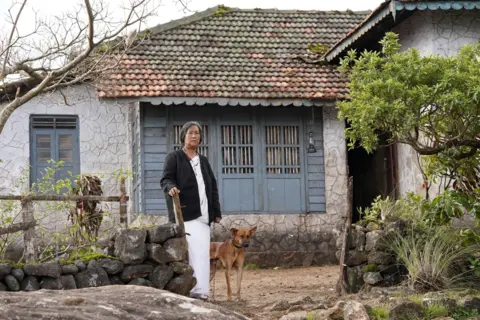
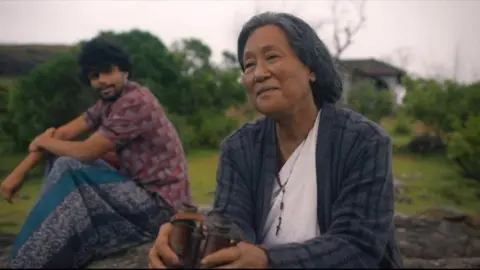
In Eko, a title that plays on the word "echo", Momin plays Mlathi Chettathi, an enigmatic elder living alone in the Western Ghats, a vast mountain range along India's western coast known for its dense forests and mist-covered hills. As the film's lead, her presence anchors its fog-laced landscape and moral core.
Shot on a modest budget and completed in 45 days, Eko, showing on Netflix, has emerged as a critical success.
Much of the intrigue surrounding the film centres on Momin's performance, both for its quiet power and for her unusual profile.
Director Dinjith Ayyathan was searching for a fresh face to play an elderly Malay woman who flees Malaysia during the Japanese invasion of World War II and arrives in Kerala accompanied by men with hidden motives.
Over decades, she lives alone in a crumbling house atop a forested mountain, sharing her world with feral dogs and drifting clouds, while men claiming friendship and family ties attempt to unravel the mystery around her.
The search for the right actor led the Eko team to reach out to friends in the fledgeling film industry and even the Indian army stationed across the eight north-eastern states, looking for someone whose features might plausibly pass as Malay.
It was then that images and clips of Momin, who had recently appeared in a short film on Garo folklore exploring the transformation of human souls into animals, found their way to the Kerala-based scouting team.
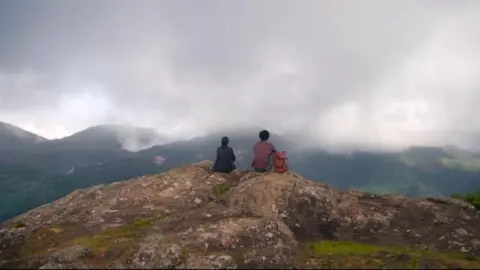
"It seems an unusual coincidence that a short film involving animals led me to a role also set in the company of animals," Momin says.
On a rainy day, she travelled with her son to meet the director and writer for an audition.
"We gave her a fictitious situation: approaching police officers to report her missing son," says Eko's writer and cinematographer Bahul Ramesh. "Her spontaneity, emotive restraint and quiet confidence stood out immediately. Her courage to move far from home and attempt something entirely new at this age won us over."
Though often described as an eco-mystery or psychological thriller, Eko resists easy categorisation - and so does Mlathi Chettathi. She is neither ornament nor mystical cliché. Instead, she carries a quiet authority, observant and grounded.
"I am proud, as an indigenous person, that there are creative people willing to take a chance on me at this age," Momin says. "I hope it inspires more representation."
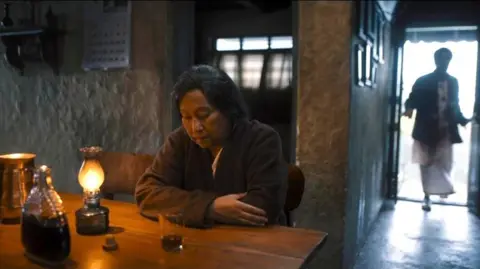
Ramesh describes her performance as "organic and intuitive". "What was extraordinary was her fearlessness and stepping onto a film set for the first time at 70," he says.
For Momin, the shoot was an education.
"Suddenly, I was a student again," she says. She learnt her Malayalam lines phonetically with help from a language coach, followed position cues, absorbed emotional beats and adapted to the rhythm of a professional film set.
Although her dialogue was later dubbed by a local voice artist, Momin memorised and delivered her lines during filming. The shoot involved long treks up a mountain each day, unpredictable weather, veteran actors, heavy equipment and frequent rushes to beat the rain and descending clouds.
"I am a strong woman," she says. "I didn't fall sick despite the weather, and I was adventurous enough to try the cuisine in Kerala."
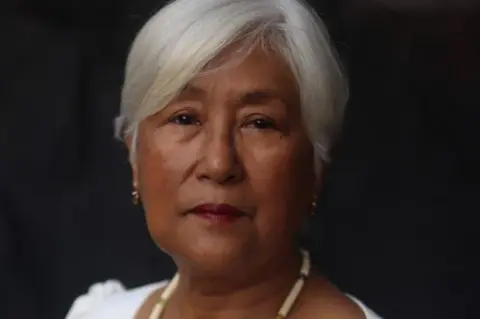 Biana Watre Momin
Crew members say they were struck by her sharp grasp of emotion, angles and movement. Momin credits her life experience. "I have lived a full life and could draw from that," she says. "I also come from a matrilineal tribe, similar to Kerala, and my feminism informed my approach to the role."
Ramesh agrees. "This is a self-reliant character who outwits those trying to exploit her with silent grit and steely determination. Momin slipped into this feminist folklore with quiet understanding."
Accolades have followed her, with national award-winning Tamil actor Dhanush calling it a "world-class performance".
Following Eko's success, filmmakers from Bollywood and beyond have approached Momin with scripts. "Talks are on," she says carefully. "Acting is strenuous work. Let's see what surprises are in store."
For the time being, Momin has returned to her life at home, keeping busy with her family and her book club. "We'll be discussing Arundhati Roy's Mother Mary Comes to Me this week," she says cheerfully.
Biana Momin did not become an actor in the conventional sense. What she became instead was a reminder that cinema, at its best, does not manufacture truth but learns to recognise it.
"Old age should burn and rage at close of day," she quotes Dylan Thomas, momentarily sounding like the teacher she once was.