Caroline DaviesPakistan correspondent, Lahore

 Getty Images
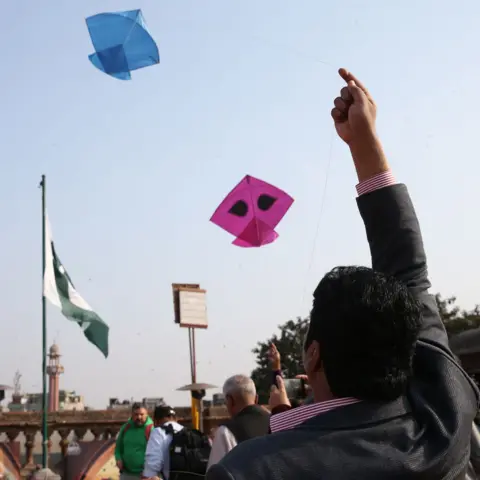
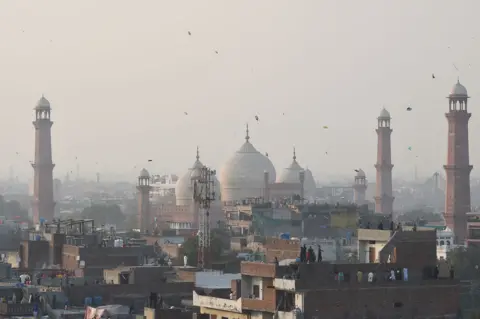
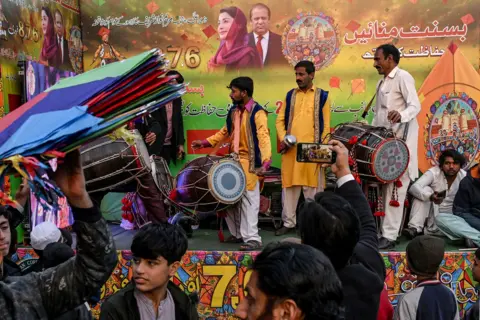
In the streets of Lahore there are hints that the kite flying festival, Basant, has returned. Someone is fishing a kite from electricity cables, the distant sound of a drum beat, a flash of neon when you look up in the walled city's narrow streets to a stretch of sky. This party is above.
 Sh Ed Kamil Khan
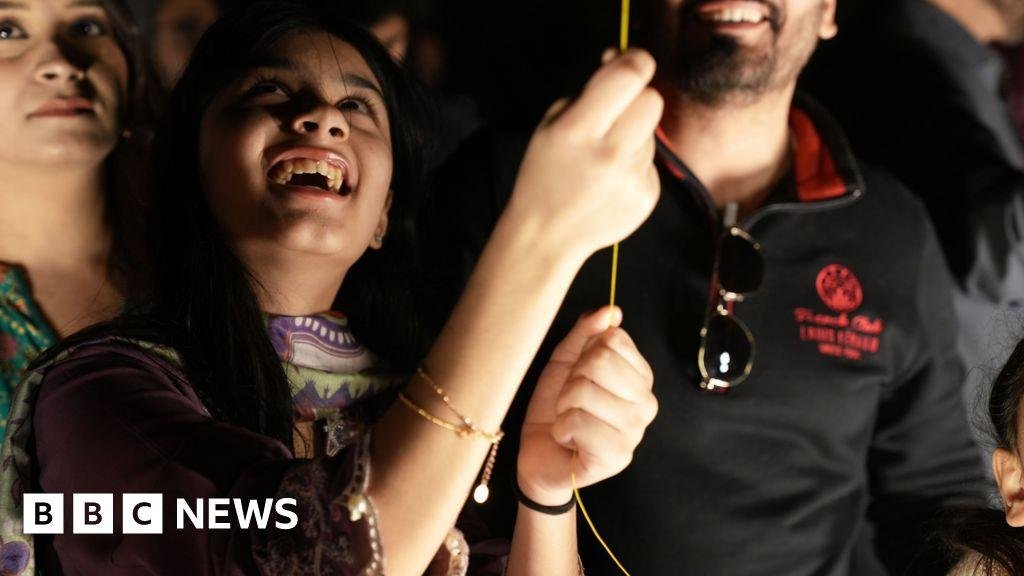
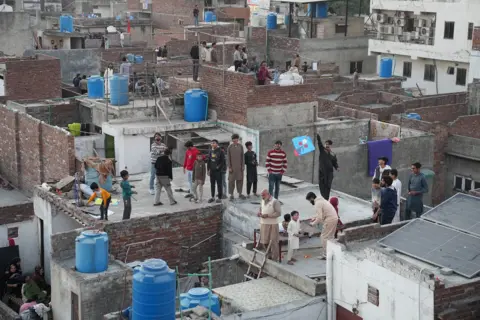
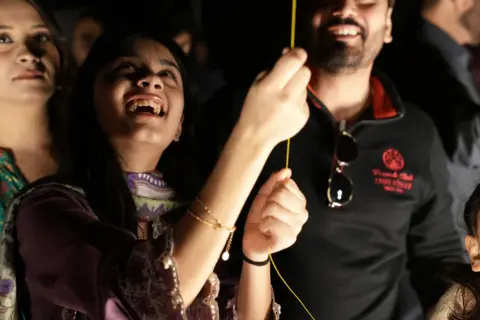
As the sun sets across the city, on every rooftop we can see families and friends, laughing, shouting, watching as kites zig zag, circle, and soar through the city's skies.
 Getty Images
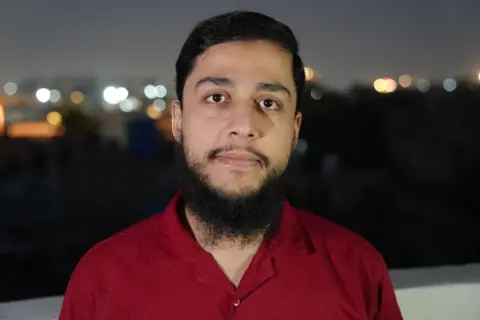
"It's really difficult!" Abu Bakar Ahmad tells me.
The 25-year-old tech engineer has been coached by his cousin, coaxing the kite higher and higher with a twitch of the string.
"All our generations here are very excited; the elders know how to fly a kite, but we Gen-Zers don't know."
 Sh Ed Kamil Khan
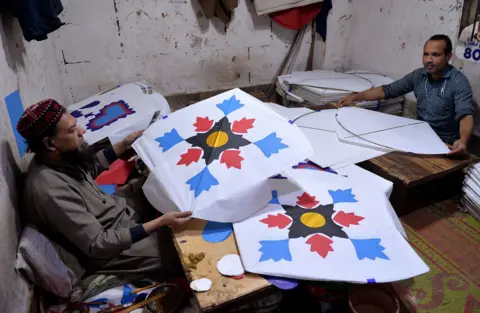
The festival has returned after nearly two decades. Marking the start of spring, it dates back centuries, but was banned in 2007 after several years of injuries and fatalities caused by sharp kite strings, falls and aerial firing.
It means for many this is their first time flying; they've never seen the skies above Lahore like this. Others are practicing the skill after years.
"It's gathering, it's love. Flying kites is ok, but the main thing is bonding," Kanwal Amin, 48, tells me. "I like watching and eating good food."
 BILAWAL ARBAB/EPA
 BILAWAL ARBAB/EPA
Kashif Siddiqui is a pharmacist, but admits his kite flying is a bit rusty. He shows me pictures of his last Basant - then Kashif's son was three. Now his son is here with his own children.
"It's special for Lahori's - this runs in our blood. It's not about kite and thread, it's about tradition. My father and his father before him used to do it."
 Sh Ed Kamil Khan
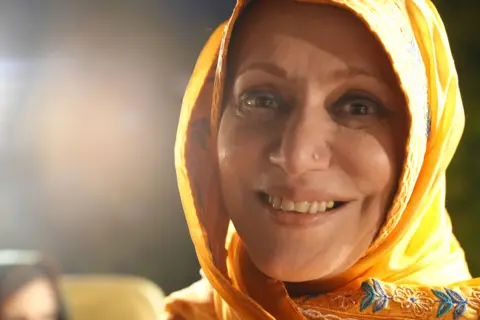
Kashif's aunt, Mina Sikander, 60, is here from Miami; she didn't want to miss out.
"I'm very fond of this festival," she says. "It was worth the journey!"
 BILAWAL ARBAB/EPA
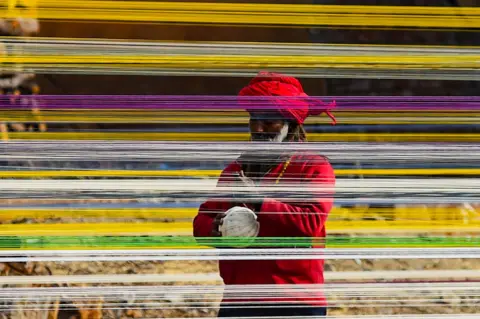
Kite flying is not just about beauty, it's about the battle to knock your opponent's kite out of the sky by cutting their string.
That led to ever sharper, stronger threads, some coated in powdered glass, others made from metal or chemical material that would not break.
Each festival there were deaths, including of children. It was particularly dangerous for motorcyclists who could inadvertently drive into a thread draped across a road, cutting their throats.
Celebratory aerial firing and falls from rooftops also caused injuries and fatalities.
 Murtaza Ali/NurPhoto via Getty Images
In a bid to try to make the festival safer, it's now been limited to only three days.
Motorcyclists have been given metal rods, sticking up between their handlebars, to stop any threads they drive into from becoming tied around their necks.
Large kites are banned because they require a stronger string and create a bigger risk the authorities say.
Nets have been placed over certain streets; in previous years metal kite strings have fallen on to electricity wires giving an electric shock to anyone holding them - and causing the wires to short circuit.
 Arif ALI / AFP
To prevent anyone flying before the festival officially began any kites sold before February 1 were seized along with any string deemed dangerous.
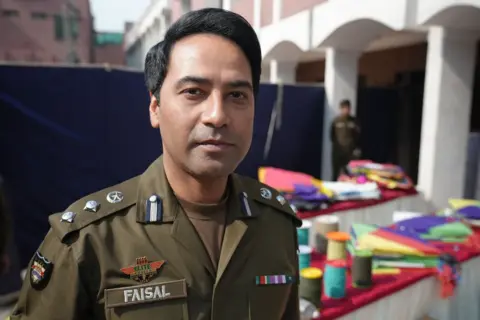
Faisal Kamran, Deputy Inspector General of Lahore Police, shows us some of more than 100,000 kites and 2,100 rolls of string he says his team seized.
His officers are monitoring the skies and rooftops through drones, officers watching in person and repositioned CCTV cameras.
 Sh Ed Kamil Khan
"All these cameras were covering our main roads," he says pointing to images now looking across Lahore's rooftops. "We have a good view just to keep a check on activities like if somebody is using that banned material or weapons."
He says the cameras will be turned back to the roads when Basant is over.
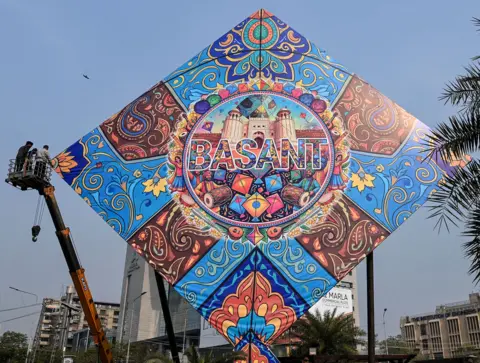
Many are hoping the measures are a success, not least the Punjab government who decided to bring Basant back and have been promoting it.
 Sh Ed Kamil Khan
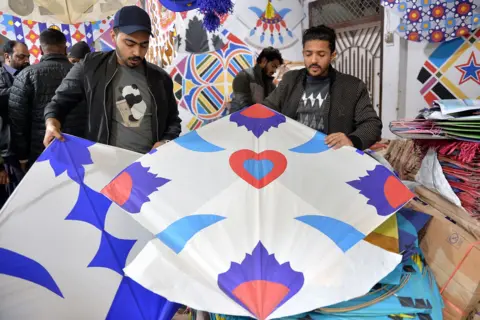
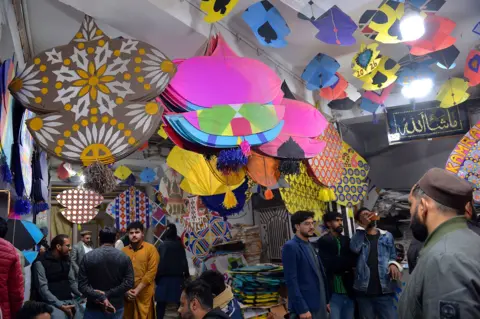
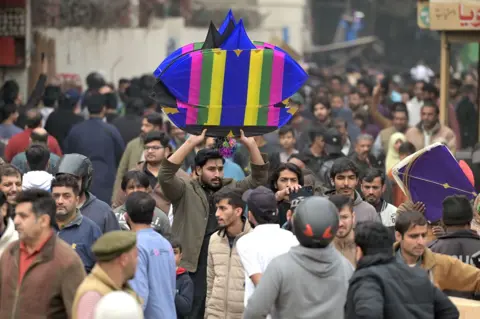
In the narrow streets of Mochi gate, customers hold their paper kites overhead to stop them getting ripped as they squeeze through the crowd and past the occasional slow moving motorbike.
Usman, one of the kite sellers, tells me he's sold more than 7000 kites in just a few days.
 A HUSSAIN/EPA
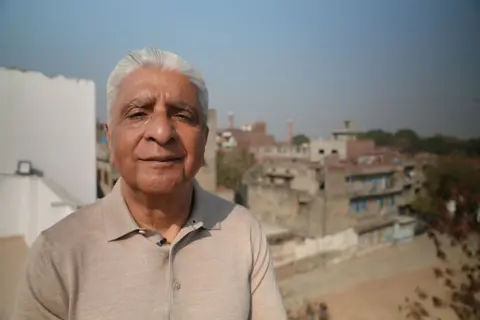
Yousaf Salahuddin has been one of the festival's key supporters and advocates for decades.
In the 1980s he hosted the glitterati of Pakistan at the festival and invited the media to cover it to raise its profile. He says it makes a financial difference to the city too.
"There was a lot of revenue," Yousaf says. "And that revenue was going down to the poorest - the vendors on the street, the restaurants in the old city, the people who dyed the clothes, the people who were selling shoes, bangles, everything.
"And then the hotels were all booked, there were extra flights coming in."
 Sh Ed Kamil Khan
His first memories of the festival date back to before he was old enough to fly kites, when instead he would rush across the rooftops to catch the kites whose strings had been cut.
Yousaf felt emotional seeing them back in Lahore's skies in such numbers for the first time this weekend.
"It's always been a part of us, I don't remember the city without kites," he says.
That doesn't mean he wants to fly them though.
"I don't have the patience, I flew one last night and it got cut," Yousaf says. "So I said, 'I'm not flying anymore - I'm done!'"
 Arif ALI/AFP