Madeline Halpertand Sakshi Venkatraman

 Getty Images
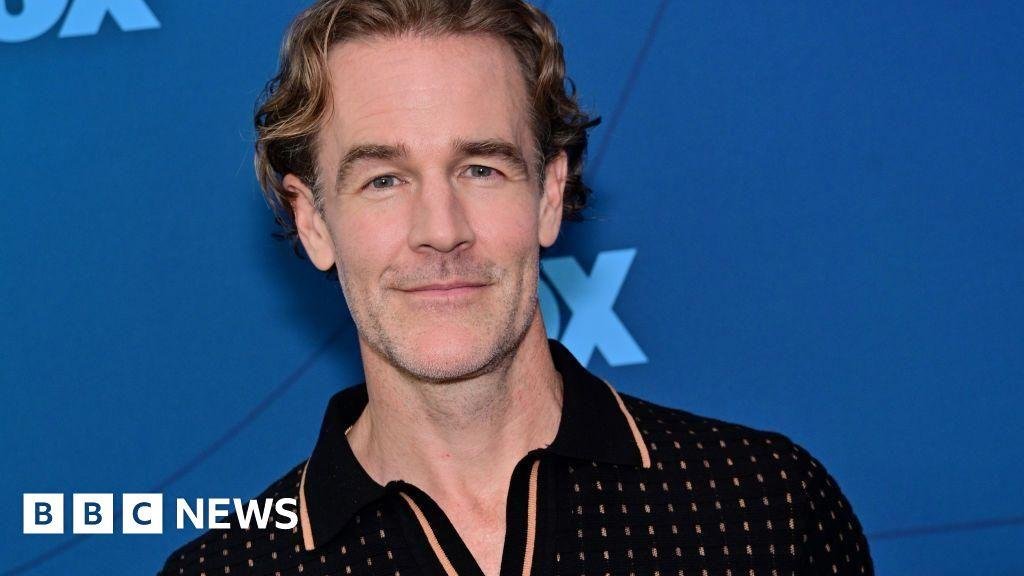
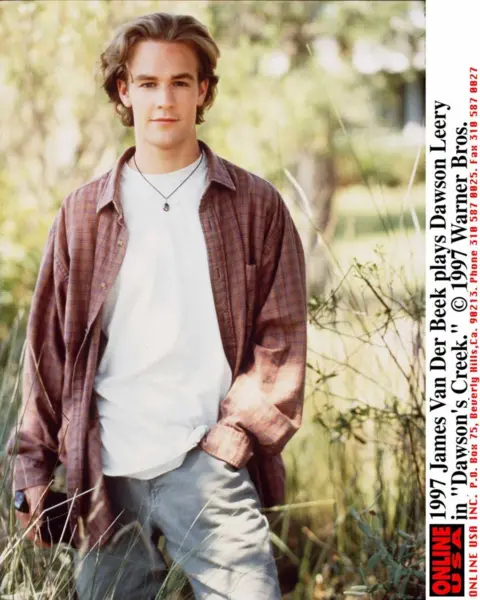
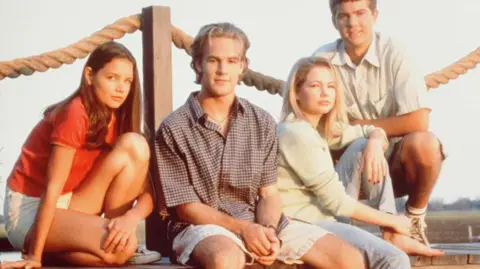
Actor James Van Der Beek seemed to be everywhere in the 1990s and 2000s. With the title role in coming-of-age teen drama Dawson's Creek, he walked some of the industry's hottest red carpets, and his face plastered magazine covers - one even dubbing him a "new superstar".
But when tragedy struck later in life, his family needed to rely on the kindness of his friends - and fans - for financial help, shedding light on the precarious financial situation of not just many actors, no matter how famous, but millions of everyday Americans struggling with medical bills.
Van Der Beek - who had six children with his wife - died on Wednesday at the age of 48 after being diagnosed with colorectal cancer three years ago.
The cost of his medical treatments were so financially draining, his wife says, that she has now made a public plea for donations so they would not lose their home. They have raised $2.3m (£1.7m) thus far.
 Getty Images
In the months before his death, Van Der Beek had shared how cash-strapped the cancer treatments had left him and his family. He even publicly auctioned off items he'd saved for decades from the roles that defined his career - a plaid buttoned shirt he wore in the first episode of Dawson's Creek, a necklace he gifted to Katie Holmes' character on the teen drama series and sports shoes he wore when he starred in the 1999 film Varsity Blues.
"I've been storing these treasures for years, waiting for the right time to do something with them, and with all of the recent unexpected twists and turns life has presented recently, it's clear that the time is now," Van Der Beek told People Magazine last November.
On top of the costly treatments, Van Der Beek was not making the same cash that he'd seen in the prime of his career decades ago. He had said he was paid "almost nothing" for Dawson's Creek and his contract didn't include residuals - payments writers, actors and directors receive when their work is re-aired on television. Actors on other still-popular shows from that same period, like Friends, are said to make about $20m annually from such payments.
"There was no residual money," Van Der Beek told Today in 2012. "I was 20. It was a bad contract. I saw almost nothing from that."
He continued working after his diagnosis, appearing in two episodes of the television show Overcompensating in 2025, but it's unclear whether that was enough to qualify him for health insurance from the prominent actors' union in Hollywood. Actors can qualify for health insurance through SAG-AFTRA only if they work 108 days a year or earn at least $28,090 on union shoots. The BBC has contacted the union.
Van Der Beek is not the first high-profile American actor to highlight the issue. Beverly Hills 90210 star Shannen Doherty, who died in 2024, said she did not have insurance when she was first diagnosed with breast cancer.
 Getty Images
Benjamin Byron Davis, 53, an actor who has appeared on television shows as well as in movies like Marvel's Ant Man, told the BBC that decreased residuals have become a problem for actors across the board.
"Revenue streams that actors have depended upon have disappeared," he said, noting that the rise of streaming has affected how production companies compensate performers. He said many actors depend on these payments both for income and to qualify for health insurance through their union SAG-AFTRA. "I work when I'm hired and I survive when I'm not."
Davis said he lost his health insurance during the 2023 SAG-AFTRA strikes. "There wasn't work," he said, adding that he ended up getting it back when the strikes were over and he was able to meet the qualifications again.
Davis said that just 10 years ago, the union's minimum earnings for health insurance was a third of what it is now, at a level today that is out of reach for the vast majority of actors.
Those who are covered by the union plan get good health coverage, said Valerie Yaros, an archivist with SAG-AFTRA.
But it was possible Van Der Beek no longer received the union plan because of his fewer work hours, she added.
In 2024, Van Der Beek told People that it had become a "full-time job" dealing with cancer treatment appointments and his insurance.
A heated debate on health insurance
His death put a new celebrity face on the debate about rising healthcare costs in the US - an issue that Republicans and Democrats have long recognised needs reform but have disagreed on the best ways to resolve the problem.
The US has one of the most expensive health systems in the world, with spending on health care estimated to reach $5.9tn in 2026, according to the Centers for Medicare and Medicaid Services.
About 100 million people in the US are estimated to struggle to pay off their medical and dental healthcare debt, according to recent data.
The GoFundMe page posted online on Wednesday solicited donations to assist Van Der Beek's widow Kimberley and their six children, whose ages range from 4 to 15.
His wife shared the page, which noted the "significant financial strain" the family had seen as they "did everything possible to support James and provide for his care".
"In the wake of this loss, Kimberly and the children are facing an uncertain future. The costs of James's medical care and the extended fight against cancer have left the family out of funds," the page reads. "They are working hard to stay in their home and to ensure the children can continue their education and maintain some stability during this incredibly difficult time."
Even with health insurance, cancer treatment can prove extremely costly for those in the US. Some studies suggest the average monthly cost of chemotherapy can range from $1,000 to $12,000.
This is because in the US private health-care system, even those with insurance can face high deductibles and thousands of dollars in out-of-pocket costs, said Eva Stahl, the vice president of policy at Undue Medical Debt, a nonprofit that has paid off about $25bn of medical debt for almost 15 million people.
"People simply can't afford vital, life-saving treatments without going into debt," she said. "When even someone with James Van Der Beek's resources has no option but to fundraise for treatment, it's clear how fundamentally unfair our healthcare system is."
Michael Short, a graphic artist in Tennessee who has had his own battles with medical debt, told the BBC that his sister has had to declare bankruptcy because of medical debt for treatments for her endometrial and another cancer, even with insurance coverage.
"It's in the hundreds of thousands if not millions for these cancer treatments," he said. "The prices on these medications and on these treatments are just so high."