'Trump will be gone in three years': Top Democrats try to reassure Europe
Anthony ZurcherNorth America correspondent, in Mar-a-Lago

 EPA
EPA
US Secretary of State Marco Rubio was the centre of attention at the Munich Security Summit, as European leaders wondered apprehensively what tone he would strike in his remarks on Saturday.
While his speech did not fully allay their concerns, it has been viewed as a reassurance to allies that while US relations may have frayed under Donald Trump, they will not break.
Rubio's was not the only American political voice at the security summit, however.
And even if the secretary of state's remarks had not been so well-received – if he had sharply criticised Europeans the way Vice-President JD Vance did at the conference last year – there were other American politicians doing their best impression of the Persian poet, counselling: "This too shall pass".
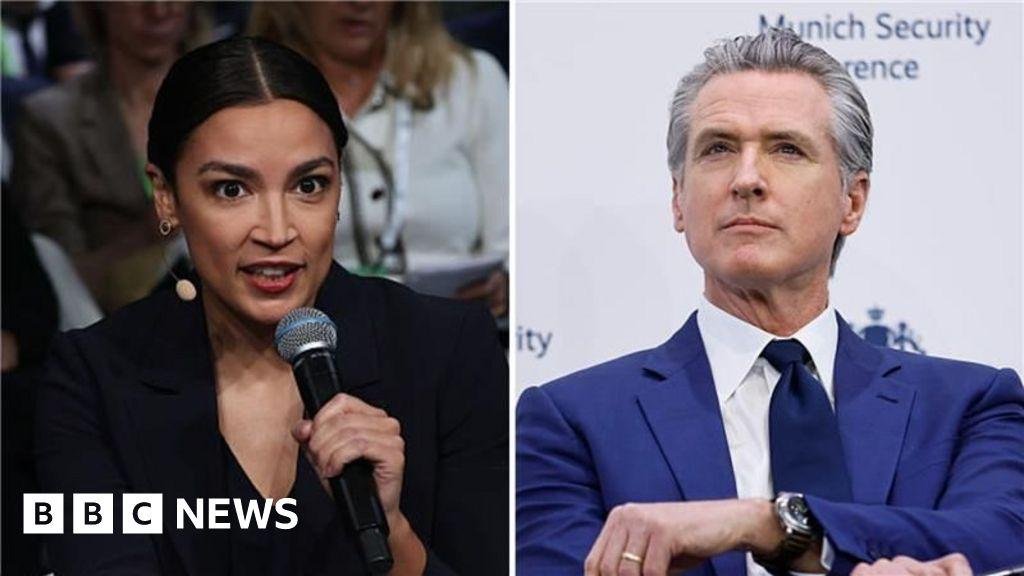
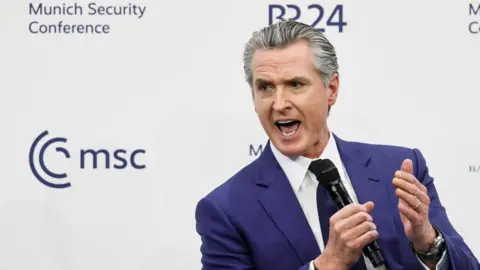
"If there's nothing else I can communicate today," California Governor Gavin Newsom said at a conference event on Friday, "Donald Trump is temporary. He'll be gone in three years."
Newsom was just one of dozens of American legislators and governors in attendance – including some Democrats, like the Californian, who may contend for their party's 2028 presidential nomination.
 Reuters
Many emphasised that the US would continue to be a strong partner with Europe – lines similar to those offered by Rubio, but unleavened by his criticism of cultural decline on the continent.
"The reason we're here is to provide reassurance that we understand how important our European allies are," Democratic Senator Jeanne Shaheen of New Hampshire said.
A Republican in attendance, Senator Thom Tillis, echoed her, noting that the US and Europe were not in a "civil war". He cautioned American allies not to get caught up in the "rhetoric of American politics".
That has been easier said than done recently, as Trump has imposed steep tariffs on many US trading partners, and he and some of his top aides have been blunt in their desire to reshape the international order, use American military power and refocus American foreign policy on the western hemisphere.
The president's designs on Greenland – which he repeated before departing the White House for a weekend in Florida on Friday – have been only the most jarring example of the shift in the American outlook.
Trump's willingness to push boundaries and test the limits of his power has not been limited to foreign affairs. And several Democrats took time in Munich to address more domestic concerns.
Virginia Senator Mark Warner warned that the president's talk of nationalising elections and instituting stringent identity requirements for voting via executive order mean the freedom and fairness of November's midterm congressional elections are at stake.
"I never thought I would say that in 2026 America," he said.
Trump has defended his effort – and the SAVE act, which would implement a national voter identification requirement legislatively – as both popular with a sizable majority of Americans and necessary to prevent voter impersonation at the ballot box.
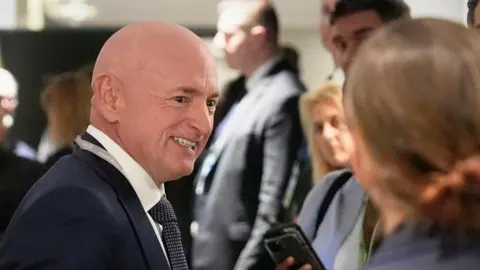
Senators Mark Kelly and Elissa Slotkin, who were the focus of a recent unsuccessful indictment attempt by the Department of Justice for their video urging US soldiers to disregard "illegal" orders, both commented on being in the administration's spotlight.
America, Slotkin said, was "going through something profound", before adding, "We'll get through it."
 Reuters
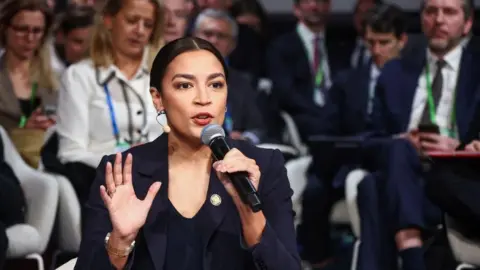
Congresswoman Alexandria Ocasio-Cortez proved to be one of the biggest attractions at the conference beyond Rubio. She drew a line between growing wealth inequality – a focus of her domestic policy agenda since she won an upset victory in Congress in 2018 - and the rise of authoritarian governments.
"It is of the utmost urgency that we get our economic houses in order and deliver material gains for the working class," she said. "Otherwise, we will fall into a more isolated world governed by authoritarians who also do not deliver to working people."
While Ocasio-Cortez comes from a different wing of the Democratic Party, her view about the need for western democracies to provide a compelling alternative to authoritarian governments was similar to one expressed by Joe Biden during his presidency.
Trump, with his "America First" foreign policy and talk of preserving Western culture, provided a decidedly different view of world affairs. And in 2024, a plurality of Americans voted to return Trump to the White House, setting off a tumultuous year in which Vance's confrontational Munich speech was just the scene-setter.
While Rubio has smoothed over some rough edges, the Democrats who made the trip to Munich attempted to provide a more distinct counterpoint.
"Right now, Europe just wants us to be better, right? And I think this has been a very good conference to reassure nerves," Arizona Senator Ruben Gallego said. "Sometimes you have to remind them that this is not all Trump ... We're still here."