
 Miguel Gutierrez/EPA/Shutterstock
Pressure is growing on the Venezuelan interim government to free the remaining political prisoners being held in the country.
A pressure group campaigning on detainees' behalf, Foro Penal, said on Sunday that it had been able to verify that 444 political prisoners had been released since US forces seized Venezuelan leader Nicolás Maduro last month.
But hundreds more remain behind bars, according to a tally kept by Foro Penal, even though the Trump administration has pressured Venezuelan officials to speed up their release.
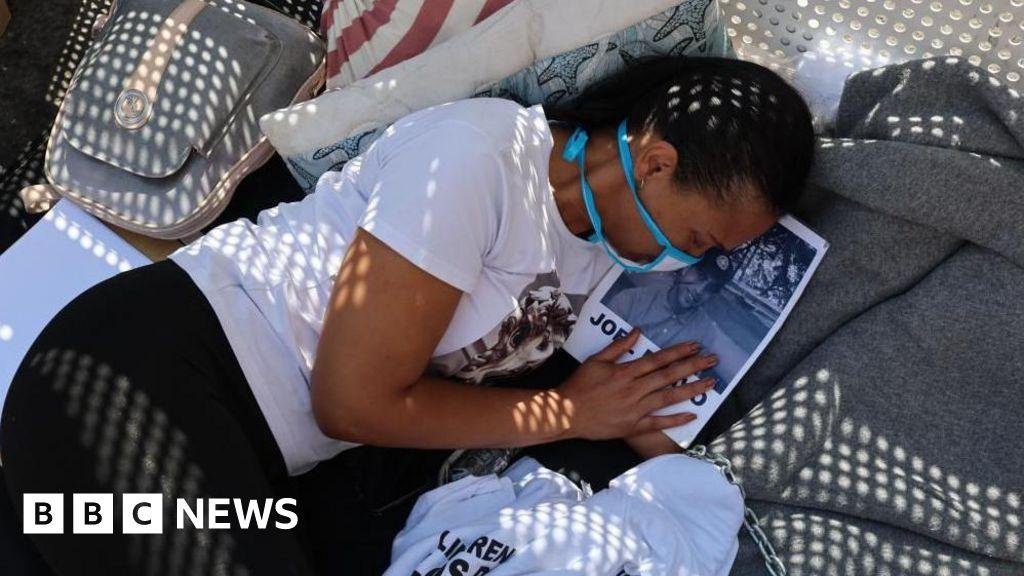
Activists say the health of some relatives who have gone on hunger strike to demand the release of their loved ones is quickly deteriorating.
Opposition party Vente Venezuela posted footage of one of the relatives - who appears to be unconscious - being tended to by others outside the Zona 7 detention centre in the capital, Caracas.
According to a pressure group, 10 people went on hunger strike on Saturday to demand that their relatives, who are being held at Zona 7, be freed.
They have been holding a vigil outside the police detention centre since 8 January, when the head of Venezuela's National Assembly, Jorge Rodríguez, first announced that "a significant number" of prisoners would be freed as a goodwill gesture to demonstrate what he said was the interim government's will "seek peace".
While the Trump administration has praised Venezuela's interim government for the progress it has made so far, activists within the South American country have denounced delays and a lack of transparency in who is being freed.
Members of the opposition have also denounced that those who have been released have been barred from speaking out publicly.
They cite the case of opposition politician Juan Pablo Guanipa as evidence that those released are not "really free".
Guanipa was released on 8 February after eight months in jail, only to be seized again hours later for allegedly breaking the conditions of his release. He has since been placed under house arrest.
Last week, students took to the streets to demand an amnesty for those who have been jailed as part of the widespread repression against critics of the government of Nicolás Maduro.
Venezuela's interim government - led by Maduro's former vice-president, Delcy Rodríguez - has put forward an amnesty bill since Maduro was removed from power in a US raid on 3 January.
The bill passed its first reading unanimously on 5 February but lawmakers failed to approve it as scheduled last week as they could not agree on how it should be applied.
The bill is due to be discussed further this week.