DHS shuts down after a funding lapse. And, why athletes get the 'yips' at the Olympics
DHS shuts down after a funding lapse. And, why athletes get the 'yips' at the Olympics
Good morning. You're reading the Up First newsletter. Subscribe here to get it delivered to your inbox, and listen to the Up First podcast for all the news you need to start your day.
Today's top stories
Funding for the Department of Homeland Security ran out last week, triggering a third partial government shutdown in three months. The agency shut down after lawmakers failed to meet a Friday deadline to fund DHS and its workforce of over 260,000 people. The funding lapse points to a greater issue: Congress's consistent failure to do its job on time. Check out these five things you should know about the shutdown.

The Department of Homeland Security sign is seen outside its headquarters on Feb. 13, 2026, in Washington, D.C. Alex Wong/Getty Images hide caption
toggle caption
Alex Wong/Getty Images
- 🎧 The White House and Democrats have been trading offers, but multiple roadblocks stand in the way of an agreement, NPR's Sam Gringlas tells Up First. Democrats say Republicans' proposals to reform immigration enforcement tactics are insufficient. The GOP calls Democrats' demands, including judicial warrants for some enforcement operations, unreasonable. Based on how quickly lawmakers left Washington, D.C., on Thursday for a weeklong recess, Gringlas concludes that both sides stand far from a deal. Americans are not expected to notice the impacts of the partial shutdown unless it really drags on.
As Russia's war against Ukraine nears its fourth anniversary, officials from both countries and the U.S. are set to meet in Geneva tomorrow. The officials will conduct another round of negotiations focused on ending the war.
- 🎧 The Kremlin claims it prefers diplomacy over conflict, but insists that Russia's victory is inevitable. NPR's Charles Maynes says that Russia uses these talking points in its negotiations with the White House, aiming to convince the U.S. that Ukraine's mission is hopeless. The Kremlin suggests that once the war is settled, the U.S. and Russia can resume business, opening up major investment opportunities. Russia is demanding that Ukraine give up territory. Ukraine counters Russia by arguing against giving up territory that Russia hasn't been able to claim during the war.
Over the weekend, the Winter Olympics saw some amazing performances by U.S. athletes, as well as stumbles from high-profile names. U.S. speed skater Jordan Stolz won his second Olympic gold. Meanwhile, others, such as U.S. Alpine skier Mikaela Shiffrin, fell short of a medal.
- 🎧 Figure skater Ilia Malinin, who fell repeatedly in his figure skating program on Friday, informed reporters that his preparation for the Olympics unraveled. Dr. Sahen Gupta, a sports performance psychologist at the University of Portsmouth, studies this phenomenon, known as the "yips" or "twisties." Gupta says that while athletes train to handle pressure with techniques like meditation to quiet the brain, the unique Olympic pressure can sometimes overwhelm this training. NPR's Brian Mann says experts have told him that athletes often learn from Olympic setbacks and return stronger.
Picture show
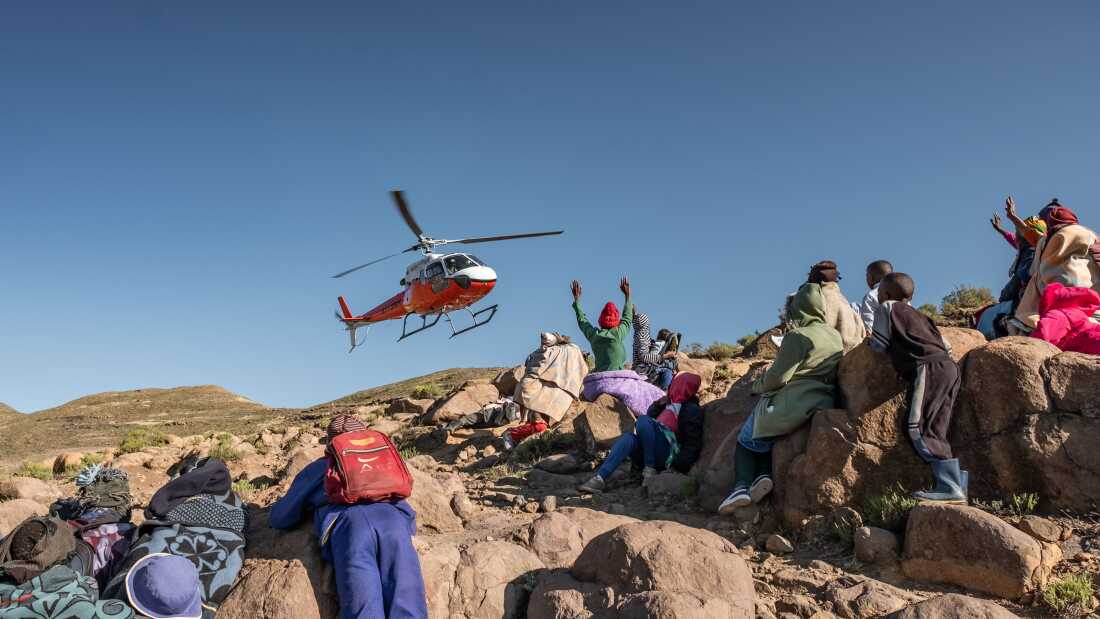
Residents of the isolated village of Mphooko wave as a team from the Lesotho Flying Doctor Services departs after a day treating patients in the village. Mphooko is inaccessible by road, and relies on the LFDS for basic medical care. Tommy Trenchard for NPR hide caption
toggle caption
Tommy Trenchard for NPR
The Lesotho Flying Doctor Service is a band of airborne health workers who deliver essential medical care to isolated communities in the southern African nation. Lesotho, referred to as the Kingdom in the Sky, is the world's only nation entirely above 4,593 feet. Its rugged terrain makes road transport nearly impossible, leaving roughly 300,000 people without reliable access to health care. For decades, the service was their lifeline until President Trump's aid cuts in January 2025 all but severed it. After a tumultuous year, the flying doctors now aim to bounce back stronger, more efficient, and less reliant — with or without U.S. support. Take a look at these photos showing the work the doctors do in their community.
Behind the story
by Frank Langfitt, NPR's roving national correspondent

Ice boat racer and sailor, Ray Gauthier, sails across the ice at Claiborne Landing, in Claiborne, Md., on Monday. Wesley Lapointe for NPR hide caption
toggle caption
Wesley Lapointe for NPR
As NPR covers the Winter Olympics in Italy, an obscure winter sport — ice boating — has enjoyed a renaissance back home during the recent deep freeze. The prolonged low temperatures froze rivers, lakes and bays, providing some of the best ice boating conditions in decades.
NPR's Frank Langfitt joined ice boaters recently on the Chesapeake Bay and even skippered a vessel himself.
I'm a sailor who lives in Annapolis. When ice began to cover the bay, my social media feed lit up with videos of these graceful wooden vessels gliding along sheer ice. I reached out through Facebook to a group of ice boaters on Maryland's Eastern Shore who were providing free rides to scores of curious spectators. Even if you have no interest in sailing, ice boating is a revelation. The boats ride on three narrow metal blades, making a sail practically frictionless. That means ice boats can often travel at more than three times the speed of the wind. It's breathlessly exciting and entertaining. I went out for half an hour with an ice boater. Even in a mild breeze, we hit speeds of nearly 30 mph. As the wind dropped, I took an ice boat for a brief sail and found it surprisingly simple. The boat has just one sail, and you steer by using a wooden tiller to turn the front blade. Listen and learn more about my ice boating experience. You can also read my story and see photos of people in action out on the ice.
3 things to know before you go
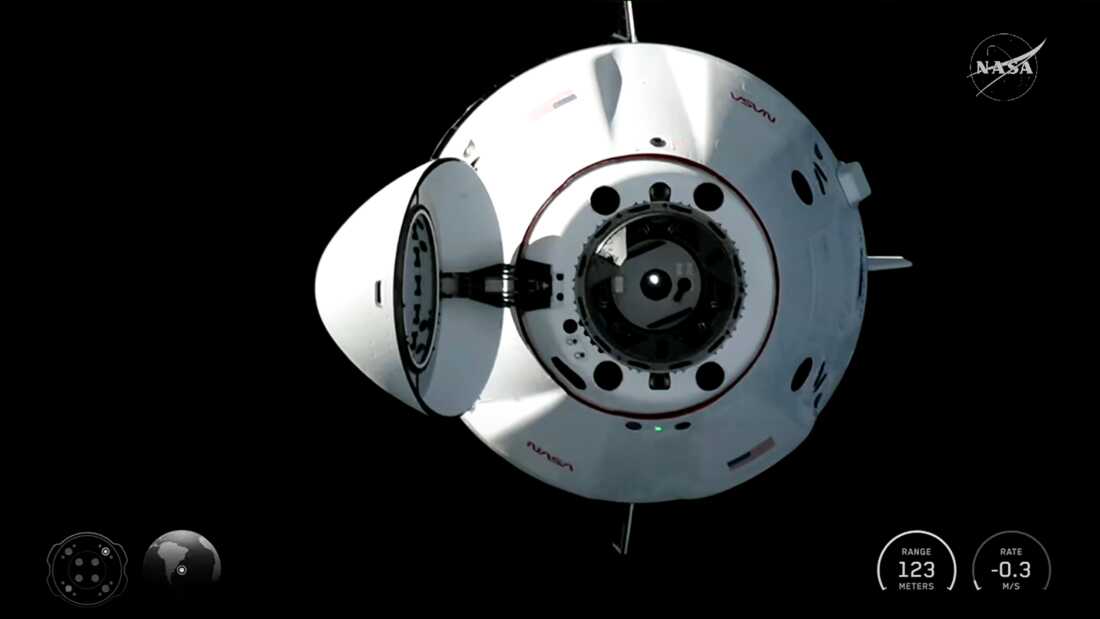
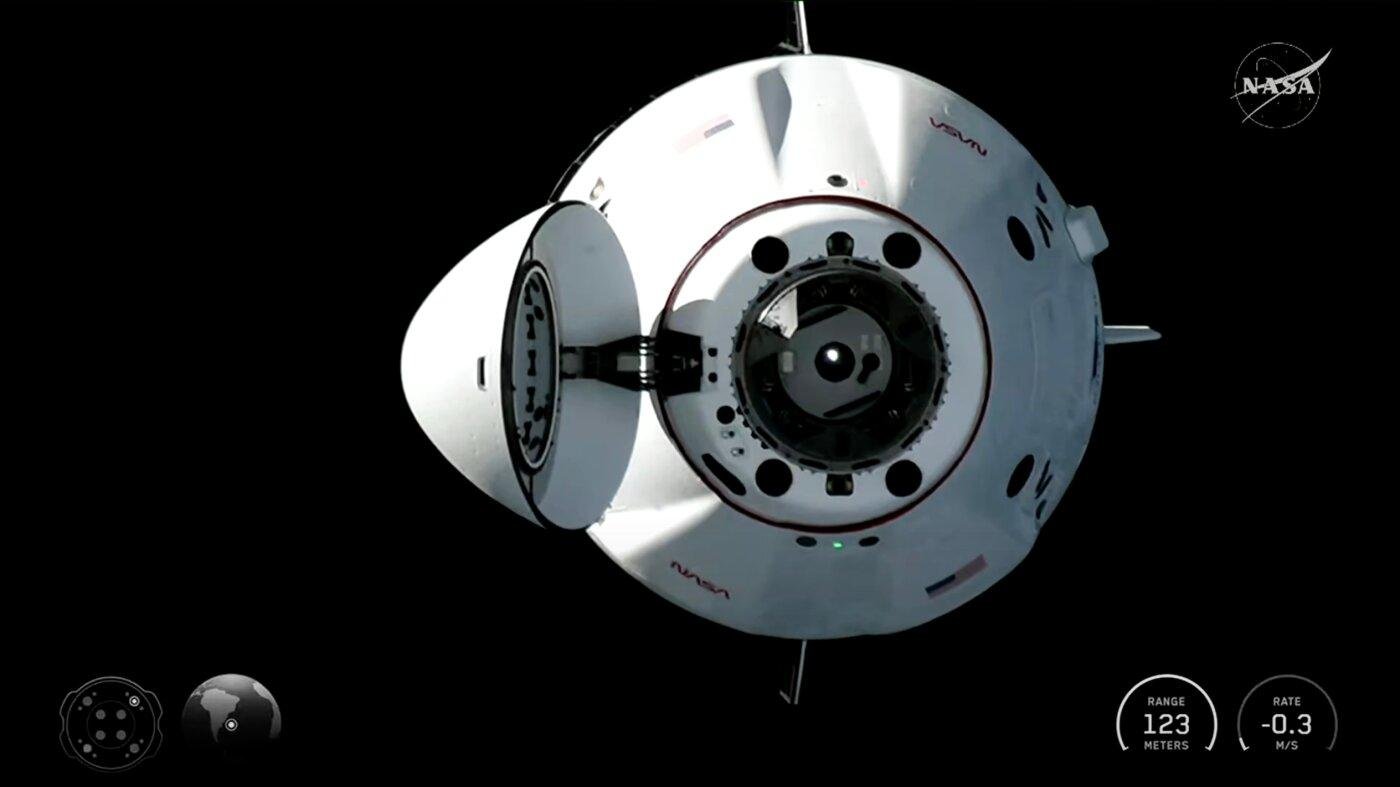
In this image from video provided by NASA, a SpaceX Dragon capsule carrying Americans Meir and Jack Hathaway, France's Sophie Adenot and Russia's Andrei Fedyaev, approaches the International Space Station for docking on Saturday, Feb. 14, 2026. NASA/AP/NASA hide caption
toggle caption
NASA/AP/NASA
- The four members of NASA's SpaceX Crew-12 mission docked at the International Space Station on Saturday. The crew will spend eight months conducting experiments to prepare for human exploration beyond Earth's orbit.
- Former President Barack Obama responded to the racist AI video depicting him as an ape that Trump's social media account posted earlier this month.
- Hundreds of well-wishers welcomed the Buddhist monks with rose petals, traditional lion dances, and chants as they returned to their east Fort Worth, Texas, temple after their 2,300-mile cross-country walk for peace. (via KERA)
This newsletter was edited by Yvonne Dennis and Suzanne Nuyen.
Patrocinados
Patrocinados
Patrocinados
Patrocinados
Publicaciones
Categorías
Read More
Microsoft's Next Xbox Console Is for Real, and It'll Play PC Games, Too
Microsoft's Next Xbox Console Is for Real, and It'll Play PC Games, TooMicrosoft has confirmed what many have speculated: that its next-generation gaming console will be a hybrid piece of hardware that can play Xbox games as well as Windows PC games.There aren't yet any details on a release window, pricing or specs, but the new head of Microsoft's gaming division, Xbox CEO Asha Shar, wrote in a...

Madonna joins Sabrina Carpenter to surprise Coachella
Madonna surprises Coachella by joining Sabrina Carpenter on stageMadonna joins Sabrina Carpenter to surprise CoachellaRiver Callaway via Getty ImagesMadonna surprised fans at Coachella making a guest appearance during Sabrina Carpenter's Friday night headline set.The Queen of Pop joined Carpenter on stage for a duet of Vogue, Like A Prayer and a song from Madonna's new album.The performance...

2 days left to save up to $190: Join 1,000+ founders and investors at TechCrunch Founder Summit
2 days left to save up to $190: Join 1,000+ founders and investors at TechCrunch Founder Summit With just 2 days left, now is the time to lock in your spot at TechCrunch Founder Summit 2026 and save up to $190 before Early Bird rates expire on June 26 at 11:59 p.m. PT. Founders rarely scale alone. The fastest path to growth comes from learning from those who have...

My Pixel 10A Hands-On: Google Adds Fast Charging, Satellite SOS for $499
My Pixel 10A Hands-On: Google Adds Fast Charging, Satellite SOS for $499 The new lower-cost Pixel looks a lot like last year's 9A, but has some quality-of-life improvements. Mike Sorrentino Senior Editor Mike Sorrentino is a Senior Editor for Mobile, covering phones, texting apps and smartwatches -- obsessing about how we can make the most of them. Mike also keeps an eye out on...

Former national security adviser John Bolton discusses risks of Iran regime change
Former national security adviser John Bolton discusses risks of Iran regime change Former national security adviser John Bolton discusses risks of Iran regime change Audio will be available later today. NPR's Steve Inskeep talks with John Bolton, a national security advisor in President Trump's first term, about the prospect and...