Ads by Money. We may be compensated if you click this ad.Ad
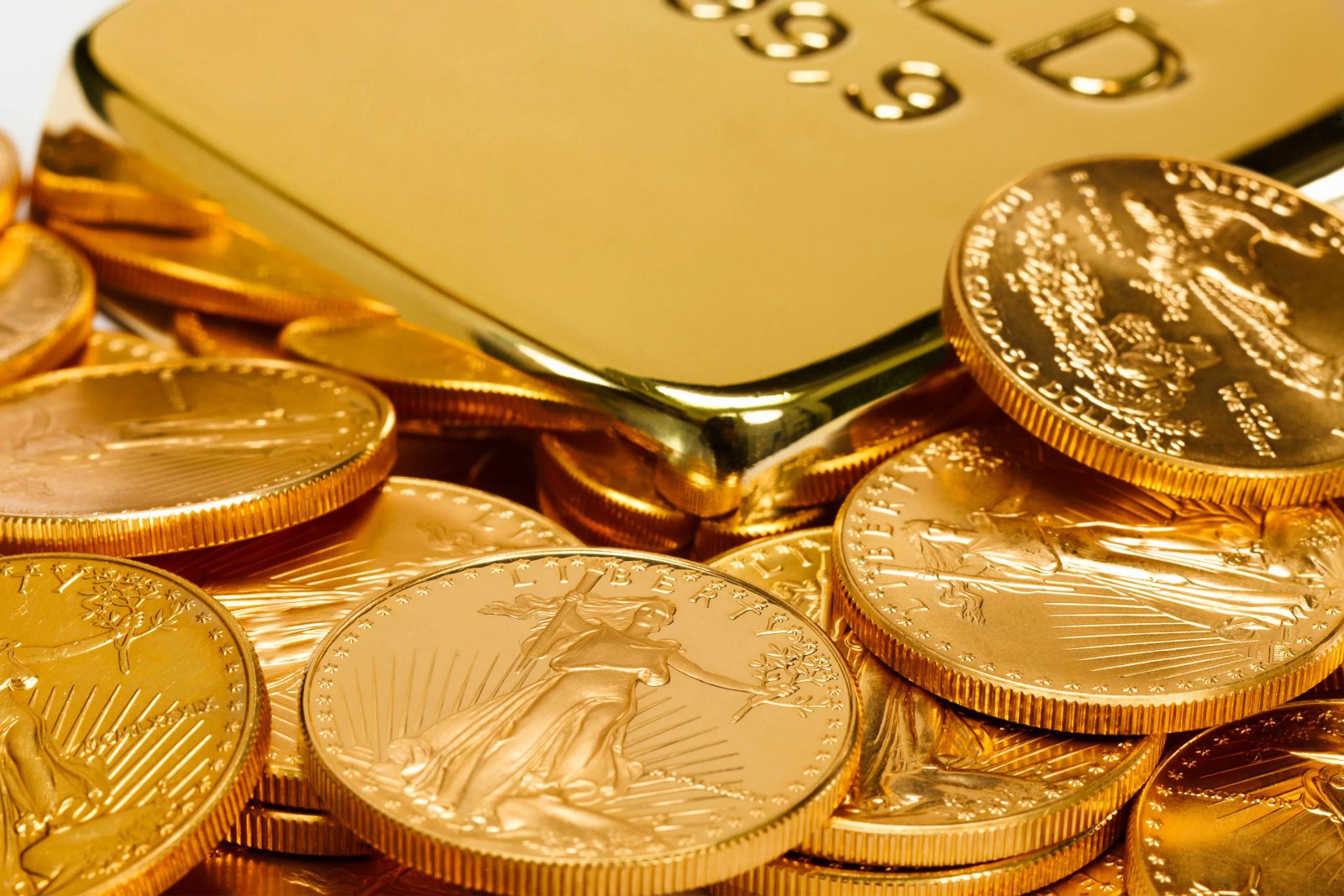
Gold is a time-tested, safe-haven asset, the price of which has historically held up well in times of high inflation, market volatility and geopolitical uncertainty. Because of this, many investors turn to the precious metal in an effort to protect their wealth.
And those holding it in their portfolios were rewarded in late 2025 when the price of gold surged to all-time highs. It set a record in early 2026 at nearly $5,600 per ounce, proving once again how valuable it is as a store of value.
Understanding how these, and other factors, contribute to the price of this precious metal is essential if you’re thinking about investing in gold (or already do so). So read on to learn about these factors and some considerations to make before you spend.
What affects the price of gold?
Gold prices are affected by numerous economic factors. But what exactly drives the price of gold can be confusing — and sometimes conflicting. While other commodities are mostly driven by supply and demand, gold is often affected by the psychological effects of economic downturns, monetary policies or currency valuations. conditions.
Value of the U.S. dollar
Gold is a dollar-denominated asset, meaning the value of gold is priced in U.S. dollars. These types of assets typically have an inverse relationship with the value of the U.S. dollar.
When the value of the dollar decreases, investors are able to buy less gold per dollar due to decreased purchasing power. Because the value of the dollar is less, more dollars are needed to buy the same ounce of gold, therefore increasing the value of the precious metal.
By extension, during periods of high inflation, gold historically remains stable or increases in price, proving its value as a safe-haven asset. This was perfectly encapsulated when gold set its all-time high price numerous times in 2024 alongside the diminished purchasing power of the U.S. dollar.
Additionally, if the exchange rates of the U.S. dollar decrease relative to other currencies, investors outside the U.S. will be able to buy more gold with their currency, which can also drive up demand and gold prices. For example, in January 2026, the exchange rate for the euro was about $1.20, which coincided with gold setting its all-time high price due to a weaker USD.
Demand for gold
Gold demand is another factor that can influence prices. The precious metal has a broad base of demand from diverse consumers, investors and institutions, and a few industries directly affect interest in buying gold.
1. Jewelry-driven demand
Jewelry is one of the most common ways people know how to buy gold. As the demand for jewelry increases, so too can the price of gold. However, jewelry is typically considered one of the weaker drivers of gold prices since many people buy jewelry and keep it for years.
2. Demand from gold exchange-traded funds (ETFs)
If you know how to buy stocks, you're likely familiar with the concept of exchange-traded funds (ETFs). Gold ETFs invest in gold bullion or the companies that mine gold. These ETFs combine some of the benefits of investing, offering both broad industry exposure, convenience and the stability of gold without actual ownership.
Demand driven by gold ETFs has a similar effect on gold prices as other types of demand. The value of the precious metal can increase according to how many people invest in gold ETFs. More demand equates to more buying volume, and the higher buying volume is, the higher shares can go.
3. Central bank buying
We are seeing greater investment in physical gold led by the world's central banks as opposed to U.S. Treasurys. The World Gold Council conducted a survey concluding that central banks are placing a greater emphasis on gold’s value in crisis response, diversification attributes and store-of-value credentials.
When the U.S. sanctioned and froze Russian assets, other countries and central banks realized the importance of being in control and eliminating counterparty risk, hence gold began seeing massive inflows in the wake of Russia's invasion of Ukraine. Central banks in the various BRICS+ nations, including China, Russia and India, are also buying more gold at a faster pace.
Essentially, central bank gold buying is showing a migration of the asset from West to East, with the aim of those central banks being to create a network of countries that have confidence to trade outside of the U.S. dollar.
4. Demand for industrial applications
Gold is used for numerous industrial and production applications, including electronics, healthcare, semiconductors and space exploration. If demand increases in the industries that use significant amounts of gold, the value of the precious metal can increase alongside that demand as more is needed to produce goods and complete services that rely on the precious metal.
Gold production
Gold is a finite resource. Therefore, prospecting and mining physical gold is becoming increasingly more difficult and expensive. As demand outpaces supply, its price increases.
Whether or not peak gold has been reached is a point of contention. However, production has plateaued over the past decade, and some experts estimate that by 2050, mining gold could be an unsustainable endeavor.
While the precious metal can be melted and repurposed numerous times, much of the world’s gold takes the form of jewelry that remains out of circulation for lengthy periods. As gold gets harder to source, its price will increase.
Interest rates
Interest rates and gold prices historically have an inverse relationship. As gold prices rise, interest rates fall — and vice versa. However, as recent history has proven, this is not a direct correlation.
In its attempt to quell runaway inflation, the Federal Reserve raised interest rates at 10 consecutive meetings beginning in March 2022. In fact, the price of gold hit its then-all-time high in December 2023 amid the highest interest rates since 2007.
When interest rates rise, it typically signals that the economy is strong. Under these circumstances, sentiment can prove bullish and investors may feel confident purchasing higher risk assets like stocks. If demand for other assets increases, gold and precious metal demand decreases and prices will subsequently fall.
Conversely, economic factors like poor consumer confidence or weak job reports could signal investors to stay away from riskier assets, meaning you wouldn’t see the expected effect on gold prices.
Geopolitical factors
Since gold is seen as a safe-haven asset, investors may turn to it during worrisome times in an attempt to protect their money from the fallout of conflict. When geopolitical tensions flare, gold values may increase. That’s precisely what happened in the first quarter of 2022 when the Russia-Ukraine conflict helped gold gain 6%.
However, geopolitical factors may not be as influential of a factor on gold prices as many assume they are. Gold is typically associated with the U.S. economy, so overseas tensions and other events may not affect gold values as strongly as internal conflict or domestic monetary policy.
When it comes to gold and geopolitical tensions, the old adage, “buy the rumor, sell the news,” can apply. Investors tend to buy gold before a crisis occurs and then sell it to take profits once the situation unfolds.
Lastly, some geopolitical situations are seen as having positive effects on global order, like military action that protects the U.S. economy. One example of this is when the Banana Wars began in 1898 and the Dow Jones Industrial Average gained 22.49% while the price of gold remained fixed at $20.67/troy ounce. It remained unchanged until 1933.
Who determines the price of gold?
Numerous factors influence gold pricing, so no one person or organization is fully responsible for setting prices. However, the London Bullion Market Association (LBMA) publishes gold prices twice a day via the ICE Benchmark Administration (IBA).
The IBA consists of multiple banks, an oversight committee and a panel of internal and external chair members. The IBA sets gold spot prices and gold fixed prices based on supply and demand as well as the gold futures derivative markets.
The major derivative markets include the Commodity Exchange (COMEX) in the U.S. and the LBMA in the U.K. The COMEX and LBMA make futures contracts with buyers that agree to pay a certain price for gold that they will receive at a specific time in the future.
Combined with supply and demand information, the IBA can determine the spot price, which is the market price of unrefined gold. The IBA then sets a gold price to publish as the LBMA Gold Price, or the London Gold Fix.
How volatile is gold?
Gold has a relatively indirect relationship between price and volatility because investors typically use it as a safe haven during economic turmoil. Because it’s less volatile in the long term, gold is a good investment to protect long-term funds — for example, in gold individual retirement accounts — despite some volatility in the short term.
Other asset classes, like stocks and bonds, tend to have more volatility during unpredictable economic and market conditions. But gold has a relatively indirect relationship between price and volatility because investors typically use it as a safe haven during economic turmoil.
Investors shouldn't be too concerned if there is a temporary drop in gold prices. After all, they tend to rise again after a relatively short period, which can continue to increase your long-term returns.
Ads by Money. We may be compensated if you click this ad.Ad
Summary of What Drives the Price of Gold
A number of factors are responsible for driving the price of gold, including the value of the U.S. dollar, demand for gold, interest rates and other macroeconomic factors like geopolitical tension. But the relationship between these economic factors and gold’s value is ambiguous since there are no set rules determining how gold prices rise or fall.
Investing can be subject to emotions, so the psychological effects of economic uncertainty often play a role in people turning to safe-haven investments like gold. And while gold is typically seen as a stable asset, it can experience some volatility in certain short-term situations.
However, in the long term, gold can be considered a safe investment. You may want to consider investing in it to diversify your portfolio, hedge against inflation and to own highly liquid assets during times of need.