Investor Relations Best Practices: How to Build Trust and Drive Engagement

Investor Relations Best Practices: How to Build Trust and Drive Engagement
Most companies today communicate regularly with investors. But 90% fail to connect investor relations (IR) with overall business strategy. * This means that the vast majority of firms today are missing valuable opportunities to strengthen credibility and influence valuation. Make the most of your communications by following the five IR best practices
A strong IR strategy connects business goals to hard data and the key signals investors care about. According to Nasdaq's 2025 Global Issuer Pulse, issuers report that investors now expect more context around strategy so they can better assess credibility and long-term potential.
What Is Investor Relations and Why Does It Matter?
Investor relations is the strategic bridge between a company's executive leadership and its investment community. However, its impact on a business extends far beyond these core areas.
Effective IR helps companies:
- Shape narrative and perception around long-term growth potential: IR helps investors understand why the company's choices position it for sustainable growth.
- Align intrinsic values with market valuations: IR shares internal thinking around paths to profitability with the market to reduce the disconnect between actual value and share price.
- Build support among long-term institutional and retail investors to reduce share price volatility: Consistent, transparent reporting attracts fundamentals-driven investors who stabilize trading dynamics and support resilience during market drawdowns.
- Strengthen management credibility and brand trust: Clear, consistent messaging reinforces investor confidence in the brand and its management team.
- Prepare the organization for capital events, like an initial public offering (IPO): Companies that establish strong IR practices early tend to see more informed investor engagement and stronger demand in the book-building phase.
The key insight is that investor relations is a strategic leadership function. It helps investors understand why the company is positioned to grow and helps internal leadership understand how the market is interpreting its strategic decisions.
Top Investor Relations Best Practices
Aligning releases around the following five core functions may help companies accomplish more with each market communication.
1. Position IR as a Strategic Leadership Function
Traditional models of investor relations treat communication as a simple output of finance. But investors today expect more clarity on strategic thinking. Nasdaq's Global Issuer Pulse reports that 61% of buy-side investors want clearer links between strategy, KPIs, and quarterly results.
This often requires several process changes:
- Reporting through senior leadership: A KPMG survey found that 65% of CFOs and 51% of CEOs are significantly involved in IR today. Executive involvement makes sure the market hears the same priorities and framing internal leaders use when steering the business.
- Building cross-functional partnerships: Collaborating across finance, corporate development, legal, sustainability, and communications will provide a more well-rounded picture of your company's narrative.
- Preparing messaging for capital events: Whether an IPO or secondary offering, event-based communication helps to shape how investors interpret the opportunity at critical junctures. Targeted, event-based outreach helps to strengthen investor relationships.
For example, Wendy's 2025 Investor Day was led by its CEO, CFO, and heads of strategy. More than reporting raw numbers, the leadership group framed a multi-year roadmap linking strategic priorities to measurable KPIs.
The company did more than just say it was going to focus on digital acceleration and international expansion. It gave the market clear metrics to measure its progress toward those goals. Communicating milestone timing and near-term investment targets in this way provides long-term, intrinsic investors with assurances that you're continuing to execute on longer-term goals.
Measuring IR's Strategic Impact
High-performing IR teams measure their contributions the same as other strategic functions, quantifying impact on valuation, market understanding, and other internal goals:
ROI metrics for IR programs: Teams often track cost per meaningful investor engagement, incremental improvements in shareholder quality, and relative stock performance during volatility.
KPIs that link IR activity to business outcomes: Teams measure shifts in analyst model accuracy and long-term holder accumulation trends before and after IR releases to evaluate perception and the level of alignment between guidance and actual performance.
Leading companies go one step further: The highest-performing IR teams also measure results through perception studies, sentiment analytics, message retention, and post-event capital flows.
2. Target Long-Term Intrinsic Investors
Focus on publishing IR updates designed around the interests of long-term investors more than short-term traders. That means shaping messaging for investors who understand the company's strategy and business model. For example, targeting investors who appreciate your growth strategy instead of pushing for a faster pace than you can sustainably deliver.
Consider prioritizing funds that support long-term value creation, as these investors are often willing to accept temporary setbacks in the service of long-term progress. Nasdaq's 2025 Global Issuer Pulse reports that 58% of issuers have seen increased investor focus on cash flow and margin expansion. These are clear signals that fundamentals remain a top priority for the market.
In practical terms, this means:
- Using earnings calls to reinforce the strategic process instead of only focusing on immediate results. That could mean highlighting more of the actions you took to protect your current market position, even if they didn't have large impacts on your bottom line.
- Educating investors on leading indicators instead of lagging metrics. For example, you might focus on the favorable tailwinds coming in the next year before talking about last year's results. Data from Nasdaq's IR Pulse Survey Issuer survey shows that 71% of investors ask more questions about forward-looking KPIs.
- Tailoring messaging to investors who value fundamentals and are less reactive to noise in the market. That could mean spending less time discussing trending topics and more on reinforcing the long-term value proposition your business offers.
A key objective for IR teams is to align company's share price to its intrinsic value. Opting to push for the highest price possible can shift IR function to focus on capturing momentum over stable growth. That volatility can damage a brand's long-term reputation with investors.
For example, when a team prioritizes short-term metrics over long-term indicators, the stock will often behave unpredictably. Coupled with short-term IR guidance, this can make long-horizon funds question whether management is executing a disciplined strategy or just chasing a higher share price. Over time, such concerns can lead to reduced analyst confidence and lower-quality ownership, making it more difficult to raise capital and navigate downturns.
This is why IR teams should prioritize fundamental-focused metrics like customer retention, pipeline quality, renewal rates, and cash flow durability. This focus helps to attract the kind of long-term investors a company needs to maintain momentum through multiple cycles.
3. Communicate Transparently and Predictably
When companies communicate inconsistently or surprise the market with sudden changes, the consequences can be severe. Institutional investors may walk away from funding rounds, analysts may downgrade ratings, and the company's share price will often suffer.
Consistent communication reduces uncertainty, which supports a more stable share price. To achieve effective communications, consider maintaining:
- A regular communication rhythm, sharing updates after earnings
- Balanced messaging that explains both progress and challenges
- Clarity around performance expectations and forward-looking guidance
- Representation from multiple members of leadership to show alignment behind the CEO
Communications should do more than highlight the positive aspects of company performance. Long-term investors are often okay with holding shares through challenges as long as they understand why they happened and what the company is doing to move forward through them
Designing a reusable IR template can streamline consistency in messaging to promote long-term predictability for investors.
Build your templates by mapping out the key questions long-term investors ask on an outline. For example, your template should cover questions like "What is management's strategy?" and "How is execution progressing?" This helps long-term investors evaluate progress quickly and strengthens confidence in leadership.
4. Integrate Technology Into IR Workflows
Technology has become essential to modern IR strategy. Key uses include:
- Preparing for earnings
- Automated disclosure management systems
- Predictive analytics for investor behavior
- Blockchain-based disclosure systems to promote transparency
Nasdaq's Annual IR Pulse Report Issuer survey found that 72% of IR teams increased their use of analytics tools in the past year. Many are using purpose-built platforms such as Nasdaq IR Insight® to centralize workflows, gather insights, and deepen investor engagement.
One key component is analytics and data visualization tools. Clearly visualized data shows IR teams how investor reactions to quarterly performance, macro trends, and guidance change over time. Raw data is easier to process when presented visually, enabling faster decision-making for teams. It can also be useful for long-term investors who want clear overviews of how KPIs are progressing or how execution aligns with strategy.
Modern platforms also use embedded AI to surface patterns that may be challenging to detect manually. For example, AI could flag emerging investor segments and sentiment shifts so you can tailor your guidance to current trends.
By investing in a dedicated investor relations customer management (CRM) platform, you can build and maintain a single source of institutional knowledge to maintain consistency as leadership changes.
A purpose-built CRM can also log every investor interaction so you can plan outreach cadences on an investor-by-investor basis. That's why 89% of business leaders today call personalization invaluable to their success.*
5. Embed ESG and Crisis Planning Into IR Strategy
Environmental, social, and governance (ESG) expectations have changed the modern IR landscape. Regulations like the Securities Exchange Act and Sarbanes-Oxley (SOX) require stronger transparency around governance and internal controls.
Many investors today want a deeper understanding of how an organization manages its environmental impact, governance, and long-term resilience. In Nasdaq's Annual IR Pulse Report Issuer survey, 63% of companies said investors asked more ESG-related questions in the last 12 months.
Clear ESG communication improves risk visibility and competitive positioning. Practically, your goals should include:
- Aligning ESG metrics with strategic outcomes
- Articulating progress towards goals over time
- Defining how you measure goals and balance near-term performance with long-term responsibility
- Implementing measurable ESG communication strategies that tie initiatives to KPIs that investors can track
- Addressing diverse stakeholder information needs with tiered disclosures
It's also helpful to plan out messaging frameworks and communication strategies in advance of different potential crises. Prepared messaging helps maintain investor confidence during periods of uncertainty.
Already Trust Nasdaq for Data? Now Unlock the Strategic Insights Behind It
If team already relies on Nasdaq data, the next step is unlocking the deeper context behind it. Nasdaq IR Insight offers direct access to exchange-level, real-time market intelligence paired with AI-driven analytics and an integrated CRM.
The combination helps IR teams interpret moments as they come to understand the “why” behind investor behavior.
Plus, with access to deep market intelligence, you may be able to shape perception proactively to strengthen ongoing shareholder alignment. Give IR teams the data and strategic context it needs now to stay competitive and become a true driver of long-term investor confidence.
Learn how high-level IR teams combine technology with strategy to outperform in Nasdaq's 7th Annual Global IR Issuer Pulse Report.
Footnotes
*Source: Bain & Company, "Investor Relations Strategy," https://www.bain.com/consulting-services/strategy/investor-relations-strategy/
*Source: Statista, "Personalized Marketing," https://www.statista.com/topics/4481/personalized-marketing/
Προωθημένο
Διαφημίσεις
Διαφημίσεις
Διαφημίσεις
Κατηγορίες
Διαβάζω περισσότερα
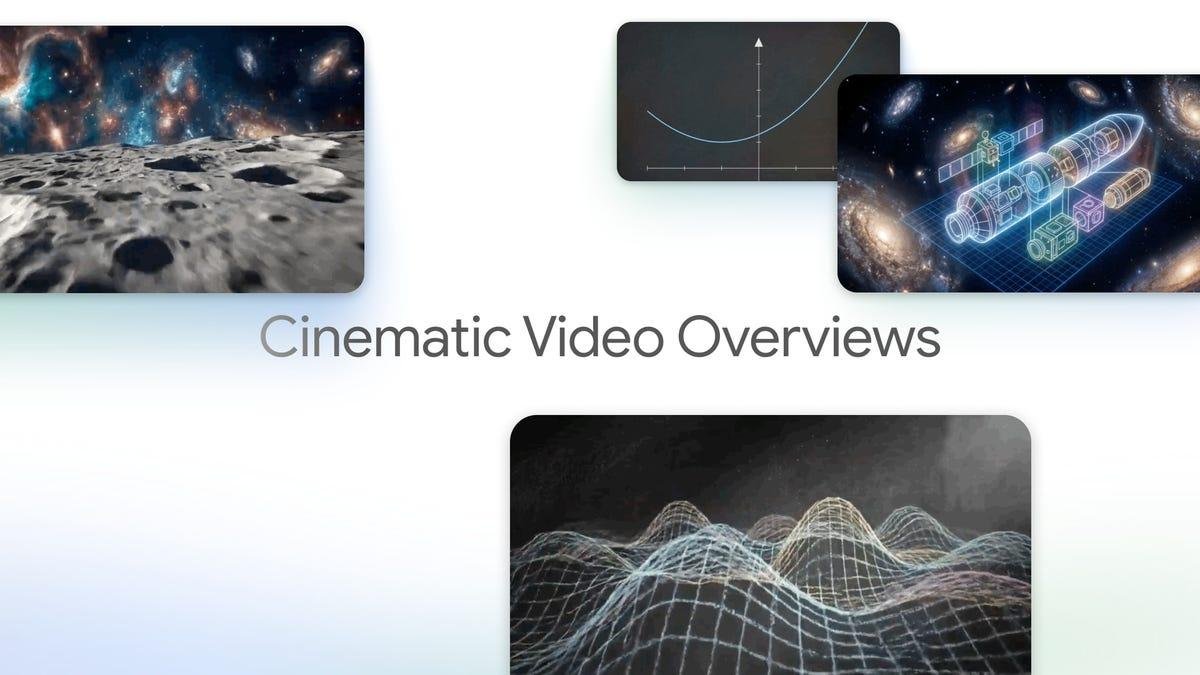
NotebookLM's Video Overviews Just Got Better Thanks to a Trifecta of Google's AI ModelsWe're big fans of NotebookLM, and one of its best features is Video Overviews, which will create an AI-generated video based on the sources you've uploaded. Google continues to add and improve NotebookLM's features, and Video Overviews has just been supercharged. The new Cinematic Video Overviews,...
Russian strikes on Kyiv kill at least nine, Ukraine officials sayAt least nine people were killed in Russian ballistic missile strikes on Ukraine, local officials said early on Saturday.At least another 23 were injured in the attack on the capital Kyiv, according to Ukraine's State Emergency Service.Moscow has escalated deadly ballistic missile attacks on Ukraine's capital recently, prompting...

Lewis University Sign up for a Money account and start creating a richer life. By clicking "Continue" I agree to receive...

In today's competitive business environment, having a strong online presence is no longer optional. Companies in every industry are investing in digital strategies to attract customers, increase brand awareness, and generate consistent revenue. Choosing the right digital marketing agency Dubai can make a significant difference in achieving these goals. With expert guidance,...

Ceasefire agreement between the U.S. and Iran ends Wednesday Middle East Ceasefire agreement between the U.S. and Iran ends Tuesday Download Embed...