It's Darkest in the Middle of the Day

It's Darkest in the Middle of the Day
An amazing milestone was passed in 2025: It was the year when off-exchange market share increased above 50%.
But looking at price discovery during the day, lit trading is even lower.
Interestingly, we find that the market is the darkest in the middle of the day.
Lit price discovery falls to 30% of continuous trading
A lot of price discovery happens during the day – while traders are working on large orders searching for liquidity – and economic news is fresh.
We have previously noted that off-exchange market share is now over 50%. But if we look at the tape during the day, we see that the percentage of lit trades is even lower. In fact, less than a third of all volume intraday comes from lit venues at the National Best Bid and Offer (NBBO).
Chart 1: In continuous trading, when price discovery happens, dark is even higher

Interestingly, the light grey shade shows the proportion of trades on exchange but at prices that are not on the SIP. That includes a lot of midpoints, but also odd lots. It also shows that even investors who like exchanges for their ability to attract liquidity, still like to stay “hidden.”
It’s darkest in the middle of the day
We can also take a deeper dive to see if the level of hidden trading changes throughout the day.
The data shows that traders rely more on lit quotes at the start and end of each day. It is, therefore, the darkest in the middle of the day.
Chart 2: The middle of the day has the lowest proportion of on exchange trades

Interestingly, though, the proportion of “lit” trades (exchange trades at the NBBO) is less variable – starting at around 30% in the morning and not really increasing until closer to 3:30 p.m. Eastern time. That’s likely when the certainty of hitting a lit quote becomes a more important factor for traders as they near the end of the day.
What about that “tipping point?”
Academics have for years thought that the 50% off-exchange represents a “tipping point,” where the NBBO no longer rewards price setters and price discovery degrades. The reason the NBBO would degrade is explained by cream skimming research.
- The most profitable spread-crossing trades are siphoned to off-exchange venues (by offering price improvement, PFOF or tiering).
- Concentrating less profitable spread-crossing trades in fair access (lit) markets.
- Because price setters in lit markets need to actually capture spread, they will need the spreads to widen to account for the lower rate of spread capture on the NBBO.
If we listen to academics, the trend we’ve seen over the last 20 years is now unlikely to reverse.
By implication, too, the NBBO is now likely wider than it should be.
What this all means
This is part of a 20-year trend, not a short-term trading pattern. So, it's most likely due to economics.
We have previously highlighted how exchange orders are competing on an unlevel the playing field. Off-exchange venues are able to segment and sometimes trade off-tick, making it easier to capture spread from less toxic flow, while exchanges must offer access to everyone. This, in turn, makes providing a quote on exchange less attractive, which leads to wider quotes and, as a result, creates a self-fulfilling cycle of increasing off-exchange trading.
We have even found that these economic differences allow less-toxic venues to charge more for trading.
In addition, SIP accounting can actually subsidize off-exchange venues.
It’s hard to expect lit trading to improve against headwinds like this.
The risk is this all leads to less competitive quotes, then higher trading costs and, ultimately, worse asset allocation and higher costs of capital for companies. That would result in less financial security for U.S. households, and perhaps even lower economic growth and liquidity in U.S. markets.
There is a reason U.S. markets are the envy of the world, but we can’t take any of it for granted.
Shiyun Song, Research Principal, contributed to this article.
Προωθημένο
Προωθημένο
Προωθημένο
Προωθημένο
Διαφημίσεις
Κατηγορίες
Διαβάζω περισσότερα
Pakistan man who murdered teen TikTok star gets death sentenceGetty ImagesUmar Hayat broke into the home of TikTok star Sana Yousaf after she rejected his advancesUmar Hayat broke into the home of 17-year-old TikTok star Sana Yousaf in June last year after she rejected his repeated advances, and shot her dead.Hayat, now 23, admitted his crime in July, saying he had developed a one-sided...

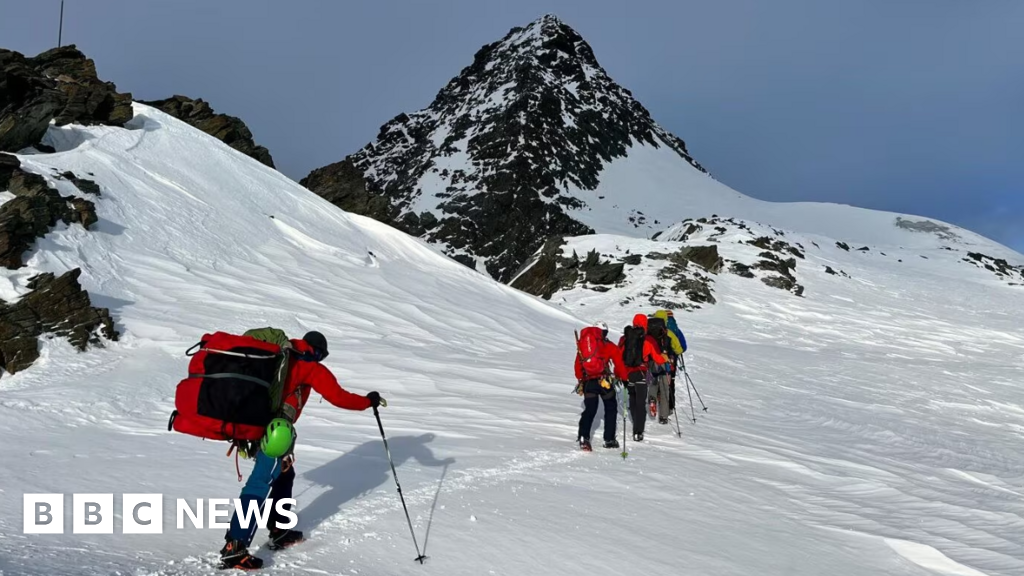
Austrian climber found guilty after girlfriend froze to death on mountainBethany BellBBC Vienna correspondentBergrettung KalsAn Austrian climber has been found guilty of gross negligent manslaughter after his girlfriend froze to death on Austria's highest mountain last year.The man, named only as Thomas P in line with Austrian privacy laws, has been given a five-month suspended sentence and...
The global trans-resveratrol market is witnessing strong growth as consumers increasingly prioritize healthy aging, preventive healthcare, and natural antioxidant supplements. Trans-resveratrol, a bioactive polyphenol commonly derived from grapes, Japanese knotweed, berries, and peanuts, is widely recognized for its antioxidant, anti-inflammatory, and anti-aging properties. Growing demand...

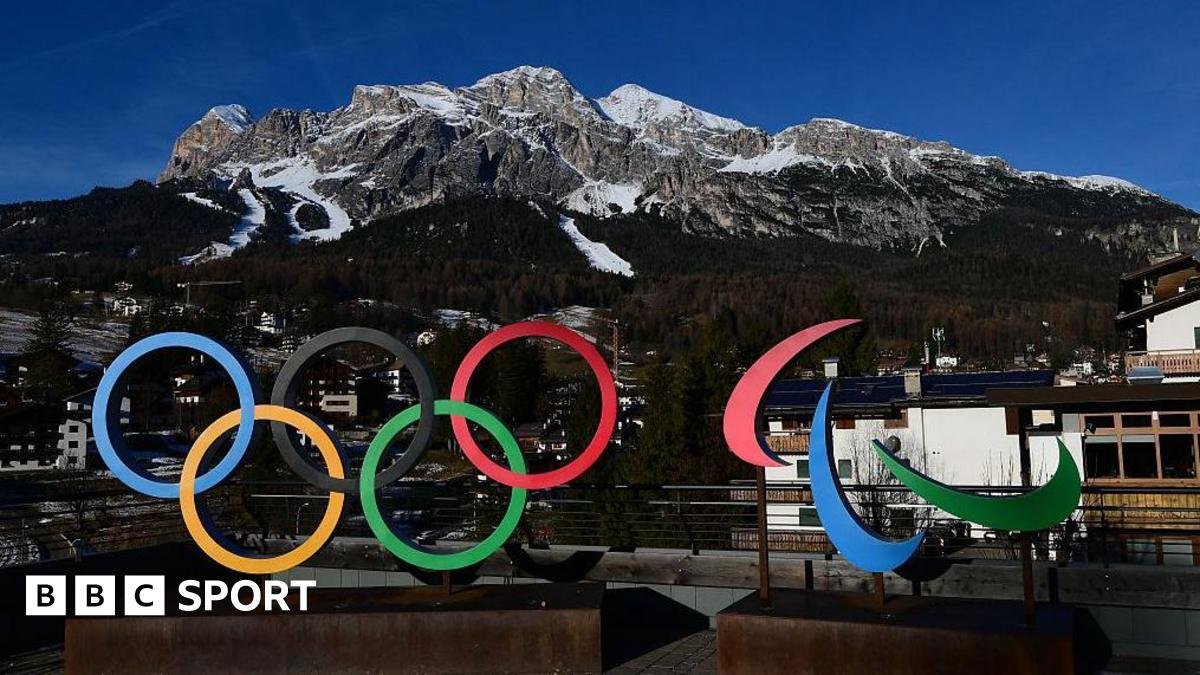
Winter Paralympics: Watershed moment as Russia's sporting exile endsThe build-up to the Games threatens to be partly overshadowed by the participation of six athletes from Russia and four from its close ally Belarus. Ukrainian athletes are boycotting Friday's opening ceremony in Verona in protest at the move, along with officials from a host of European nations.Unlike at the recent Winter...
Lebanon thought there was a ceasefire - then Israel unleashed deadly blitz4 hours agoHugo Bachega,Middle East correspondent, Beirut,Samantha Granville,BeirutandPaulin KolaEPA/ShutterstockIsrael's attacks took the country by surprise on WednesdayThe guns were supposed to have fallen silent. It was, after all, just hours after US President Donald Trump had announced that a two-week ceasefire had...