
 Reuters
Nasa is targeting March 6 (March 7 in the UK) to launch a crew around the Moon for the first time in more than 50 years, in what would be humankind's furthest ever trip into space.
The Artemis II mission will see four astronauts embark on a 10-day journey around the far side of the Moon and back to Earth, paving the way for a future lunar landing.
Nasa set the launch date following a successful "wet dress rehearsal" - a critical pre-launch test where the rocket is filled with fuel and taken through the countdown sequence.
It was the Artemis team's second attempt at a practice run at the Kennedy Space Center in Florida.
The first rehearsal, which took place in early February, ended early because of a hydrogen fuel leak at the launch pad.
Speaking at a news conference, Nasa's Lori Glaze said issues including with seals and filters had now been remedied.
"Yesterday we were able to fully tank the SLS rocket within the planned time line […] we also succesfully demonstrated the launch countdown," she said.
Three Americans - Reid Wiseman, Victor Glover and Christina Koch - and one Canadian, Jeremy Hansen, make up the Artemis II crew.
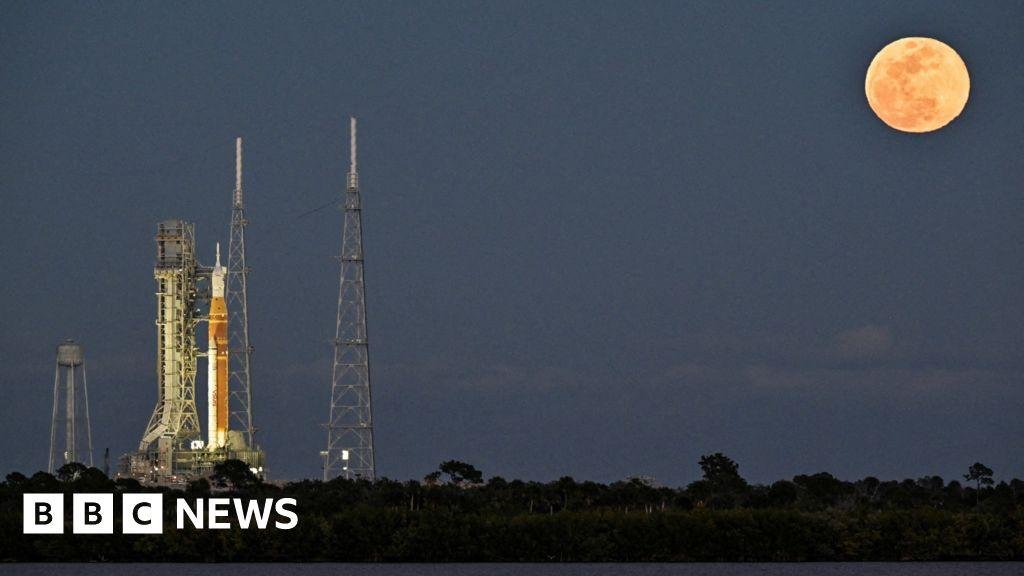
They'll begin their journey on Nasa's mega Moon rocket: the 98m-tall (322ft) Space Launch System, or SLS.
It's only flown once before in November 2022 for the Artemis I mission, but this was with no people onboard.
The crew will be strapped into the Orion capsule, which is located at the top of the rocket.
The inside of their spacecraft is about the size of a minibus, and it's where the four will live, eat, work and sleep during the 10-day mission.
The first day of their journey will be spent in orbit around the Earth, then if all systems are working well, the astronauts will head towards the Moon.
The voyage takes about four days, and the crew will travel around the far side of the Moon, which is the side we never see from Earth.
They'll be at a distance of 6,500-9,500km (4,000 to 6,000 miles) above the lunar surface, and will have several hours dedicated to studying and taking images of the Moon.
After the fly by, the astronauts will begin their four-day journey home. They will end the mission with a splash down in the Pacific Ocean.