
 EPA/ Shutterstock
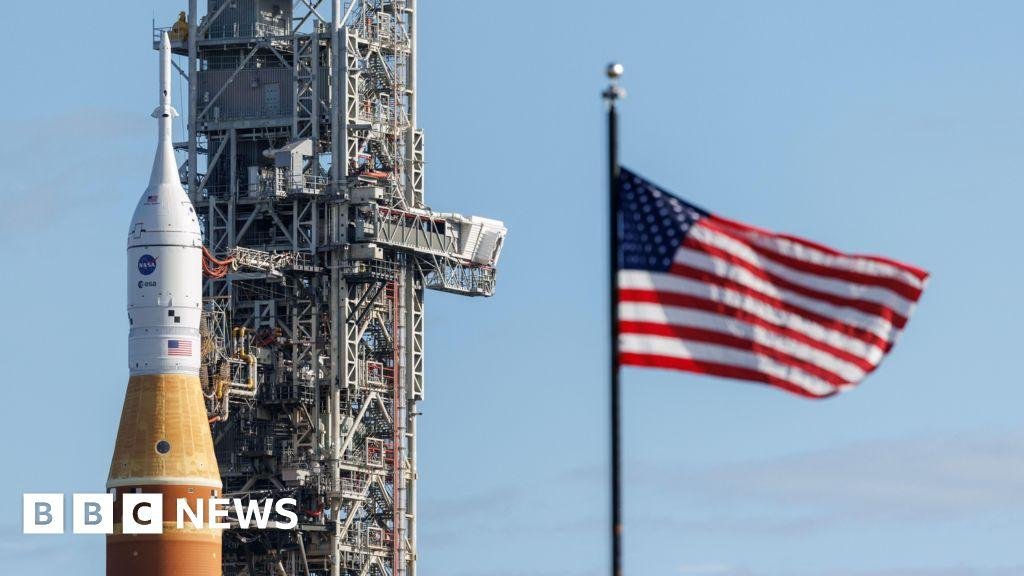
Nasa said that its early March launch day for its highly anticipated lunar mission would almost definitely be pushed back, after the agency spotted problems with the system's helium flow in safety checks.
On Friday, the space agency said that its Artemis II mission, which would see astronauts sent to the moon for the first time in 50 years, could launch as early as 6 March.
But NASA administrator Jared Isaacman announced on Saturday that an interruption to helium flow will "almost assuredly impact the March window".
Four astronauts are preparing to be sent on the 10-day trip to the far side of the Moon and back, marking humanity's furthest ever journey into space.
The check on Thursday, which involved fuelling the rocket with some 730,000 gallons of propellant over the course of 50-hours, initially revealed no faults.
But overnight on Friday, engineers observed an interruption in the flow of helium required for launch operations.
"This will almost assuredly impact the March launch window," NASA said in a statement on Saturday, adding that it would almost definitely delay its highly anticipated lunar mission.
Disruption to helium, which is used to pressurise fuel tanks and cool rocket systems, is treated as a serious technical issue, according to Nasa.
NASA's launch director Charlie Blackwell-Thompson had earlier said that Thursday's simulation felt like "a big step in us earning our right to fly", adding that he was "very proud "of the team.
The test was the scientists' second attempt at a practice run at the Kennedy Space Center in Florida, having fixed earlier issues with filters and seals that had led to hydrogen leaks.
Three US astronauts, Reid Wiseman, Victor Glover and Christina Koch, and Canadian astronaut, Jeremy Hanse, are due to take off in the mega Moon rocket, which will allow them several hours to study the moon's surface up close.
It is hoped that the mission, if successful, will pave the way for Artemis III, which will see astronauts set foot on the Moon for the first time since 1972.
Nasa says the landing will happen by 2028, but accepted this could be an ambitious time frame.