You can try to frame a budget in a nice way, but you can’t escape the math
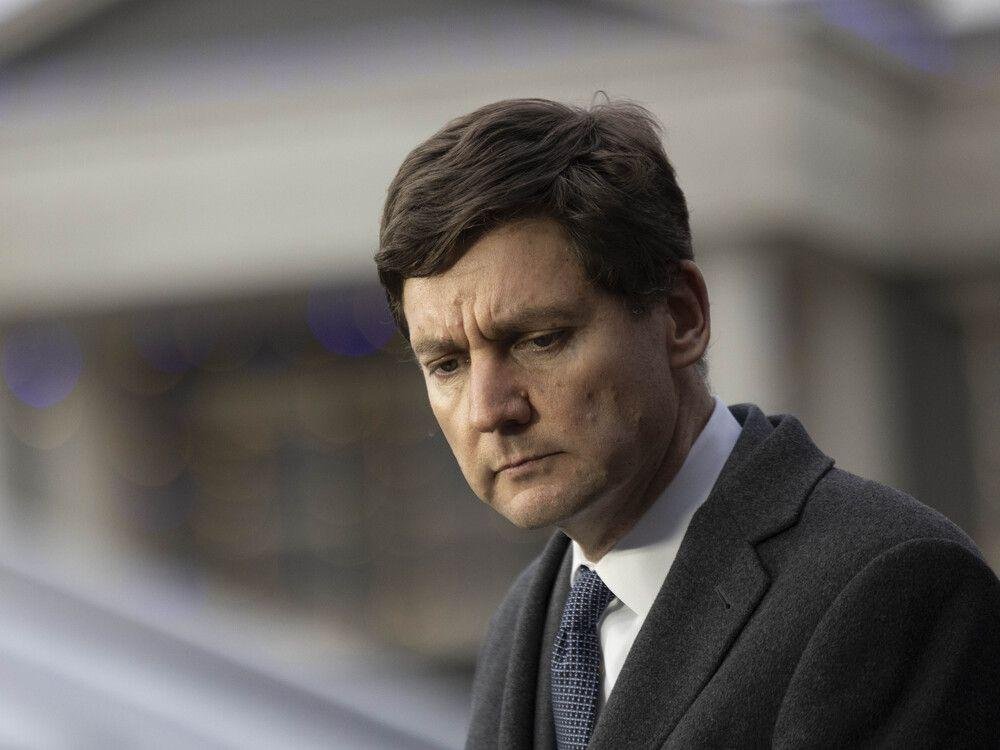
You can try to frame a budget in a nice way, but you can’t escape the math
Article content
Suspension bracket indexation — for 2027 through 2030 — is particularly concerning since it is an indirect tax increase. Indexation exists to prevent fiscal drag, whereby inflation pushes taxpayers into higher brackets even though their real purchasing power has not increased. Nominal income growth automatically generates additional tax revenue when indexation is paused, which disproportionately affects lower- and middle-income earners.
Article content
Fiscal drag is politically convenient because it avoids headline rate increases while expanding revenue quietly. Other provinces have employed similar tactics in recent years, as has the United Kingdom, where frozen personal allowance thresholds generated billions through fiscal drag. This kind of indirect tax increase is shameful.
Article content
The B.C. government is also broadening its provincial sales tax base to include services such as accounting and bookkeeping, architecture, engineering and many others. And it is proposing to increase property taxes on certain homes and increase the speculation tax for certain foreign owners by one per cent.
Article content
Article content
The amount of tax increases is shockingly tone-deaf since most Canadians are mightily struggling with affordability matters.
Article content
How will all of this be sold? Well, that’s where the second R, ‘riting, is applicable.
Article content
Jeremy Bentham, the English philosopher and founder of modern utilitarianism, in the late 18th century coined the phrase “springs of action,” the linguistic and motivational forces that influence behaviour. He understood that words are often selected not to neutrally describe reality, but to shape perception.
Article content
For example, the B.C. budget describes the capital project deferrals as “strategically sequencing the capital plan” and “adjusting the timing of delivery.” Nice-sounding language, but in plain fiscal and neutral terms, this means that projects are being postponed because the province’s borrowing capacity and cash flow are constrained. Reframing the delay as a strategy is managing political reaction.
Article content
The same applies to the tax language. A “pause in indexation” sounds technical and temporary, but in economic terms, it is a revenue measure that allows inflation to increase effective tax burdens without formally raising rates. The $76 “average” personal tax increase sounds modest, but obscures the distributional reality.
Article content
Article content
Bentham understood that language shapes perception. In fiscal policy, carefully chosen words can make tax increases and other measures sound benign before their real impact is felt. Once that principle is understood, you can clearly see that the B.C. government is trying to balance elevated spending with broadened taxation and carefully calibrated its messaging to soften the impact.
Article content
Next, the final R — ‘rithmetic. Most provincial budgets over the next while will be running deficits. But B.C.‘s trajectory — the size of its deficits, the pace of its debt accumulation and the breadth of its tax measures — most certainly places it among the most aggressive. It’s not merely cyclical weakness, but instead reflects structural imbalance. The arithmetic is not subtle. The trajectory is structural, not temporary.
Article content
As former U.K. prime minister Margaret Thatcher once said, governments eventually confront arithmetic. There are only two choices when spending growth outpaces economic growth: materially restrain expenditures or expand taxation directly or indirectly.
Προωθημένο
Διαφημίσεις
Διαφημίσεις
Διαφημίσεις
Κατηγορίες
Διαβάζω περισσότερα
Cuba's power grid collapses and plunges eastern provinces into a major blackout People look at a barricade set up by residents protesting against prolonged power outages in Havana, Cuba, Wednesday. Ramon Espinosa/AP...

Americans Are Increasingly Skeptical of AI, but We're Using It More Than Ever That lack of faith matters as AI becomes increasingly inescapable. Katelyn Chedraoui Reporter 2 Katelyn is a reporter with CNET covering artificial intelligence, including chatbots, image and video generators. Her work explores how new AI technology is infiltrating our lives, shaping the content we...

‘Not built right the first time’ — Musk’s xAI is starting over again, again And then there were two: Of the original 11 co-founders who kickstarted xAI with Elon Musk three years ago, only two remain as the deep learning lab continues a personnel overhaul to compete with Anthropic and OpenAI. That rebuilding, insists Musk, is by design. “xAI was not built right first time around, so is being...

Apple’s iOS 26.4 arrives in public beta with AI music playlists, video podcasts, and more Apple this week released the latest version of its mobile operating system, iOS 26.4, which introduces several new features, including an AI-powered playlist generation feature in Apple Music, support for video content in the Podcasts app, end-to-end encryption (E2EE) for RCS messages, and more. The...

Moment Trump signs US-Iran agreement at Palace of VersaillesSkip to contentWatch LiveBritish Broadcasting CorporationHomeNewsFootball 2026SportBusinessTechnologyHealthCultureArtsTravelEarthAudioVideoLiveDocumentariesSite searchWatch LiveUS President Donald Trump has signed an agreement to extend the ceasefire with Iran in France's Palace of Versailles, just outside Paris.The 14-point agreement,...