Some Middle East flights resume, but thousands of travelers are still stranded by war
Some Middle East flights resume, but thousands of travelers are still stranded by war
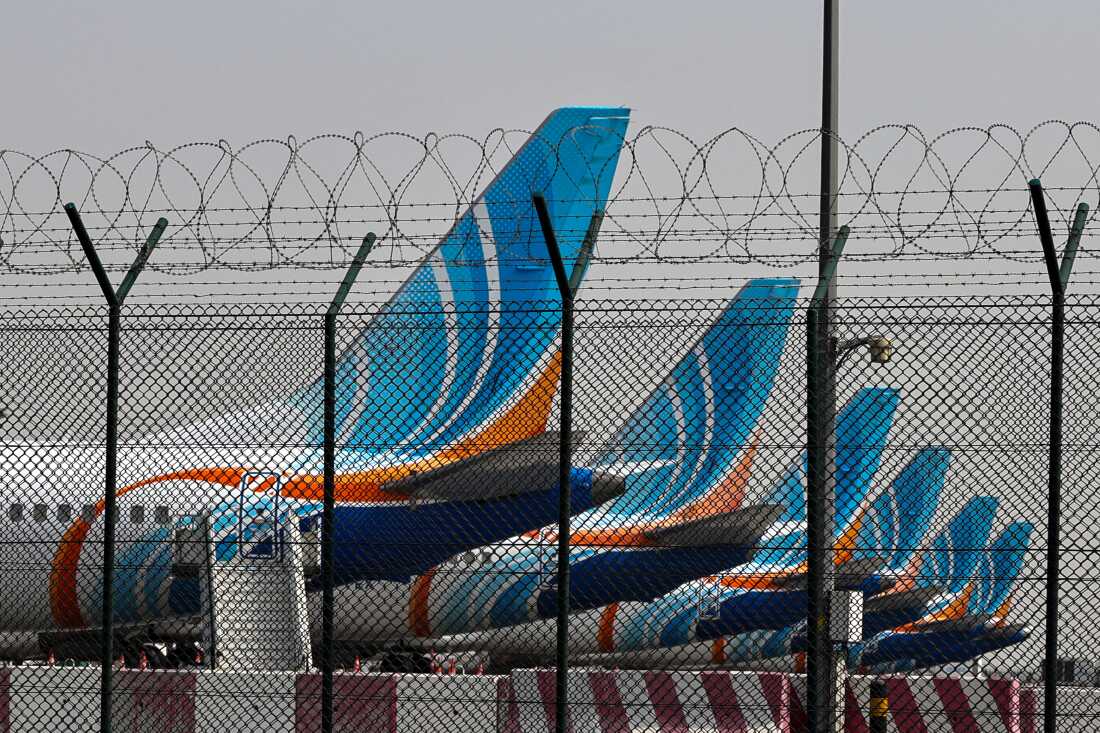
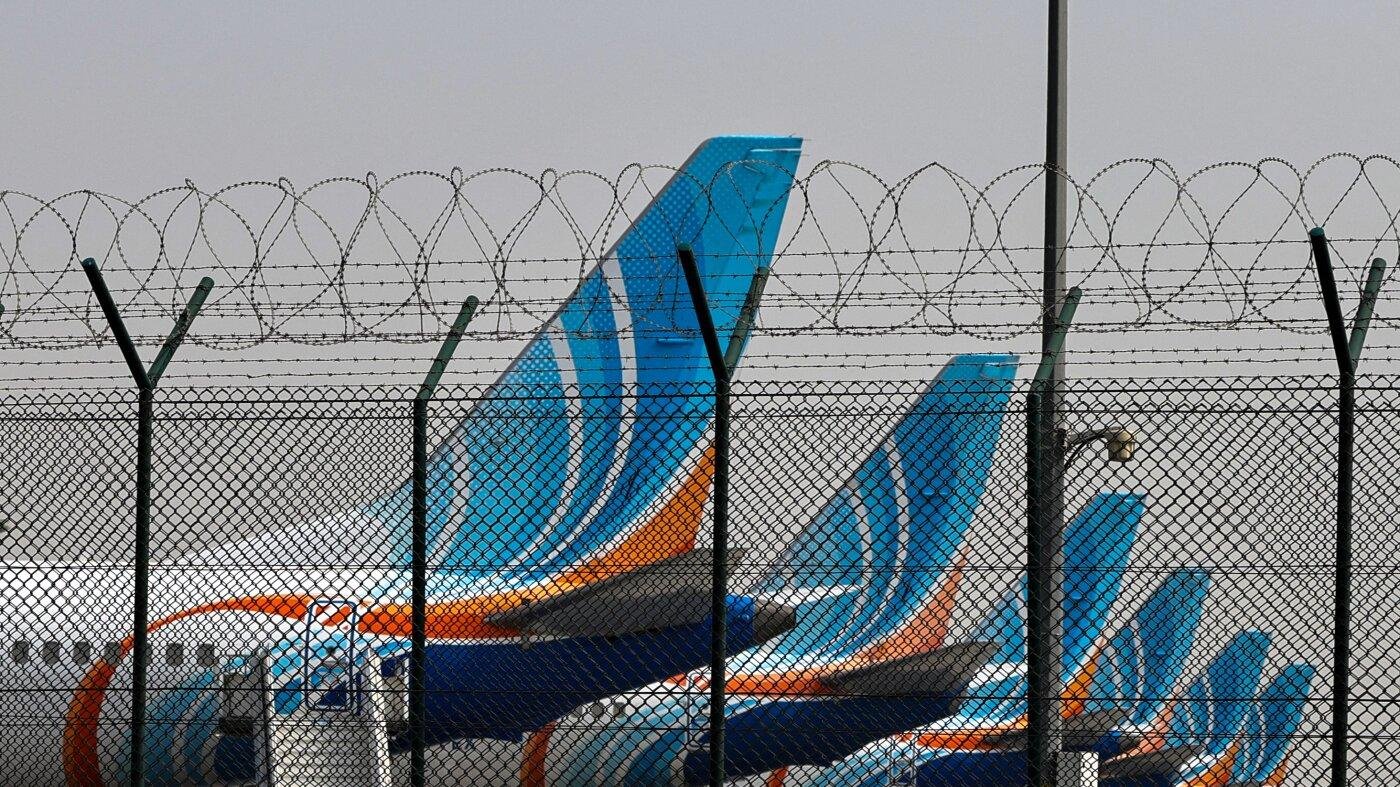
FlyDubai planes are parked at Dubai International Airport on Monday. Many airlines, including several in the Persian Gulf — including those based in Dubai and Abu Dhabi in the United Arab Emirates, Doha in Qatar and others — have curtailed commercial flights for safety reasons following the expanding U.S. and Israeli bombardment in Iran. Fadel Senna/AFP via Getty Images hide caption
toggle caption
Fadel Senna/AFP via Getty Images
Limited flights out of the Middle East resumed on Monday, but hundreds of thousands of travelers are still stranded at major aviation hubs in the region after attacks on Iran by the U.S. and Israel.
Tourists and business travelers hunkered down in hotels and airports across the Middle East, awaiting word on when airports would reopen, and flights in and out of the region could resume.
"We're waiting to fly out. Our flights keep getting canceled," said Kristy Ellmer of Portsmouth, N.H. She traveled to Dubai last week for business meetings, and is now unsure when she'll be able to leave.
"We've had flights booked every day for the week and Sunday was canceled. Monday was canceled. Tuesday's already been canceled. And so, kind of hoping that the Wednesday flights stay," Ellmer said in an interview.
Emirates Airlines, one of the largest carriers in the world, announced it would resume operating "a limited number of flights" on Monday evening. "We are accommodating customers with earlier bookings as a priority," the airline said in a social media post, but warned that all other flights remain suspended until further notice.
Airlines cancelled more than 3,400 flights in the Middle East on Monday alone, according to a post by the flight-tracking site FlightAware24, bringing the total number of cancellations since the war began to nearly 10,000.
— Flightradar24 (@flightradar24) March 2, 2026⚠️Cancellations across seven major Middle East airports (DXB, DOH, AUH, SHJ, KWI, BAH, DWC) have now exceeded 9,500 flights.
Feb 28: 1,400+ flights
March 1: 3,400+ flights
March 2: 3,400+ flights
March 3: 1,300+ flights pic.twitter.com/yqBFOnSiSw
Airports in Dubai, Abu Dhabi and Doha are major hubs for travel between Europe and the Americas, Africa and Asia. Airports in all three cities say they were targeted by Iranian strikes aimed at civilian and military sites in U.S.-friendly states in the Persian Gulf region.
The airport in Dubai, which is one of the busiest in the world, said that operations resumed with "a small number of flights" on Monday evening, just days after video posted on social media showed passengers fleeing down smoke-filled hallways after a suspected drone strike.
The airport in Abu Dhabi also resumed "partial operations" on Monday, according to a social media post. Flights on Etihad Airways, another major carrier based in Abu Dhabi, appeared to be among the first to take off, according to FlightRadar 24. Flights in and out of Doha's main airport "remain temporarily suspended," the airport said.
It's not clear how many international travelers remain stranded in the region, but an average of around 90,000 passengers transit through the region's major hubs every day on just three airlines — Emirates, Etihad, and Doha-based Qatar Airways — according to the aviation analytics company Cirium.
Airspace or airports across the region were closed over the weekend, according to flight tracking sites and government agencies. Many more cancellations are likely in the days ahead as long as air strikes and counter-strikes continue.
That's left stranded travelers from around the globe scrambling to make alternative plans.
"I deal with uncertainty all the time," said Kristy Ellmer, whose work as a consultant focuses on helping clients navigate transformation and change. She says that's helped keep her own situation in perspective.
"We've lost a few service members through this. There are people who are living in much worse conditions right now through this conflict. We're staying at a good hotel that's taking care of us," Ellmer said. "So I think just keeping that perspective is also helping me be calm."
Sponsorizzato
Sponsorizzato
Sponsorizzato
Sponsorizzato
Pubblicità
Categorie
Leggi tutto
According to an extensive market evaluation published by Fact.MR, the global food binders market was valued at USD 4.1 billion in 2025. Driven by a sweeping worldwide transition toward plant-based meats, rising demand for gluten-free texturizers, and a parallel industrial push to optimize moisture retention and mouthfeel in processed foods, the industry is projected to scale to a milestone...

Greetings from Porto, whose lanes are lined with colorful textiles Linen lines the lanes of Porto's old town. Up high, fresh laundry quivers in the breeze like bunting, pegged precariously to twine stretched taut between windows. And at street level, linen scarves, cotton aprons and tea towels adorn the entrances to souvenir...

An exclusive tour of Amazon’s Trainium lab, the chip that’s won over Anthropic, OpenAI, even Apple Shortly after Amazon CEO Andy Jassy announced AWS’s groundbreaking $50 billion investment deal with OpenAI, Amazon invited me on a private tour of the chip development lab at the heart of the deal, at (mostly*) its own expense. Industry experts are watching Amazon’s Trainium chip, created...

Watch: Will Mexico City's airport be ready for the World Cup?With the 2026 World Cup just months away, Mexico is finishing significant renovations at Benito Juárez International Airport in Mexico City. The airport is undergoing major upgrades to modernise aging infrastructure and increase capacity ahead of the tournament. However, logistical challenges and budget constraints have caused delays,...

The Austrian nuns who fled their care home are now in Rome and visited the Vatican Sisters Rita (right), 81, Regina (left), 86, and Bernadette (center), 88, at the convent chapel of the Goldenstein castle south of Salzburg, Austria, on Sept. 20, 2025. Supporters of the three nuns flocked...