
 AAP
AAP
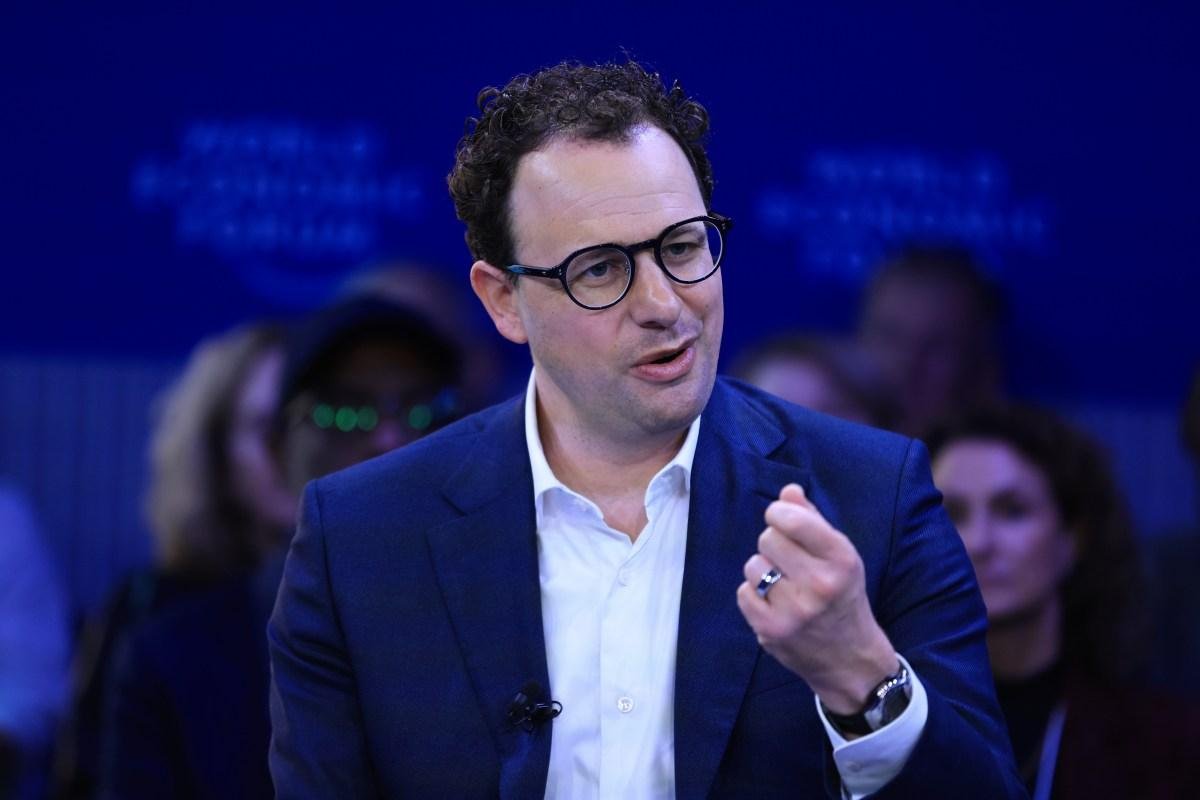
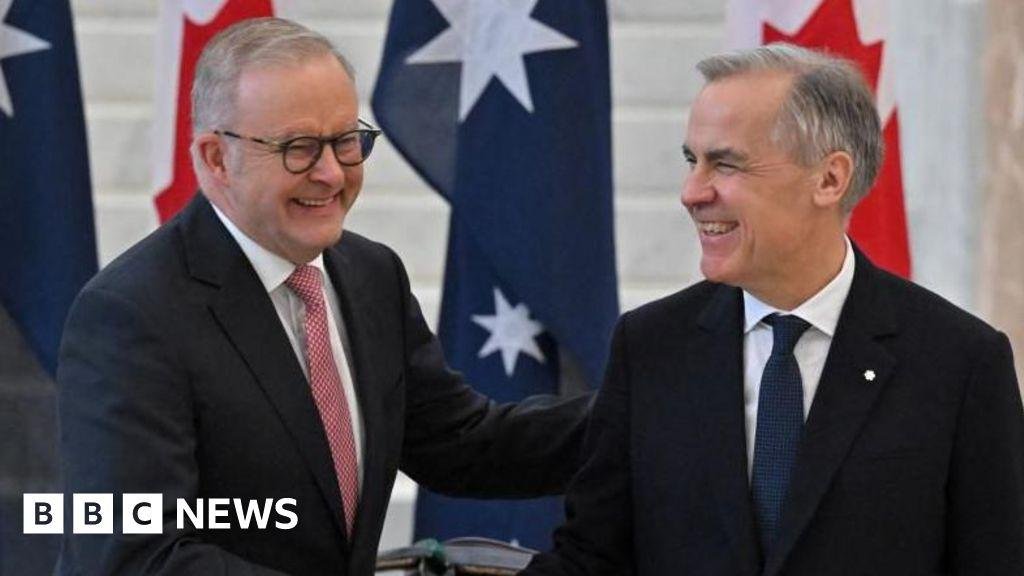
With the post-war "global architecture breaking down from consecutive crises" Australia and Canada should work together as "strategic cousins", Mark Carney has told the Australian parliament.
The question for middle powers was whether they would write the new rules that determine security and prosperity or "let the hegemons dictate outcomes", the Canadian prime minister said.
Carney said the two countries should cooperate further to boost sovereign capabilities including in the areas of critical minerals, defence and AI.
The speech echoed previous statements, including a speech in Davos in January in which he said the "old order is not coming back" and urged middle powers to band together.
Many countries were deciding to increase their sovereign autonomy, Carney said on Thursday, the first time a Canadian prime minister has addressed parliament in Canberra in almost 20 years. "This impulse is understandable when the rules no longer protect you."
He joined his Australian counterpart Anthony Albanese at a press conference afterwards, where the pair announced measures they said would deepen relationships across several areas, including defence, security and between the countries' space agencies.
Australia would also join the G7 Critical Minerals Alliance, which Carney called the "largest grouping of trusted democratic mineral reserves in the world".
Canada and Australia produce one-third of the world's uranium and lithium and more than 40% of its iron ore.
"Australia and Canada must seek and create new ways to stand with – and for – each other," Albanese said ahead of Carney's address to parliament, noting the two countries were bound together by shared convictions and values.
As the conflict in the Middle East spreads across the region, both leaders, who backed the strikes on Iran, called for a de-escalation.
"The world wants to see a de-escalation and wants to see Iran cease to spread the destinations of its attacks," Albanese said.
"We're seeing Gulf states that have not been involved attacked across the board, including the attacks on civilian and tourist areas as well."
But they said a ceasefire should not occur until Tehran no longer had the capability to produce a nuclear weapon.
"I also want to see a removal of the ongoing threat that has been there for such a long period of time, of Iran endangering peace and security and stability, not just in its own region, but here in Australia," Albanese said, referring to two antisemitic attacks in Australia last year which the government blamed on Iran.
Before arriving in Australia, Carney spent four days in India where he signed deals worth billions in a significant diplomatic breakthrough with Delhi.
The reset comes after years of tensions between the two countries, sparked when Carney's predecessor accused Delhi of a link to the 2023 assassination of a Sikh separatist in Canada.
After Australia, Carney will continue on to Japan where he will meet Prime Minister Sanae Takaichi.