Lucy HookerBusiness reporter

 Getty Images
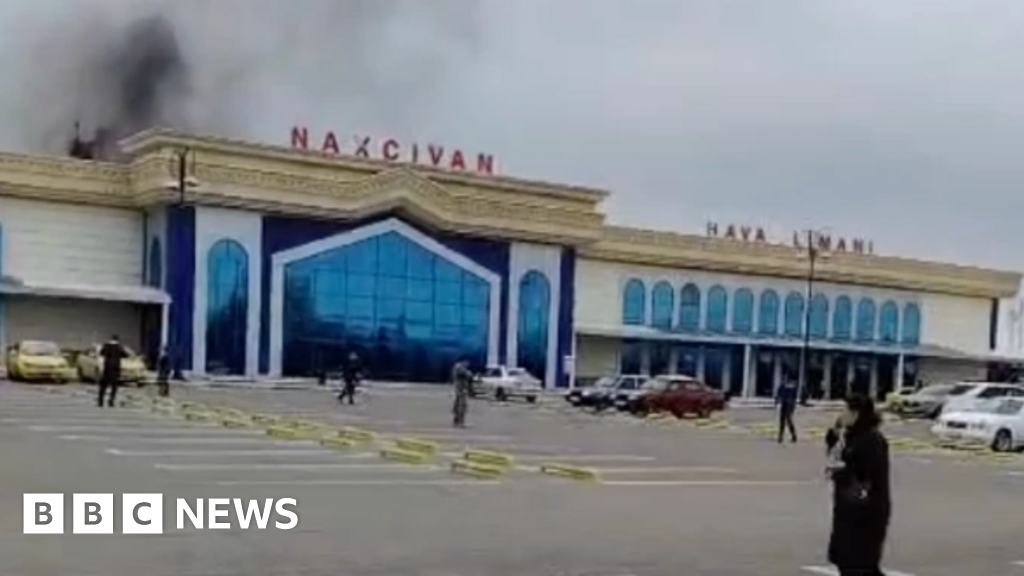
The closure of airspace over the southern half of Azerbaijan is putting additional pressure on airlines scrambling to respond to disruption caused by the conflict in the Gulf.
Flight traffic had already been severely disrupted in a region which in normal times acts as a significant hub for the global airline industry.
Aviation expert John Strickland said there was now a "very tight range of options for airlines" trying to navigate the current situation.
Western airlines have had to avoid Russian airspace, including Siberia, since the invasion of Ukraine in 2022. Now all flights are also steering clear of Iran and Iraq airspace, seeking alternative routes to the north or south.
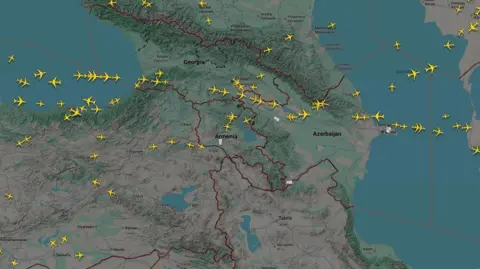
Flightradar24 data maps show real-time congestion in an approximately 100km wide strip across the north of Azerbaijan, a country roughly the size of Portugal.
 Flightradar24
Gulf airlines have begun to operate more flights out of the UAE and Oman, helping to evacuate stranded travellers, but there are no flights out of Qatar and capacity remains well below normal levels, said Opsgroup, which provides risk information for the industry.
"The central corridor across Iran, Iraq and the Gulf is effectively closed, so most traffic is going either north via the Caucasus and Afghanistan, or south via Egypt/Saudi/Oman," said David Mumford, international operations specialist at Opsgroup.
"Both routes are longer and busier than usual, so flight times and fuel burn are higher."
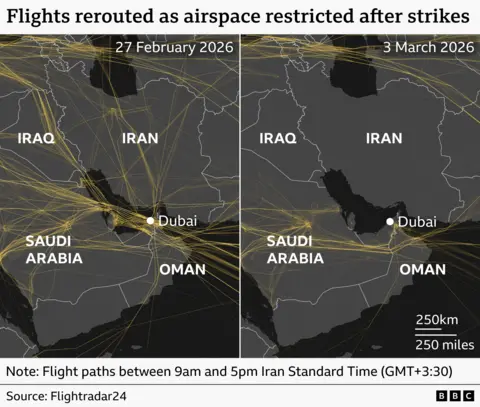
Air traffic reduced sharply after the attacks began on Saturday as airlines were forced to use more limited corridors, as the map below shows.
Aviation consultant Strickland said passengers could find their flight times extended due to longer routings.
"Flights already doing circuitous routing have even less choice," he said.
Some airlines had begun to adapt routes in recent weeks as tension built in the Gulf, he said. This week even more flights were forced to switch to routes further south to avoid the conflict zone.
There was likely to be congestion at busy times of the day, for example west to east in the afternoon and evening when Europe to Asia flights are typically scheduled, and east to west early in the morning when flights tend to come from Asia to Europe, he said.
That represented "another big complication for airlines' planning" on top of the usual factors, such as meteorological conditions, and the ramifications that a delayed flight can have for an aircraft and crew's next scheduled flight.
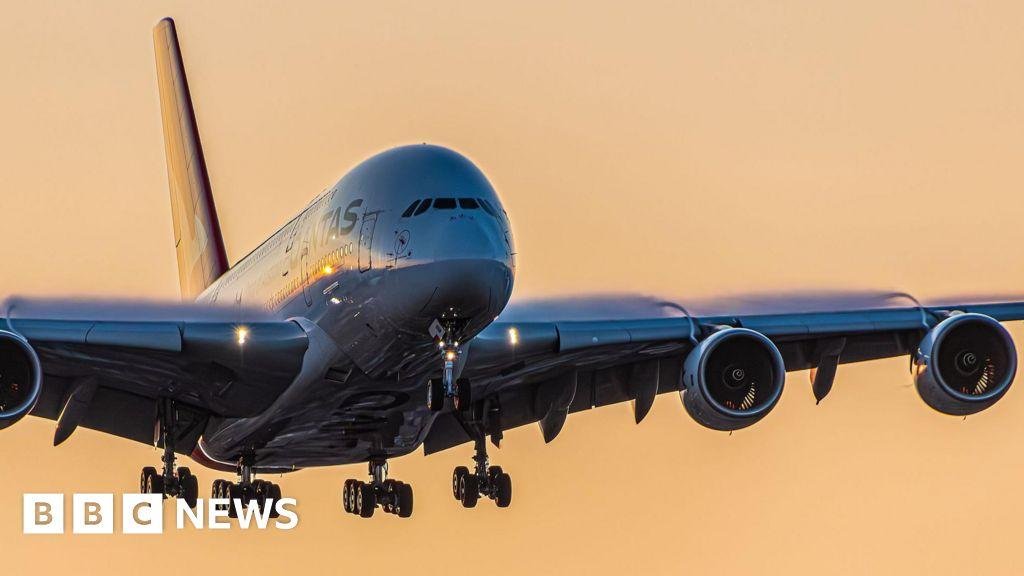
Most airlines are not currently having to add in additional stops to accommodate the longer routes, but Qantas has added a Singapore refuelling stop on its non-stop flight from Perth to London, he said. Most flights to India will be taking longer and going via routes to the south of the Gulf.
In the short term close attention would be paid to any further incidents in Azerbaijan, said David Kaminski, air transport editor at specialist news service Flight Global.
Azerbaijan, an oil-rich former Soviet republic, is a small but strategically important country bordering Russia, Iran, Armenia and Georgia.
If the country were drawn into the conflict that could leave airlines facing "a huge airspace equivalent of a brick wall from Saudi Arabia to northern Russia," said Kaminski. "The disruption would be vast."
If the conflict is resolved in the near term Gulf airlines would aim to rebuild their business on the current model, but if it were to persist, it could lead to a more permanent restructuring.
The Gulf airlines' current business model, which has transformed cities in the region into tourist destinations, might not survive a prolonged conflict, he suggested.
"Etihad, Qatar, Emirates are using those cities as connection points from Europe. You go to Dubai or Abu Dhabi and take a connecting flight to Asia.
"They market it: you don't have to fly 15 hours to Asia non-stop - come to Dubai for a few days, have a good time, go shopping, then get a connecting flight."
If the disruption were to continue, it was likely that other nearby cities like Riyadh or Istanbul, which already has plans to expand its airport to nine runways, might try to capitalise, he added.