Pizza delivery, iced lattes and untold amounts of bottled water add up fast. At $20 a pop in many places, a large pie for the family can be key when there's no time to cook, but start relying on these food and beverage shortcuts regularly and your wallet will start to feel the pinch.
Your local café and the restaurant around the corner are quietly winning a war against your savings. Meal by meal, drink by drink, the habit of eating out costs most people more each year than they'd ever care to admit.
Not all kitchen splurges are created equal, but the right appliances -- think coffee machines, water filters, and soda makers -- don't just save you a single trip out; they can recover their purchase price within months and keep saving long after.
We did the math to determine which kitchen investments deliver the best financial returns, taking into account upfront costs and projected annual savings. The most dramatic example we found? Switching from daily coffee shop visits to home brewing can save upwards of $1,000 per year.
1. Pizza oven
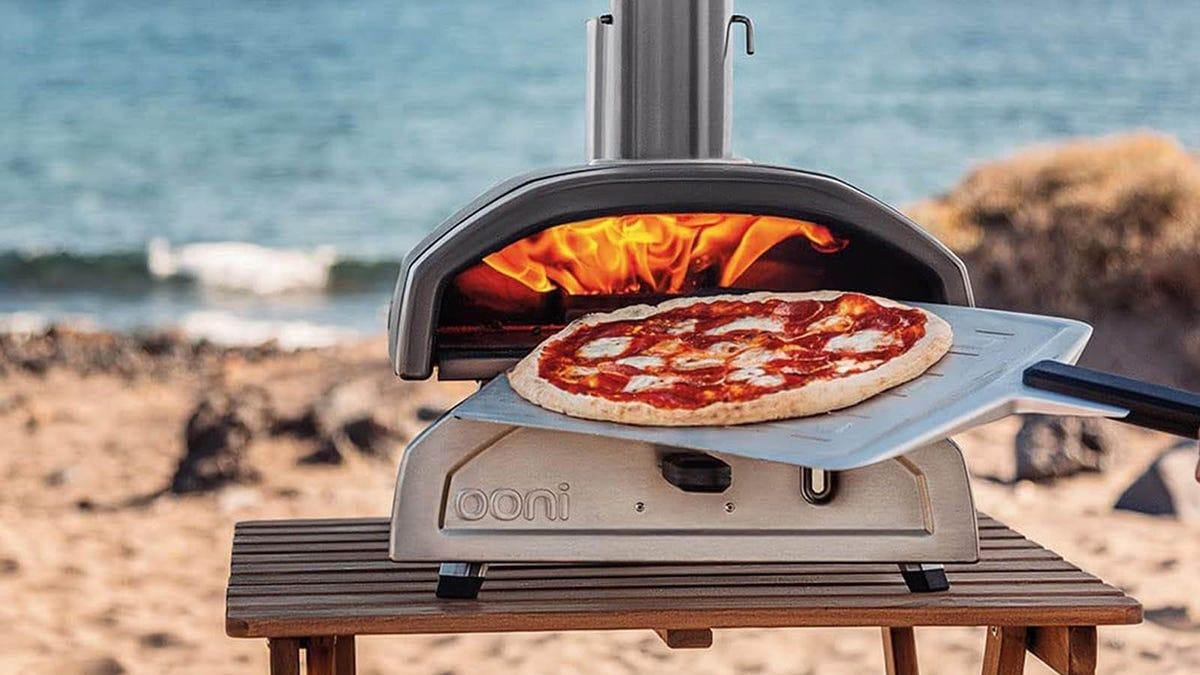
A home pizza oven can be had for a few hundred bucks and will spare you the rising takeout costs.
OoniMaking pizza at home isn't just fun; it can save you big money if you swap an at-home pizza night for expensive store-bought, even just a few times a year.
The ingredients to make several pies at home -- dough, red sauce and cheese -- cost around $8. Compare that with the $17 average cost of a single pizza in the US, and the potential for saving becomes clear. Since most households require two pizzas per order, you could be saving roughly $30 every time that craving hits.
Best of all, pizza ovens are easy to operate, with most models fueled by gas or wood pellets, and can produce restaurant-quality pies in under 3 minutes. Some of our favorite models cost just a few hundred bucks, so your pizza oven won't take long to pay for itself.
- Upfront cost: $300 to $500
- How much you could save: $500+ per year (based on one pizza per week)
2. SodaStream sparkling water maker
Making the bubbly stuff with SodaStream will cost you far less than buying cans of seltzer.
SodaStreamI drink a lot of seltzer, so this analysis hit close to home. I thought it would be nearly impossible to give up crushing cans of LaCroix and Polar, but the decision was made easier once I calculated the savings of using a SodaStream instead of buying 12-packs regularly.
I did the math, and those who drink two cans of seltzer per day will save more than $300 a year if they spring for a $70 SodaStream, which makes the stuff at home. After the first year, you can subtract the device cost and the savings get even bigger. Essentially, you'll need about two CO2 cartridges -- $15 each if you use the exchange program -- to get through the year drinking one 12-ounce serving of bubbly water each day. If you're a two-can (24-ounce) drinker, you'll spend approximately $60 a year on the four CO2 canisters required to produce that amount.
I down more like three or four cans per day, so the yearly savings clock in at more like $600. This all proved more than enough of a reason for me to kick the can.
- Upfront cost: $70
- How much you could save: Up to $600 per year
3. Coffee maker
Coffee is a big expense for many. Make it at home and save hundreds, even thousands per year.
GEIf you're buying coffee at Starbucks or another coffee shop even once a day, the total spend over a year is astronomical. Luckily, coffee can be made at home for a fraction of what the chains charge and all you need is a good coffee maker and a steady supply of beans to make it happen.
We crunched the numbers to see exactly how much making coffee at home will save you in a year. Even a modest one-cup-per-day drinker will save as much as $700 per year, depending on the specific order. Those who drink two or more cups per day are likely to save closer to $1,000.
- Upfront cost: $30 to $150
- How much you could save: Up to $1,000 (based on consumption of two cups per day)
4. Air fryer
An air fryer uses less than half the energy a large oven uses.
NinjaEven casual air fryer users know that these trendy cookers save time and hassle, and anything that inspires us to cook more and order less will save big bucks in the long run. But you might not have considered how these countertop convection ovens can also save money on your energy bill.
A typical air fryer uses far less energy than a big oven to operate, takes less time to preheat and cooks food faster. By my calculations using New York's electricity prices (2023), a standard four-quart air fryer costs 25 cents per hour to run. That's 50% more energy-efficient than the average full-size electric oven and about 35% more efficient than a gas oven.
- Upfront cost: $50 to $100
- How much you could save: Up to $114 (based on 300 hours of cooking)
5. Rice cooker
A rice cooker is essential for anyone who regularly eats this budget-friendly food.
David Watsky/CNETRice is about as versatile an ingredient as you can get. Top a bowl of basmati or brown with veggies and meat or a fried egg with some chili oil and you've got yourself a budget-friendly meal.
Former CNET editor David Priest caught the rice cooker bug during quarantine and did a breakdown of how much it costs to make a serving of rice at home. On average, it's about $1 for four servings of rice made at home, or 25 cents per serving, whereas buying a portion of cooked rice for four will cost about $3 or $4. That means you can feed a family or group for pretty cheap if you start with rice and don't go too crazy on the rest of the ingredients.
Best of all, a decent rice cooker won't cost you more than $25. And, if you already have an Instant Pot, it almost definitely has a rice cooker function.
- Upfront cost: $25
- How much you could save: Up to $547.50 (based on two servings of rice per day)
6. Instant Pot or slow cooker
Using a slow cooker is easy and turns cheap cuts of meat into tasty dishes.
George Peters/Getty ImagesThese hybrid pressure cookers have been around for decades now and for good reason. The multicookers are easy to use and will turn tough, cheaper cuts of meat into meals you can cut with a butter knife.
Beyond the Instant Pot's prowess for turning budget ingredients into toothsome food, these lil' cookers also use less energy than a wall oven. We did the math to see how much you can save using an Instant Pot over a big oven. While the average large oven costs more than $0.50 per hour to run, a slow cooker costs just $0.05. Using the pressure cooker mode is slightly more expensive at $0.17 but still about a third of the cost to run your large oven.
- Upfront cost: $40 (slow cooker) or $90 (Instant Pot)
- How much you could save: Up to $135 on energy alone (based on 300 hours of cooking)
7. Water filter pitcher
If you're still drinking bottled water, a filter pitcher and reusable water bottle will put money in your pocket.
David Watsky/CNETIf you're still drinking single-use bottled water around the house, or even outside, it's time to kick that nasty habit. Saddle yourself with a reusable water bottle and a water filter pitcher and you'll eliminate loads of plastic going into landfills and clogging up the recycling systems. You'll also save yourself some serious dough and have great-tasting water, to boot.
We did the math, and those who drink three bottles of water a day could save more than $800 a year by switching to a home filter. While Brita is one of the cheapest models, even the top-performing pitcher in our test of more than 10, the Zero Water Filter, still costs less than $30.
- Upfront cost: $20
- How much you could save: Up to $830 (based on consumption of three 12-ounce bottles per day)