H&M wants to make clothing from CO2 using this startup’s tech
H&M wants to make clothing from CO2 using this startup’s tech
The fashion industry knows it has a waste problem. About one garbage truck of textiles is thrown away every second. Meanwhile, the industry generates more carbon pollution than international flights and maritime shipping combined.
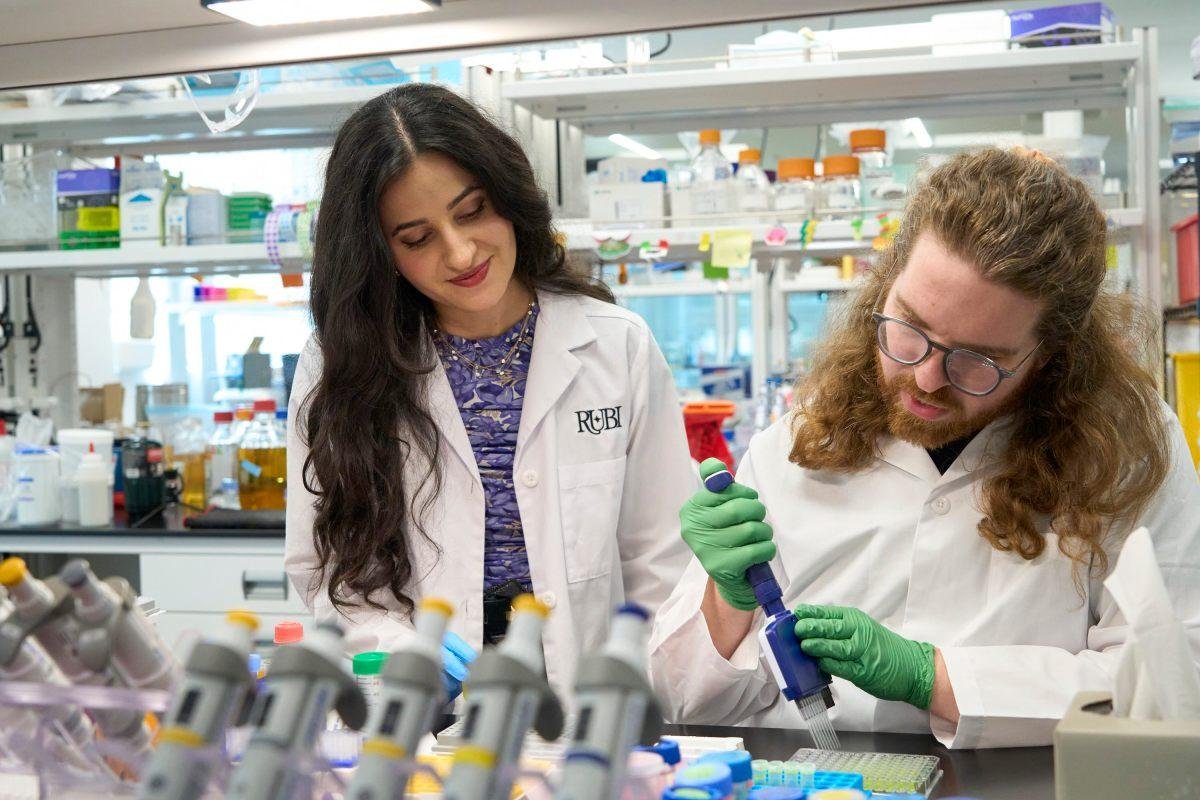
Some companies are experimenting with new ways to recycle textile waste, while others are developing new materials that won’t require fossil fuels. One startup, Rubi, is “basically taking the machinery of biology outside of the cell” to make the building blocks of lyocell and viscose, co-founder and CEO Neeka Mashouf told TechCrunch. The startup’s technology would allow any company that uses cellulose to build products from captured carbon dioxide.
Rubi recently raised $7.5 million to build a demonstration scale of its cellulosic production system, which is designed to produce tens of tons of material using CO2 as its main ingredient. The round was led by AP Ventures and FH One Investments with participation from CMPC Ventures, H&M Group, Talis Capital, and Understorey Ventures, Rubi exclusively told TechCrunch.
The startup has booked more than $60 million in non-binding off-take agreements with a couple of partners, Mashouf told TechCrunch. The company has tested the material with 15 pilot partners, including H&M, Patagonia, and Walmart.
To make cellulose for lyocell or viscose, Rubi uses enzymes. That differs from other startups, which might use engineered bacteria inside a fermenter or chemical catalysts to transform carbon dioxide into the compound. Today, most cellulose comes from trees, including plantations and virgin rainforests.
“These textile and raw material supply chains are very long,” Mashouf said. “Here in the U.S., we’ve gotten interest in being able to actually produce cellulose pulp that’s textile grade, where that doesn’t exist today.”
The idea to use enzymes came when Mashouf, who as a scientist researched new materials, teamed up with her twin sister, Leila, who was studying medicine at Harvard Medical School. “We looked at all the tech out there,” she said, but they kept coming back to enzymes.
Techcrunch event
San Francisco, CA | October 13-15, 2026
The enzyme industry is massive, she said. It’s used to make high fructose corn syrup and in wastewater treatment. “The capacity is out there already and can be very low cost.”
Rubi uses a “cascade” of enzymes to process waste carbon dioxide. The company has used AI and machine learning methods to boost the enzymes’ efficacy and stability.
Currently, the enzymes float in an aqueous solution, and as carbon dioxide is added, white cellulose will appear inside the reactor within a few minutes, Mashouf said. The reactors fit inside shipping container-sized modules. Eventually, Rubi plans to change its process to allow for continuous production.
While the startup is targeting apparel companies as its first customers, eventually it hopes to provide cellulose to any industry that uses it. “This really is a platform,” Mashouf said. “We think of it as a platform to make all the important chemicals and materials across the economy in a low-cost way.”
Tim De Chant is a senior climate reporter at TechCrunch. He has written for a wide range of publications, including Wired magazine, the Chicago Tribune, Ars Technica, The Wire China, and NOVA Next, where he was founding editor.
De Chant is also a lecturer in MIT’s Graduate Program in Science Writing, and he was awarded a Knight Science Journalism Fellowship at MIT in 2018, during which time he studied climate technologies and explored new business models for journalism. He received his PhD in environmental science, policy, and management from the University of California, Berkeley, and his BA degree in environmental studies, English, and biology from St. Olaf College.
You can contact or verify outreach from Tim by emailing tim.dechant@techcrunch.com.
Patrocinado
Patrocinado
Patrocinado
Patrocinado
Anúncios
Categorias
Leia Mais
The highly anticipated song "Long Face" by the character Lestat de Lioncourt, played by Sam Reid in the series "Interview with the Vampire," is now available on major music streaming platforms. This release coincides with Season 3 of the show, which has been rebranded as "The Vampire Lestat." Fans of the series are excited to hear this fresh single from one of their favorite characters. "Long...

In POE2 Currency, players are continually exploring new and innovative builds to maximize their effectiveness in both solo and group play. One of the most intriguing hybrid options is the Archer Monk-a class that blends the ranged precision of archers with the agility, tactical awareness, and spiritual resilience of monks. This combination allows for a versatile and dynamic playstyle that...

Showcase Your Startup at TechCrunch Disrupt 2026
If you're looking to grow your startup, TechCrunch Disrupt 2026 is the perfect opportunity. Taking place from October 13 to 15 in San Francisco, this event will attract around 10,000 tech leaders and investors. By exhibiting at this prestigious gathering, you'll be able to present your business to a large audience, opening doors for potential partnerships and funding. It's a chance to gain...
Unanswered questions as search for Nancy Guthrie enters a new monthNardine Saad and Sareen HabeshianNBC / ReutersIt's been more than a month since the mysterious disappearance of Nancy Guthrie captivated the nation, and yet, more questions than answers remain.In a case that feels ripped from a true-crime novel, the 84-year-old mother of US television presenter Savannah Guthrie is believed to...

Job Hunting? Cut These 3 Overused Words from Your Resume Now We research all brands listed and may earn a fee from our partners. Research and financial considerations may influence how brands are displayed. Not all brands are included. Learn more. Today’s job market is competitive, and hunting for a new role can feel like a slog. The last...