Very Small Trades Matter Little to Liquidity

Very Small Trades Matter Little to Liquidity
In the past few years, retail traders had the ability to trade fractional shares on all stocks through various retail brokerage platforms.
While this was useful for those customers with small investments to make, it was tricky for the consolidated tape, which is used to report trades in whole shares.
Today, we will look into changes in reporting of fractional shares, and how much those trades matter to the market.
Changing how fractional shares are being reported
Initially, fractional shares were excluded from the tape, which made some sense when you think that there was no change in “voting” ownership if less than a whole share matched.
But as fractional share trades became more popular, FINRA in a 2017 FAQ required them to be reported as if they were whole-share trades. However, it wasn’t until FINRA clarified their rules in 2021 that fractional share reporting really started.
Recently (as of Feb. 23), FINRA required that actual fractional share volume also be reported to the Trade Reporting Facility (TRF), in a new field, which is also reported to the Securities Information Processor (SIP).
How much does this change average daily volume (ADV)?
Before Feb. 23, fractional share trades were being rounded up or down:
- Less than 1 share was rounded up (to 1).
- More than 1 share was rounded down (to the nearest whole share).
This means that the ADV could actually be lower or higher than reported.
Now, fractional shares are reported on the TRF at up to six decimal places.
Table 1: Fractional shares reporting guidelines before and after February 23

Now, we can see how many “one-share” trades are actually frictional trades and which stocks have the most over or understated ADV. As we show in Chart 1, many of the popular retail stocks see the most shares trade in fractions. The data also shows that:
- Trades are much more likely to be rounded up (blue) than rounded down (red).
- Unsurprisingly, very high-priced stocks like Berkshire Hathaway also see a lot of fractional value (blue bar) but actually much less fractional volume (light blue dot).
Chart 1: Retail names had the biggest discrepancy in volume

Overall, the market ADV is overstated by 4.4 million shares. That’s comprised of 4.3 million shares rounded up (black) to one share, and 100,000 worth of shares rounded down (red) to the nearest whole number. This adds to $1.3 billion per day more value traded on the tape than in real liquidity.
How much do fractional trades affect liquidity
Fractional trades all need to be facilitated by an investor’s broker on a principal basis as fractional quantities can’t be sent to exchanges or dark pools or settled by the DTCC. Given that, it’s interesting to look at how prevalent they are, and how much they distort available liquidity.
Looking at the proportion of trades in different share quantities (Chart 2a), we see that:
- High-priced stocks see more fractional or whole one-share trades.
- Low-priced stocks see almost 15% of all trades in the TRF representing one share or less.
- Stocks in the $1000+ group see almost 45% of all trades in the TRF representing one share or less.
- There are almost no trades for fractional larger than one share.
- Whole one-share trades are more consistent across all price groups.
Chart 2a: Fractional volume appears more in higher-priced stocks

Looking at the proportion of volume that trades in different share quantities (Chart 2b), we see that:
- Whole one-share trades still dominate the small trades in the TRF (green).
- Stocks with higher prices tend to have more fractional volume.
- It’s more likely a fractional is more than one share for low-priced stocks (red).
- It’s more likely a fractional is less than one share for high-priced stocks (red).
- Although there are few trades for fractionals larger than one share, they actually account for more liquidity (especially in low-priced stocks).
Overall, the liquidity from frictional trades adds to less than 0.2% of TRF volume. With the TRF representing around half of all shares traded, that means fractionals are less than 0.1% of ADV.
Chart 2b: Fractional volume appears more in higher-priced stocks

Why do fractional trades exist?
It’s interesting that fractionals exist even for low-priced stocks.
Looking at a distribution of fractional trades by notional (value) hints at why this happens.
The spikes we see in Chart 3 show that a high proportion of trades occur in whole-dollar values. The largest spike occurs for a $1 trade, with relatively small quantity of trades for 99-cents or $1.01. We then see more spikes at $2, $5 and $10 exactly.
In short, retail not only trade in small value, but they also often like to trade in notional instead of shares.
Chart 3: Fractional trades are reporting the notional to a round dollar amount

More fractional data teaches us about how retail trade
It's interesting that more fractional data shows that retail likes to trade in dollars — and not shares. We also see that more than 1-in-5 trades in high-priced stocks are in fractional quantities.
However, the impact on liquidity is less problematic. Total ADV is overstated by (just) 4.4 million shares, which adds to less than 0.05% of ADV.
In short, fractional reporting turns out to be a smaller problem than maybe some expected.
Sponsorluk
Sponsorluk
Sponsorluk
Sponsorluk
Reklam
Kategoriler
Read More
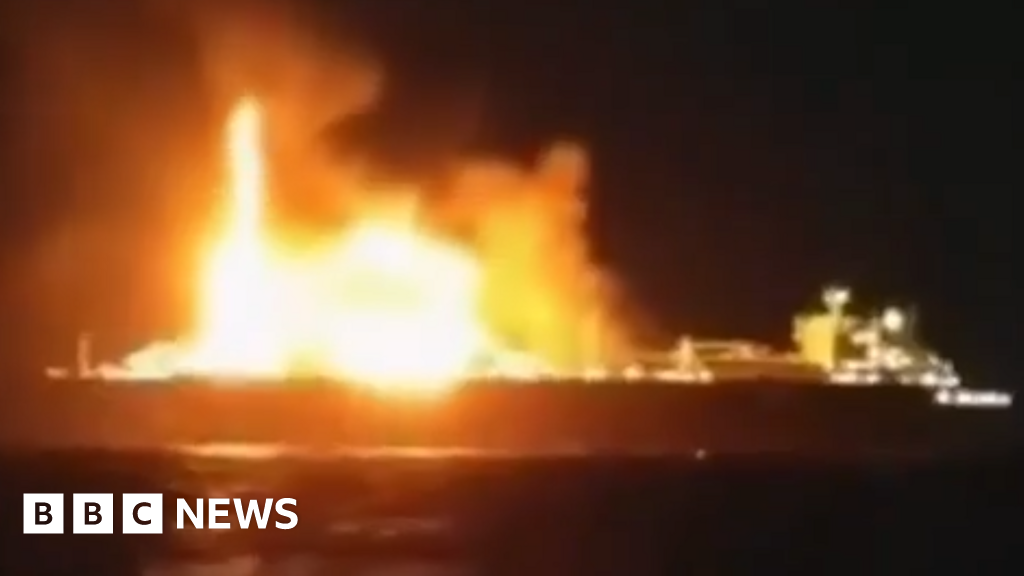
Russia blames Ukrainian naval drones as tanker sinks in MediterraneanSerhii Sternenko/XUnverified footage of the blaze was shared by an adviser to Ukraine's defence ministerA Russian LNG gas tanker has sunk in the Mediterranean between Libya and Malta after it was hit by explosions and a fire, Libyan port officials have said.Russia has accused Ukraine of targeting the Arctic Metagaz with...
Reddit says it’s looking for more acquisitions in adtech and elsewhere Reddit is gearing up for more M&A, the company told analysts on its fourth-quarter earnings call on Thursday. Reddit CFO Andrew Vollero said the online forum site is looking for businesses that can either leverage Reddit’s scale — meaning their products become more impactful when deployed across Reddit’s massive user...

WHCA dinner shooter charged. And, Charles III to address Congress WHCA Shooter In Court, Trump-King Charles Relationship, Lebanon Ceasefire In Limbo Good morning. You're reading the Up First newsletter. Subscribe here to get it delivered to your inbox, and listen to the Up First podcast for all the news you need to start your day....

Today's Wordle Hints, Answer and Help for March 16, #1731Looking for the most recent Wordle answer? Click here for today's Wordle hints, as well as our daily answers and hints for The New York Times Mini Crossword, Connections, Connections: Sports Edition and Strands puzzles.Today's Wordle puzzle is a pretty common word, with a pretty common repeated letter. If you need a new...
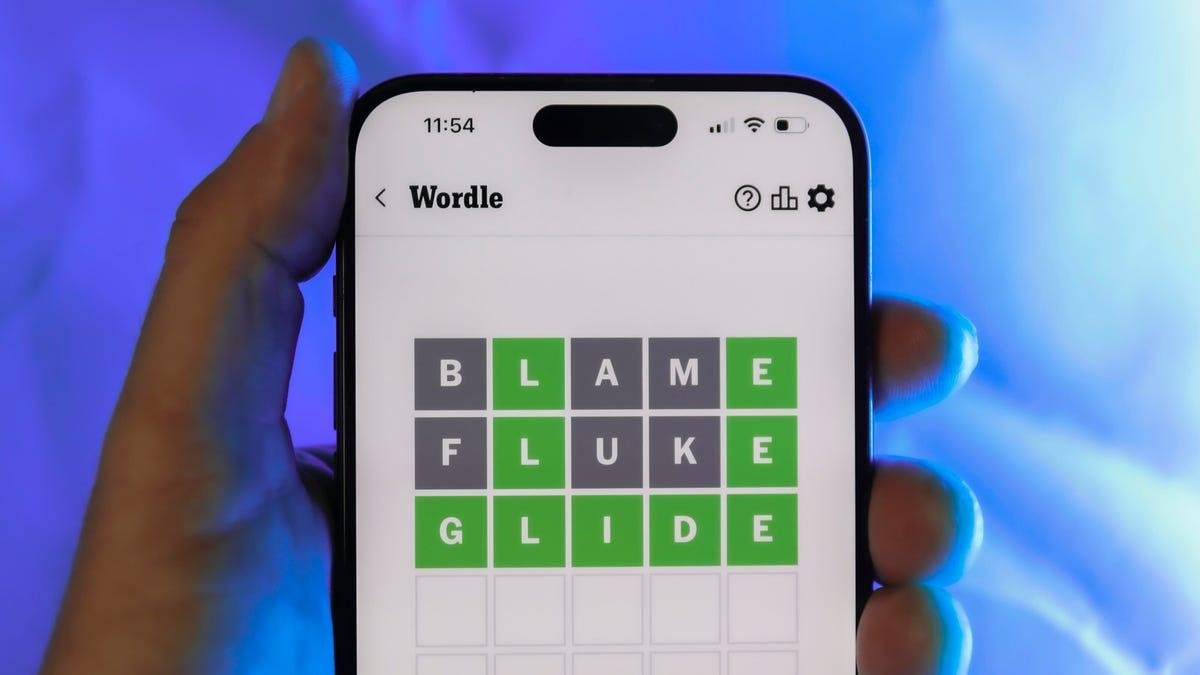
Russia will stop deploying Kenyan fighters to Ukraine, Musalia Mudavadi saysRussia agrees to stop using Kenyan recruits in Ukraine conflict, Kenya saysAFP via Getty ImagesCharles Ojiambo Mutoka claims his son Oscar was duped into fighting for Russia in Ukraine, and was killed in AugustKenya's foreign minister says Russia has agreed to stop deploying Kenyan nationals to fight in the war in...